
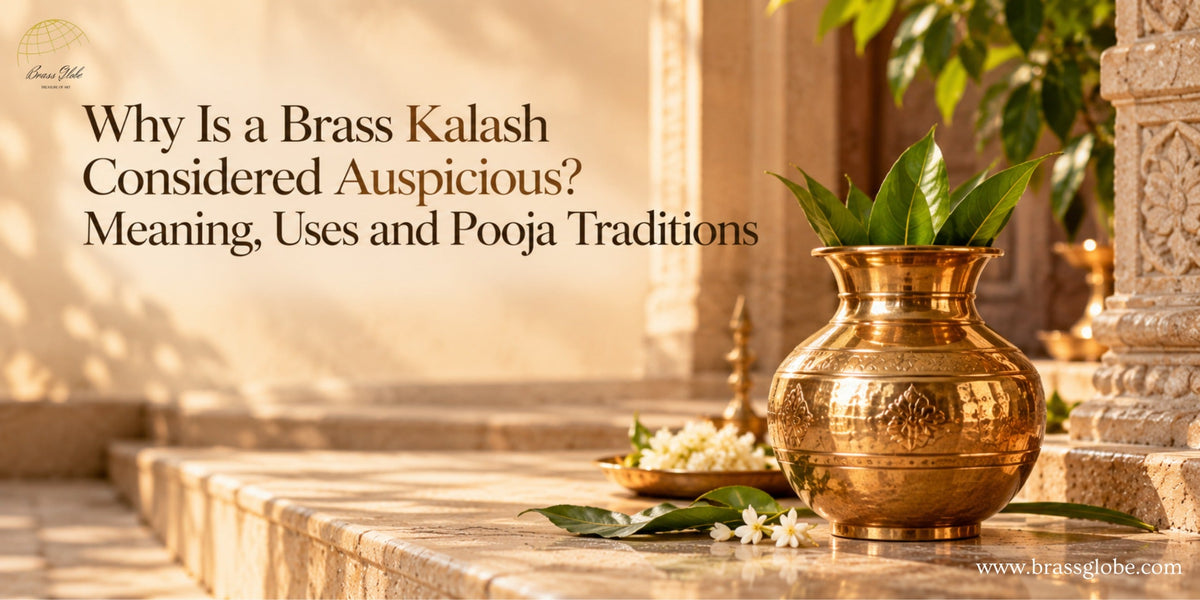
Why Is a Brass Kalash Considered Auspicious? Meaning, Uses and Pooja Traditions
Walk into almost any Hindu ceremony, a housewarming, a wedding, or the first day of Navratri, and there's a good chance a small metal pot sits near the center of it, water inside, mango leaves at the mouth, and a coconut balanced on top. That's a kalash, and a brass kalash is a popular choice in many Indian households. Here's what it represents, why brass is commonly used, and where it appears throughout the pooja calendar.
What Is a Kalash, Exactly?
A kalash, sometimes called a Purna-Kalasha or Purna-Kumbha, is a round-bellied pot with a narrow neck, traditionally filled with water and topped with fresh mango leaves and a coconut. It appears in daily worship, weddings, childbirth ceremonies, festivals, and temple consecrations. In many Hindu traditions, it symbolises abundance, auspicious beginnings, and divine presence.
Kalash vessels are made from several materials, including brass, copper, silver, and clay. Clay pots are particularly associated with certain seasonal and festival rituals, including some Navratri Ghatasthapana traditions. Brass is a common household choice because it is durable, reusable, and well suited to traditional worship settings.
What Each Part of the Kalash Represents
In traditional Hindu worship, the elements of a kalash carry symbolic meaning. Interpretations can vary across regions, religious texts, and family traditions.
- The pot: The vessel can represent the earth, fertility, nourishment, and the source of life. Depending on the ritual, it may also be associated with deities such as Ganesha, Gauri, or Lakshmi.
- The water: Water represents life, purity, nourishment, and the sustaining power of nature. Some rituals include sacred water or other offerings according to family custom.
- The mango leaves: Fresh mango leaves are commonly associated with auspiciousness, vitality, and prosperity. They are often arranged around the opening of the vessel.
- The coconut: The coconut is traditionally associated with prosperity, auspicious beginnings, and an offering to the divine. In some rituals, it is wrapped in red cloth before being placed on the kalash.
- The sacred thread: A mauli or kalawa tied around the neck of the pot represents sanctity and protection in many traditions.
Together, these elements make the kalash a powerful symbol in many Hindu ceremonies. Its placement often marks the beginning of a ritual and expresses prayers for prosperity, well-being, and auspiciousness.
Why Is It Called a Purna-Kalasha?
The word "purna" means full or complete. A Purna-Kalasha symbolises fullness, abundance, and completeness. In many rituals, the vessel is filled with water as part of the prescribed preparation. The exact filling level and additional offerings depend on the particular ceremony and the family's customs.
Roots in Scripture and Ritual Practice
The kalash has a long history in Indian religious and ceremonial traditions. It appears in a range of Hindu ritual practices and is used in ceremonies associated with worship, consecration, weddings, festivals, and new beginnings.
During Ghatasthapana, for example, a kalash is established as part of the opening observances of Navratri in traditions that follow this ritual. Depending on regional practice, the setup may include water, soil, grains, sacred leaves, and other ritual materials.
A swastika, a sacred symbol of auspiciousness in Hinduism and several other Indian religious traditions, may be drawn on the vessel. The specific symbols, offerings, and mantras used depend on the ceremony and local custom.
In many traditions, the kalash is understood to symbolically invoke sacred rivers, divine energies, or multiple deities. This helps explain why it occupies an important place at the beginning of many major ceremonies rather than serving merely as a decorative object.
Why Brass Is Commonly Used for a Kalash
Brass is not the only material used for a kalash, but it remains a familiar choice in many Indian households. Its popularity reflects a combination of religious tradition, appearance, durability, and practical reuse.
- Traditional significance: Brass is widely used for Hindu ritual objects, including diyas, bells, pooja plates, and kalash vessels.
- Durability: A well-made brass kalash can be reused for many years when cleaned and stored properly.
- Golden appearance: Its warm, golden colour is often associated with prosperity and auspiciousness in ceremonial settings.
- Everyday practicality: Brass vessels are available in a wide range of sizes and designs, from simple pots for home worship to decorative pieces for weddings and festivals.
- Reusable design: Unlike a disposable or single-use ceremonial item, a brass kalash can form part of a household's regular pooja collection.
Copper and silver are also used for kalash vessels. The choice often depends on the ritual, regional tradition, family preference, budget, and the type of ceremony being performed.
The Different Kinds of Brass Kalash
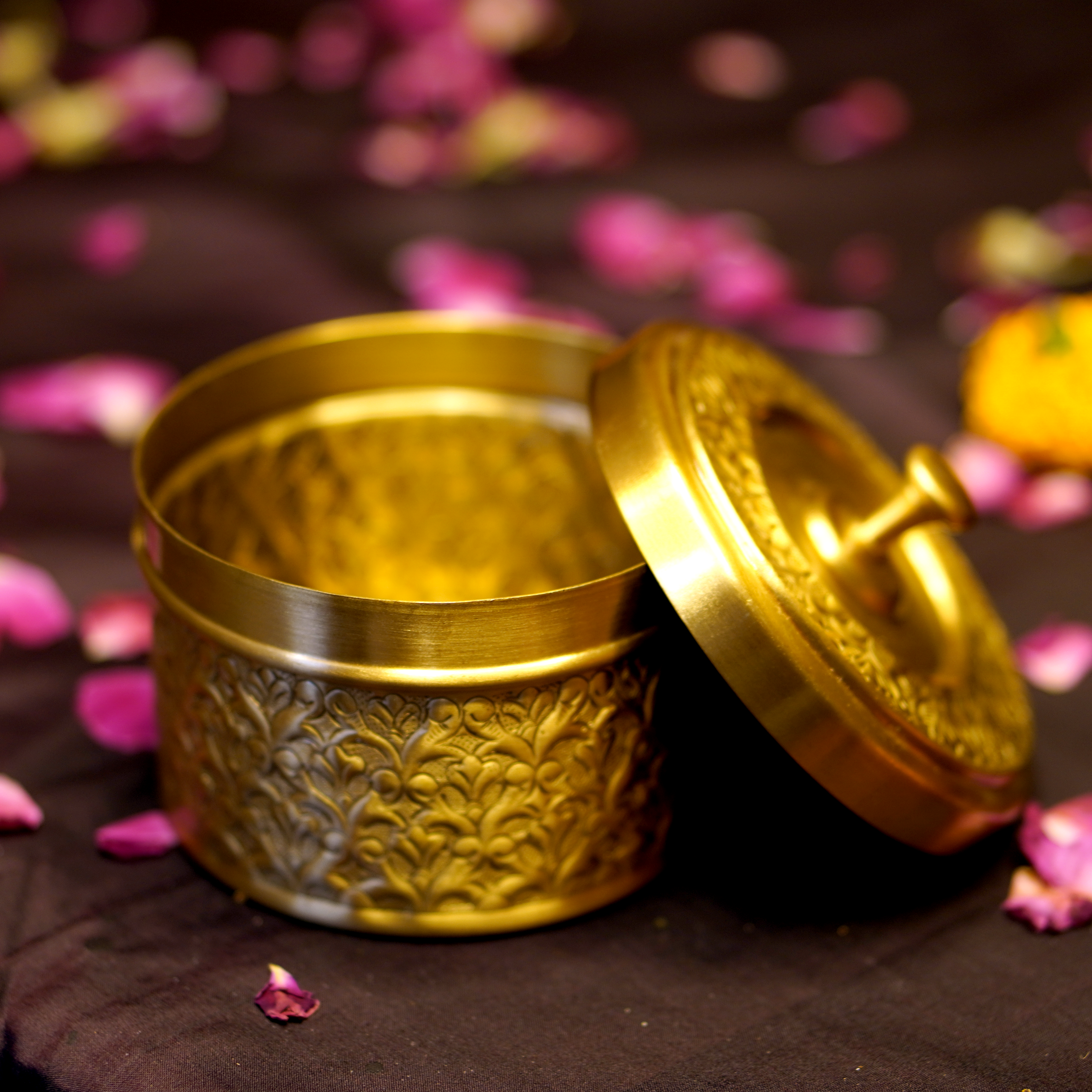
Brass kalash vessels come in different shapes, sizes, and finishes. Choosing one depends largely on how it will be used and how often it will appear in your pooja setup.
1. Simple Brass Kalash
A plain brass kalash is suitable for households that want a traditional vessel for regular worship. Its uncomplicated design is easy to clean and can be used for a variety of ceremonies, provided it is suitable for the intended ritual.
2. Engraved or Decorative Brass Kalash
These vessels feature etched patterns, traditional motifs, or ornamental detailing. They are often selected for weddings, festivals, housewarming ceremonies, and gifting.
3. Brass Kalash with a Coconut Holder
Some designs have a specially shaped opening or holder that helps support the coconut during ritual arrangements. These can be convenient when preparing a traditional kalash setup.
4. Large Brass Kalash with a Stand
Larger vessels, sometimes supplied with a separate stand, are suitable for temple settings, community ceremonies, and elaborate household rituals. Their size makes them more visible within a larger altar arrangement.
The right option depends on your needs. A small, simple vessel may be sufficient for daily worship, while a larger or decorated kalash may suit occasional ceremonies and festive displays.
Where a Brass Kalash Is Used
The kalash appears in many Hindu rituals. Although the precise arrangements vary by region and family tradition, its symbolism of auspicious beginnings and abundance remains an important theme.
Daily Pooja
Some households keep a brass kalash in their home shrine as part of their regular worship arrangement. It may be filled or prepared according to the family's customary practice and placed alongside other pooja items.
Navratri and Ghatasthapana
In traditions that observe Ghatasthapana, establishing the kalash marks an important part of the beginning of Navratri. The vessel remains part of the ritual arrangement during the observance, with daily worship carried out according to the family's tradition.
Diwali Pooja
During Diwali, a kalash may be placed near images or idols of Lakshmi and Ganesha as part of the household pooja setup. Its presence symbolises prayers for prosperity, well-being, and auspicious beginnings.
Griha Pravesh
During a Griha Pravesh, or house-entry ceremony, a kalash may be included in the rituals performed when entering a new home. It represents blessings, abundance, and hopes for a peaceful household.
Weddings
Kalash vessels commonly appear in Hindu wedding ceremonies. They may be positioned near the mandap or used in specific ritual arrangements associated with prosperity, fertility, and blessings for the couple.
Ganesh Chaturthi
In some household and regional traditions, a kalash forms part of the broader worship arrangement during Ganesh Chaturthi, alongside the idol, lamps, flowers, and other offerings.
Across these occasions, the kalash serves as more than a vessel. It is a ritual symbol associated with welcoming blessings, marking important beginnings, and expressing hopes for prosperity and well-being.
Its Place Among Pooja Samagri
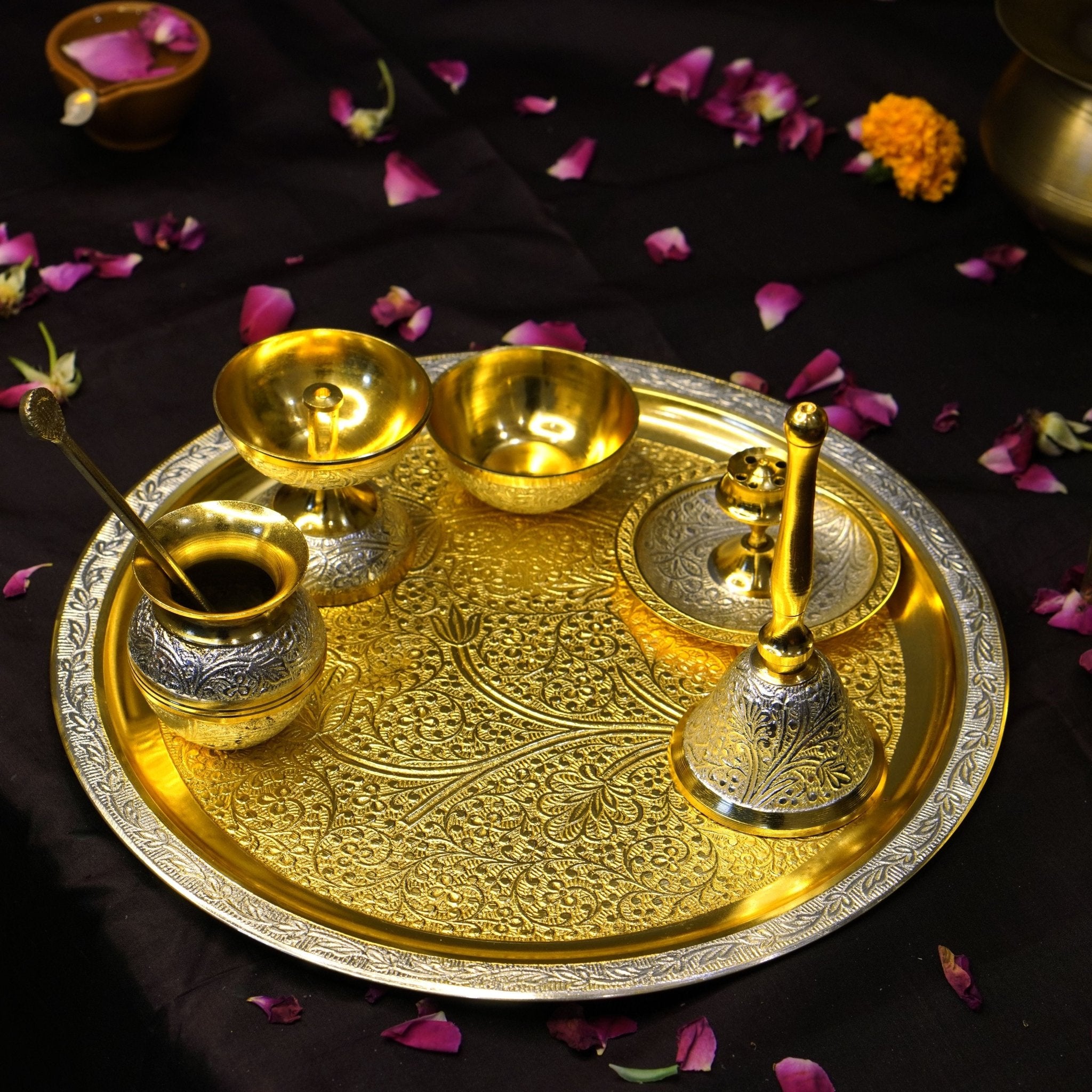
In a traditional pooja arrangement, the kalash is often placed alongside recurring items such as a diya, kumkum, akshat (uncooked rice used in rituals), flowers, incense, and other pooja samagri.
The kalash does not always sit directly on the pooja thali. In larger arrangements, it may be placed separately near the altar or at a designated location within the worship space.
Regional traditions influence the details. Some households use a standard arrangement of water, mango leaves, and a coconut, while others place particular emphasis on the type of water, soil, grains, leaves, or other offerings used during specific festivals.
When preparing a kalash, it is best to follow the instructions associated with the particular ritual or the customs followed by your family.
How to Prepare a Traditional Kalash
Although the details differ across traditions, a common kalash arrangement follows these steps:
- Clean the vessel: Wash and dry the brass kalash before preparing it for worship.
- Fill it with water: Add clean water. Some rituals call for Gangajal or other prescribed offerings.
- Add ritual items if required: Depending on the ceremony, rice, coins, turmeric, or other materials may be included according to family custom.
- Tie a sacred thread: Wrap a mauli or kalawa around the neck of the vessel if this is part of the ritual.
- Arrange the mango leaves: Place fresh leaves around the opening as prescribed by the tradition.
- Place the coconut: Set the coconut on top, sometimes wrapped in red cloth, depending on the ritual.
- Position the kalash: Place it in the designated area of the pooja space. Direction and placement may vary by ceremony and regional custom.
These steps describe a common arrangement, not a universal rule for every ceremony. Follow the specific instructions for your pooja or festival when they differ.
Buying and Looking After a Brass Kalash
A well-made brass kalash should feel sturdy for its size and have a reasonably even finish. Check the base to make sure it sits flat without wobbling, especially if you plan to place a coconut on top.
Also consider the size, weight, design, and ease of cleaning. If the vessel will be used frequently, a simple design may be easier to maintain than one with deep engravings or intricate decorative details.
How to Clean a Brass Kalash
- Use mild soap and a soft cloth for routine cleaning.
- For tarnish, use a brass-cleaning method suitable for the item's finish.
- If using traditional methods involving tamarind, lemon, or salt, test the method carefully and follow any manufacturer instructions, particularly for decorated pieces.
- Rinse thoroughly after cleaning and dry the vessel completely.
- Avoid steel wool, harsh abrasives, and dishwasher use unless the manufacturer confirms they are suitable.
- Store the kalash in a dry place when it is not being used.
Brass can naturally tarnish with exposure to air and moisture. A change in colour does not necessarily mean the vessel is damaged, although any corrosion, pitting, or uncertain surface treatment should be assessed before the item is used for a purpose involving food or water.
For more detailed cleaning advice, see our guide on cleaning brass utensils at home. Update this link if your Shopify blog uses a different URL handle.
Frequently Asked Questions
Why is a brass kalash considered auspicious?
A brass kalash is considered auspicious in many Hindu traditions because it symbolises divine presence, abundance, nourishment, and positive beginnings. The pot, water, mango leaves, and coconut each carry traditional meanings within the ritual.
What is the significance of the coconut on top of the kalash?
The coconut is commonly associated with prosperity, auspiciousness, and an offering to the divine. It may be wrapped in red cloth before being placed on top of the kalash, depending on the ceremony and family tradition.
Can a brass kalash be kept at home daily?
Yes. Many households keep a brass kalash in their pooja space as part of their daily worship arrangement. The way it is filled, decorated, and maintained depends on the family's customs.
Is brass or copper better for a kalash?
Both brass and copper are traditionally used for kalash vessels. Brass is popular for everyday household worship and festive arrangements, while copper is also widely used in religious rituals. The choice depends on the ceremony, regional tradition, personal preference, and budget.
Do all kalash setups need mango leaves and a coconut?
No. Mango leaves and a coconut are common elements in many traditional arrangements, but practices vary by region, family, and ritual. Follow the customary instructions for the particular ceremony.
Can a brass kalash be used for every Hindu festival?
A brass kalash can be used in many Hindu festivals and ceremonies, but the required vessel, offerings, and preparation vary. Some rituals call for specific materials or arrangements, so check the instructions for the particular occasion.
How do I maintain the shine of a brass kalash?
Clean it gently with a soft cloth and a suitable brass-cleaning method, rinse away any residue, and dry it thoroughly. Avoid abrasive materials that can scratch the surface or damage decorative finishes.

Leave a comment
This site is protected by hCaptcha and the hCaptcha Privacy Policy and Terms of Service apply.