
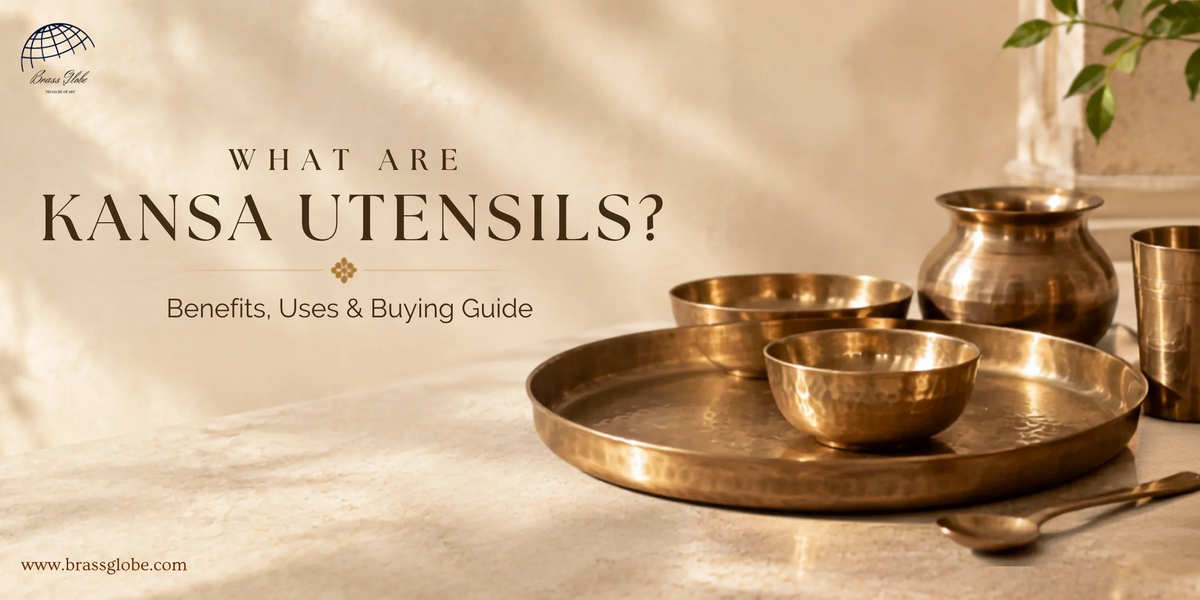
What Are Kansa Utensils? Benefits, Uses and Buying Guide
Kansa doesn't get nearly as much attention as brass or copper, but ask anyone who's eaten off a heavy, dark-gold thali at a wedding or a temple function, and there's a good chance that plate was kansa. It's been part of the table in a lot of Indian households for a long, long time. This piece covers what kansa utensils actually are, why some people pick them over steel without a second thought, the different pieces you'll run into, and what's actually worth checking before you buy a set.
What Are Kansa Utensils Made Of?
Bronze, mainly, that's what kansa is. Copper and tin, no zinc anywhere in it, and that's the real line between kansa and brass (brass being copper and zinc). Stainless steel is a completely different alloy on top of that, mostly iron with chromium mixed in.
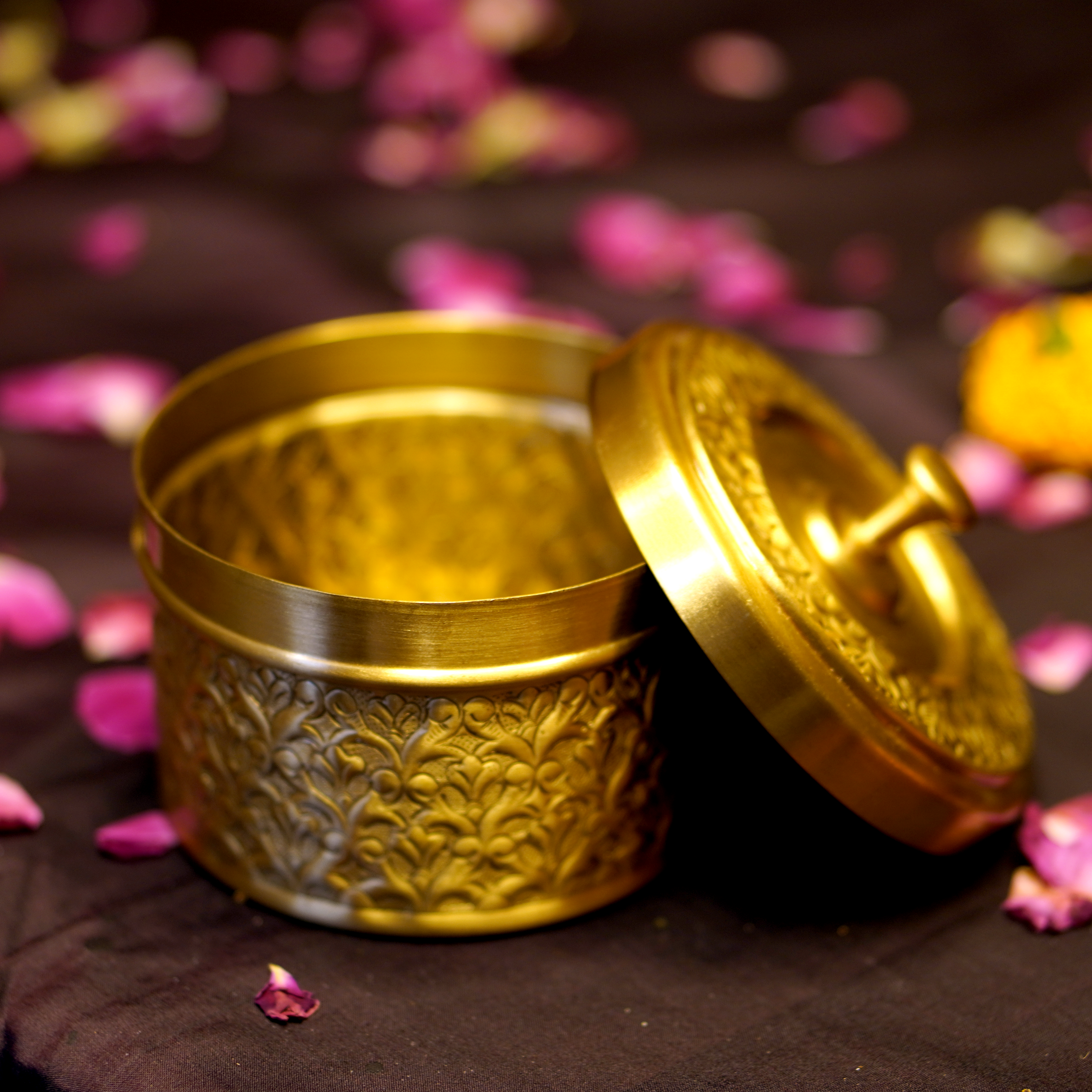
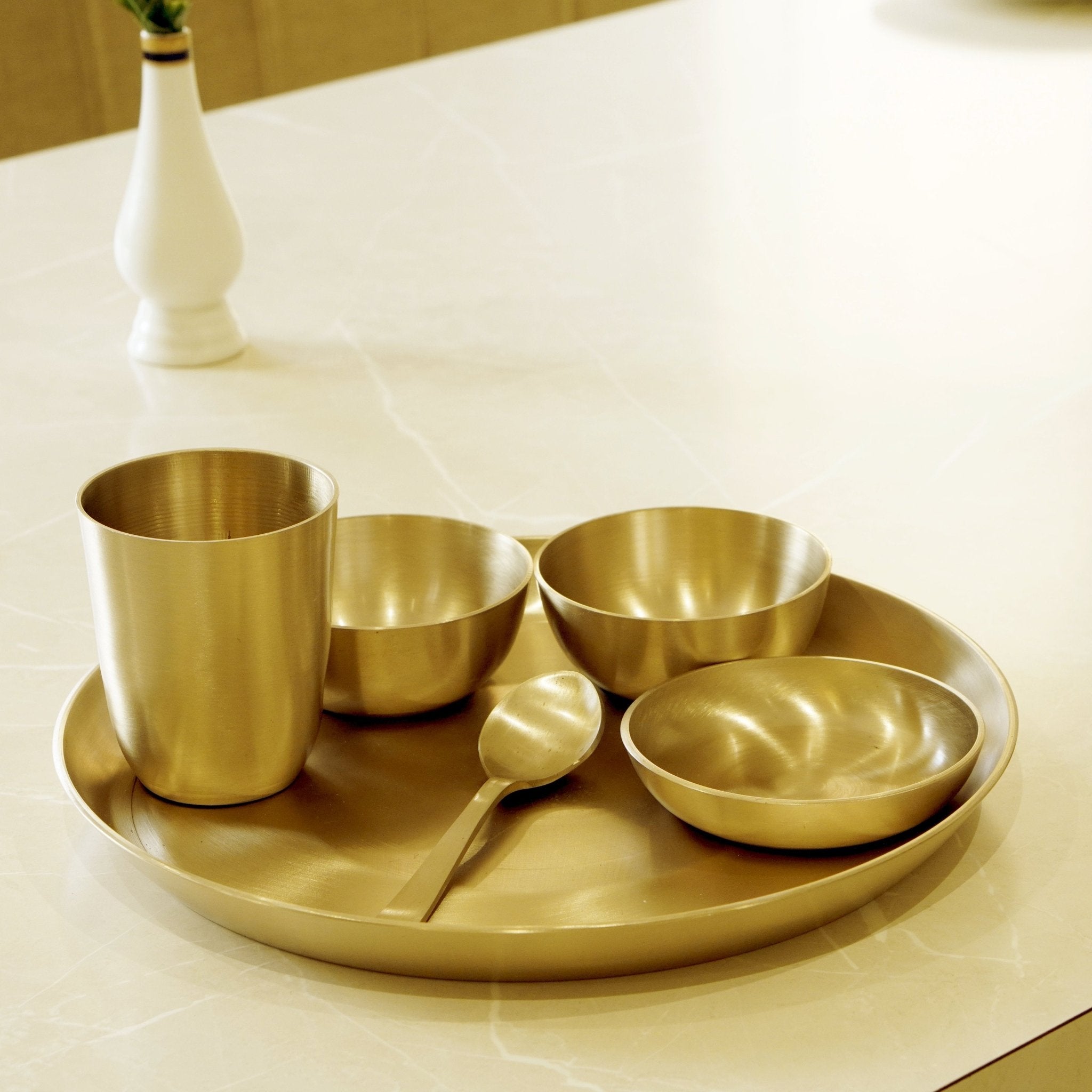
Kansa usually carries more tin than most other copper alloys, and that ratio shows. Pick up a genuine piece and it's heavier than a steel one of the same size, no contest. The colour runs deeper too, softer than brass's brighter yellow. Tap it, and you get a ring, clear and distinct enough that plenty of buyers use it as an informal test before they hand over money.
The Real Benefits of Kansa Utensils
It Actually Fights Bacteria
Copper's most of what kansa is made from, and copper carries a documented antimicrobial trait called the oligodynamic effect, trace ions on the surface make life hard for certain bacteria. Out of all the traditional claims floating around about copper alloys, this one's actually got research behind it. Probably why these vessels have been trusted for dining and drinking for so long.
Outlasts Almost Anything Else in the Kitchen
Non-stick flakes. Thin steel dents. Kansa just ages instead, developing a deeper patina the more it's used, and most collectors will tell you that darkening is the whole appeal, not something to scrub off. Look after a good piece and it'll realistically outlive you.
Holds Heat Longer Than You'd Expect
Weight and density do the work here: kansa holds heat well and keeps food warm longer once it's plated. Which is exactly why it's stuck around for thalis at big family meals, where food sits a while before everyone's actually eating.
Sustainable, Almost by Accident
Melt it, reuse it, repeat, bronze can go through that cycle more or less endlessly. A properly cared-for piece lasts decades without much trouble. Compare that to cookware that gets tossed every couple of years, and kansa utensils start looking like the smarter long-term buy.
Carries Real Weight, Culturally
Kansa turns up at weddings, festivals, family gatherings, across huge parts of India, not as a trend, but because it's been at the table for generations already. That heritage pull is real, and it's separate from anything practical the metal actually does.
Types of Kansa Utensils
Kansa mostly shows up as dining and serving pieces, not everyday cookware (there's a reason for that, more on it below).
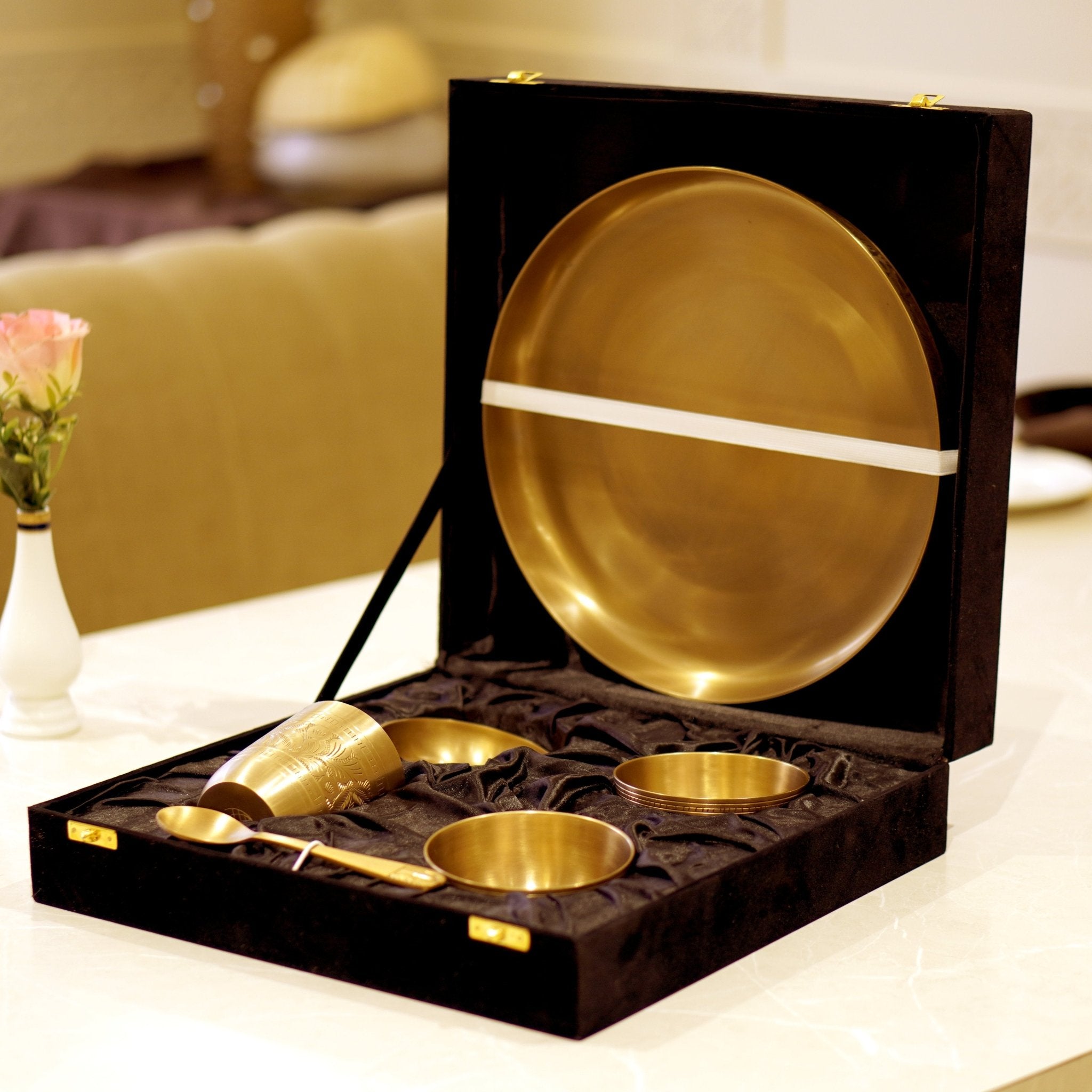
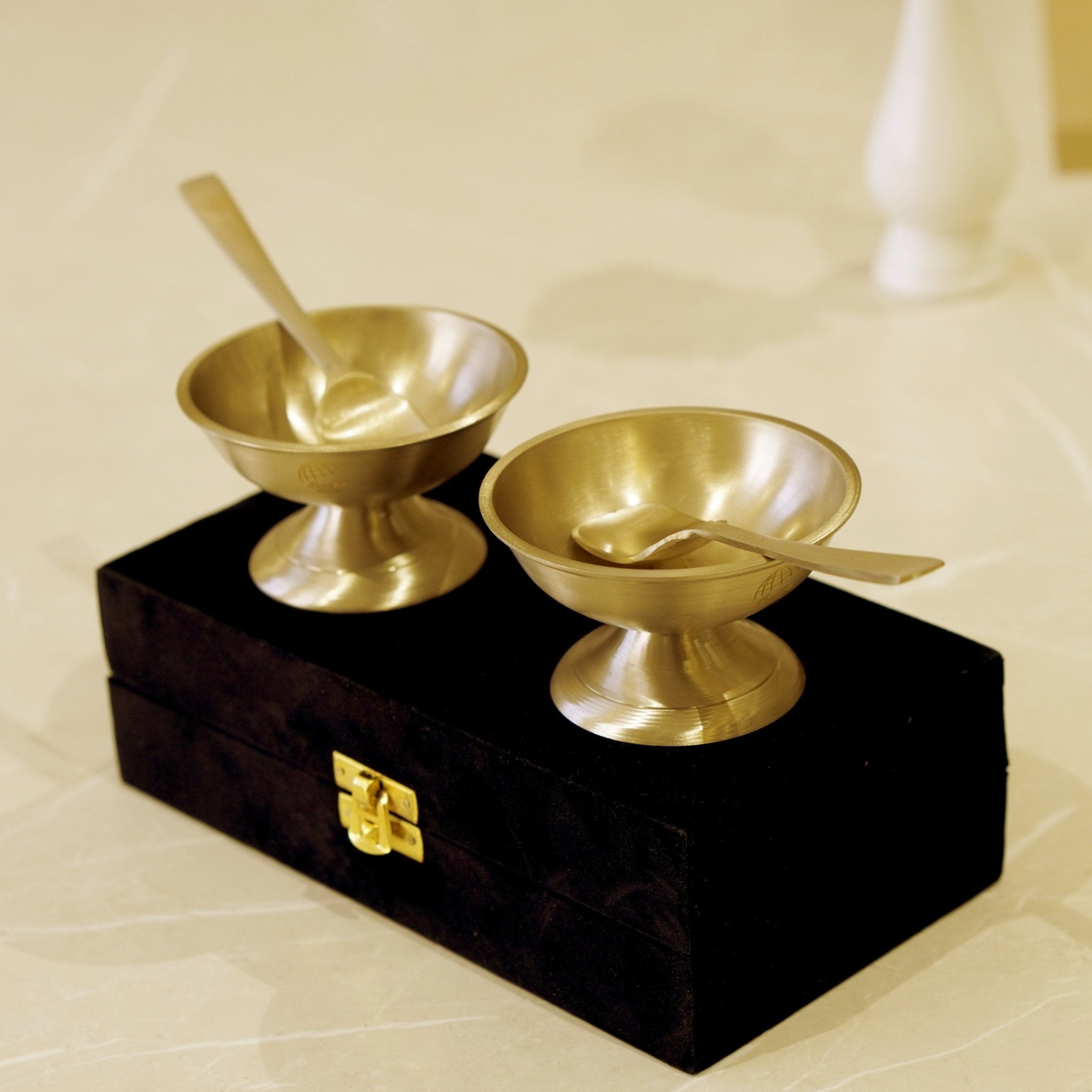
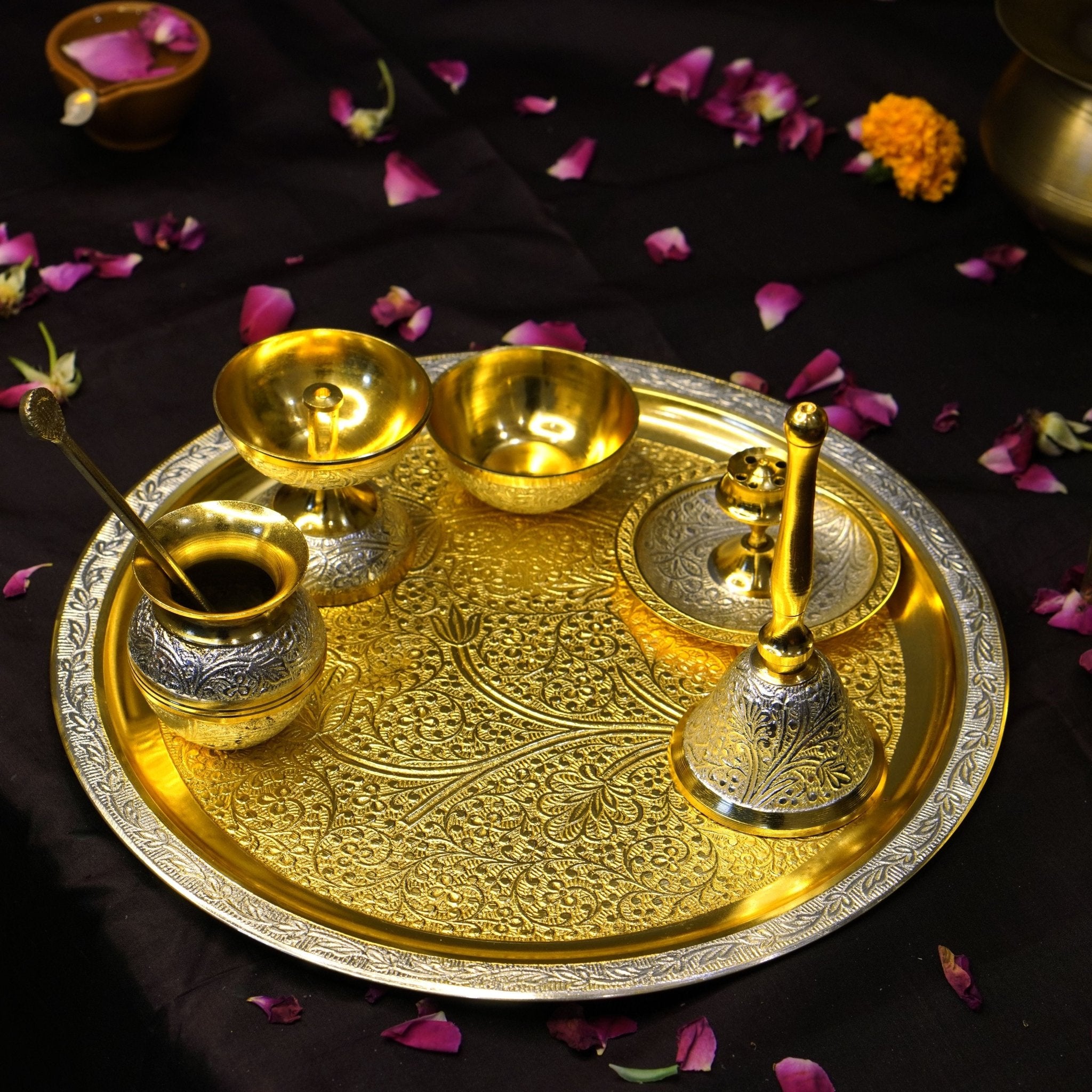
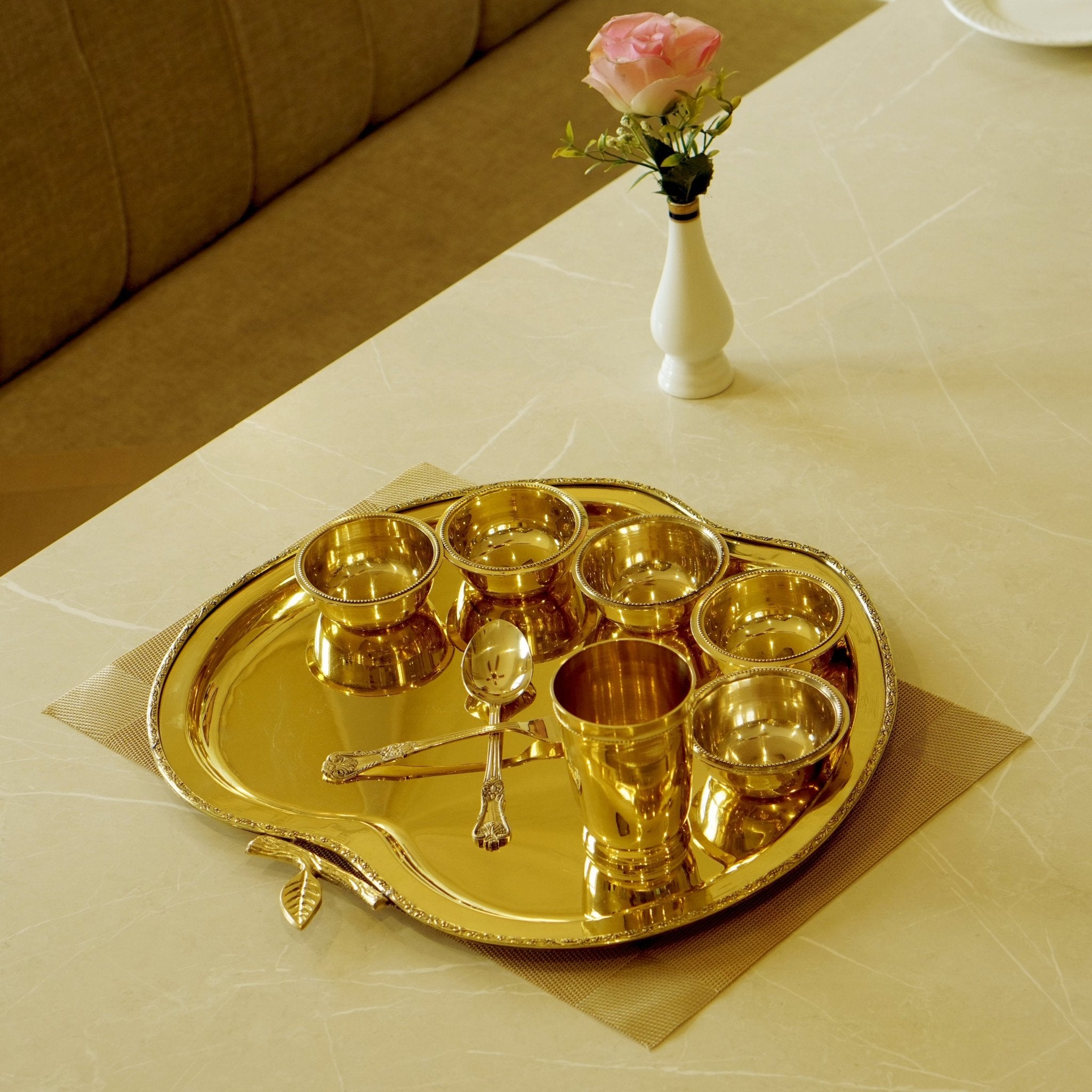
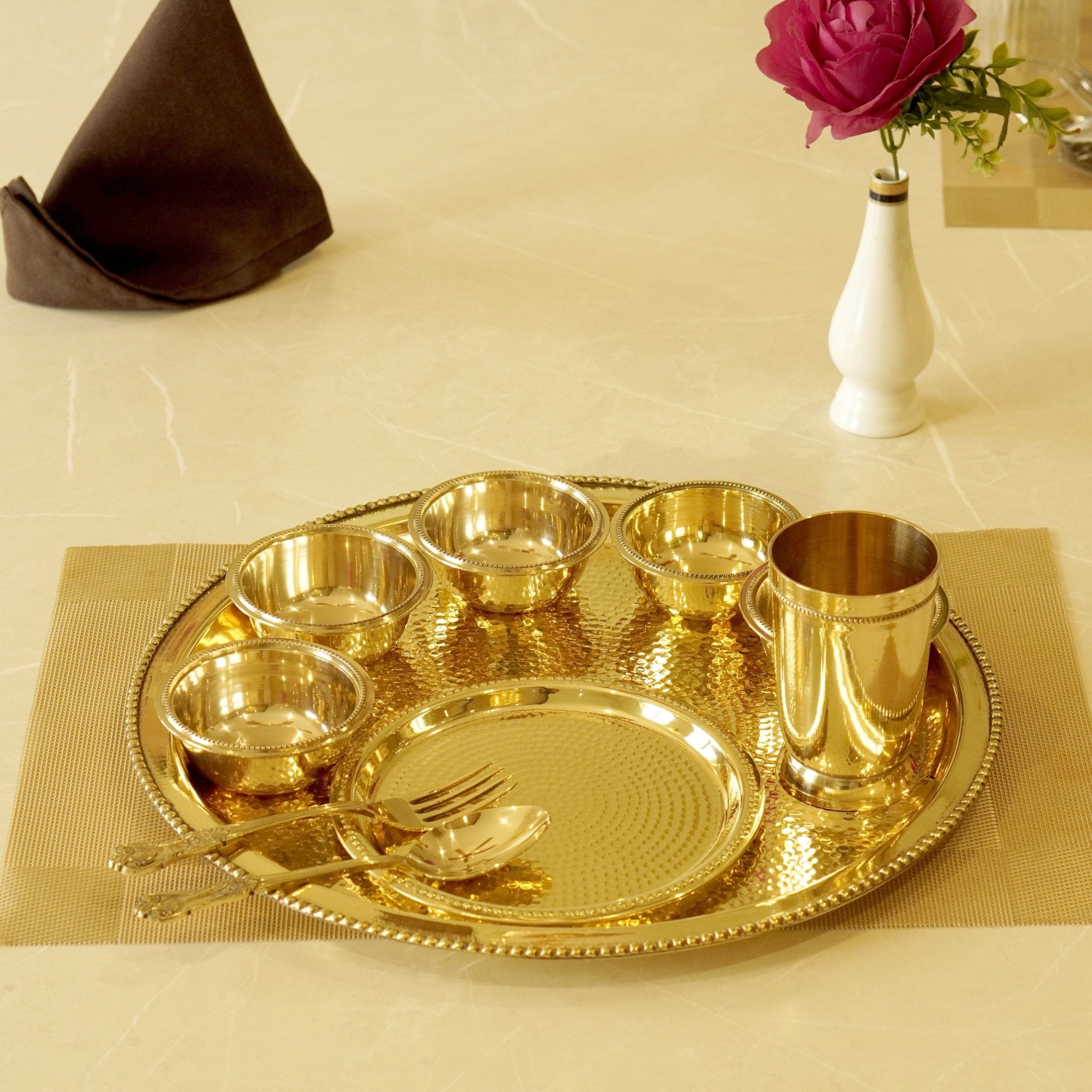
A thali's usually where people start, big enough for a full meal with room for bowls around the rim. Katoris sit on that thali, small bowls for dal, sabzi, sweets, whatever's being served. Serving bowls and spoons scale the same look up for the table rather than the plate. Glasses and tumblers round things out, usually bought to match everything else. And complete sets are the easiest route if you're starting from zero, colour and finish sorted from day one instead of pieced together over years.
Kansa vs Brass vs Stainless Steel
|
Kansa Utensils |
Brass |
Stainless Steel |
|
|
Made from |
Copper + tin |
Copper + zinc |
Iron alloy with chromium |
|
Colour |
Deep, soft gold |
Bright yellow-gold |
Silver-grey |
|
Weight |
Heaviest of the three |
Moderately heavy |
Usually lightest |
|
Best for |
Dining, serving |
Cooking, décor, dining |
Everyday cooking and storage |
|
Acidic food |
Not for long contact |
Not for long contact (unless coated) |
Handles it fine |
|
Upkeep |
Hand wash, occasional polish |
Hand wash, occasional polish |
Simple routine cleaning |
Want the heritage look and don't mind the upkeep? Kansa or brass, either works. Want to not think about it at all? Steel wins, every time.
Buying Guide: What to Check Before You Buy Kansa Utensils
A well-made piece of kansa utensils feels different the second you pick it up, heavier, more solid, unmistakably not steel. A few things actually worth checking:
Weight first. Genuine kansa feels substantial in the hand; anything suspiciously light was probably made thin, or isn't fully bronze to begin with. Give it a tap too, you want a clear ring, not a dull thud. Colour matters as well, that deep golden tone is what you're after, and if it's hand-hammered, the marks should look even and deliberate rather than rough. Buying more than one piece? Make sure they're actually matched in proportion and finish, not just vaguely similar. Thalis specifically need a flat, stable base, nobody wants a plate that rocks mid-meal. And honestly, a seller who can tell you where and how something was made is usually worth trusting more than one who can't.
Using and Caring for Kansa Utensils
Kansa's built for dining and serving, not cooking. Regular use at the table is exactly what it's meant for.
Here's the one rule that actually matters: don't let acidic or heavily salted food sit in it for long. Citrus, curd, anything pickled, all of it reacts with the metal over time, so serve and eat, don't store. Wash by hand after, never in a dishwasher, and dry it immediately rather than air-drying. Scouring pads are out too, they leave marks that don't come off. When the shine starts going, a periodic polish with a traditional method brings it right back, no harsh chemicals needed.
For the full step-by-step process, there's a separate guide on caring for kansa utensils worth checking out.
Frequently Asked Questions
What are kansa utensils made of?
Bronze, copper and tin, with zero zinc in the mix. That's exactly what gives kansa its deeper gold tone and heavier feel next to brass.
Are kansa utensils safe for daily use?
They are, with basic care. Hand wash, dry right away, and don't let acidic food sit in them too long.
What's the difference between kansa and brass utensils?
Composition, mainly. Kansa is copper and tin, brass is copper and zinc. Kansa runs heavier and darker, and sticks mostly to dining, while brass covers a lot more ground.
Can kansa utensils be used for cooking?
Not really, no. It's built for dining and serving rather than the stove, prolonged heat and acidic ingredients aren't kind to it.
How do you clean and maintain kansa utensils?
Hand wash with mild soap, dry immediately, and skip the dishwasher and anything abrasive. An occasional polish with a traditional method keeps things looking right.

Leave a comment
This site is protected by hCaptcha and the hCaptcha Privacy Policy and Terms of Service apply.