
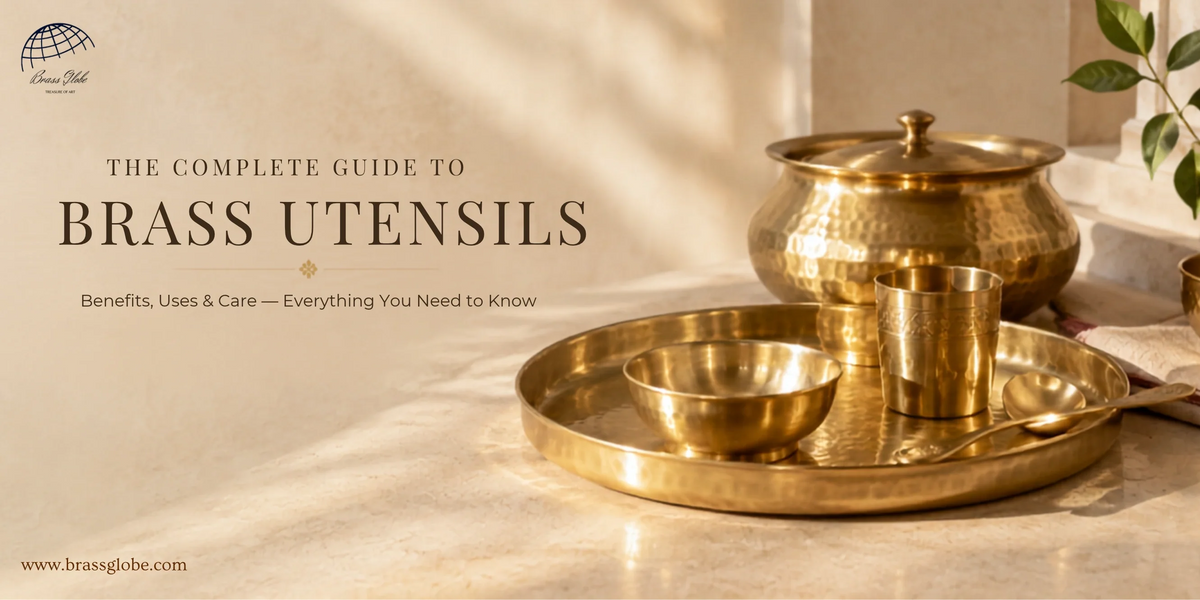
The Complete Guide to Brass Utensils: Benefits, Uses and Care
Open almost any kitchen cupboard in an Indian home and there's a decent chance something brass is sitting in there. Maybe it's tucked in the pooja corner instead, a diya or a small kalash nobody uses but nobody throws away either. Pital, that's the Hindi word for brass, and it's been part of Indian households for so long that most people don't even think of it as a "choice" anymore. It's just there. Steel took over a lot of shelf space over the last few decades. Non-stick pans took over the rest. But brass utensils never fully left, and lately they're making a real comeback, mostly from people who are done replacing cookware every two years and want something that'll actually outlast them.
This guide gets into the details: what brass utensils are made of, why they've held up for so long, the different kinds you'll come across, what actually matters when buying one, and how to keep a piece looking good for years instead of months.
What Are Brass Utensils Made Of?
Copper and zinc, mainly. Somewhere around 65 to 70 percent copper, 30 to 35 percent zinc, though that shifts a bit depending on what the piece is for. Worth knowing, because a lot of sellers throw around "brass," "bronze," and "kansa" like they're interchangeable. They're not.
Bronze is copper and tin. No zinc involved. Kansa, or bell metal if you've heard that term, is also copper and tin, just with a lot more tin in the mix than bronze carries. Common in eastern Indian thalis, if you've ever wondered why those plates have that slightly different, almost silvery tone.
So next time someone's selling "brass" and can't tell you which alloy it actually is, that's worth pausing on. The weight in your hand changes. How it reacts to food changes. Even how much upkeep it needs changes, depending on which one you're actually holding.
The Real Benefits of Brass Utensils
It Fights Bacteria, Genuinely
Copper, the bulk of what brass is made of, has an antimicrobial property that's actually backed by research, not just folklore. It's called the oligodynamic effect: trace metal ions on the surface make life difficult for certain bacteria trying to survive there. Out of all the traditional claims floating around about brass and copper, this is one of the few that holds up when you actually look into it. Probably explains why drinking water's been stored in these vessels for generations.
Old Wisdom, Still Around
Ayurveda says eating and drinking from brass or copper keeps the body in balance. That's belief, not a clinical study, no one's claiming otherwise. But it's a real reason households still reach for brass utensils over steel, generation after generation.
It Just Doesn't Quit
Non-stick coating flakes off. Steel dents. Brass changes instead of wearing out. Give it enough time and it develops a patina, and most people who actually collect the stuff will tell you that's the appeal, not a flaw to be polished away.
Heat Behaves Differently in Brass
Even heat distribution, better than stainless steel manages. Which is exactly why it's been the go-to for halwas and other sweets that need slow, steady cooking rather than a quick blast on high.
Good for the Planet, Too
Melt it down, recycle it, start over, brass can do that endlessly. A piece that's looked after right can last decades. Sometimes it gets handed down. Compare that to cookware that ends up in landfill every couple of years, and brass starts looking like one of the smarter choices in the kitchen.
Types of Brass Utensils
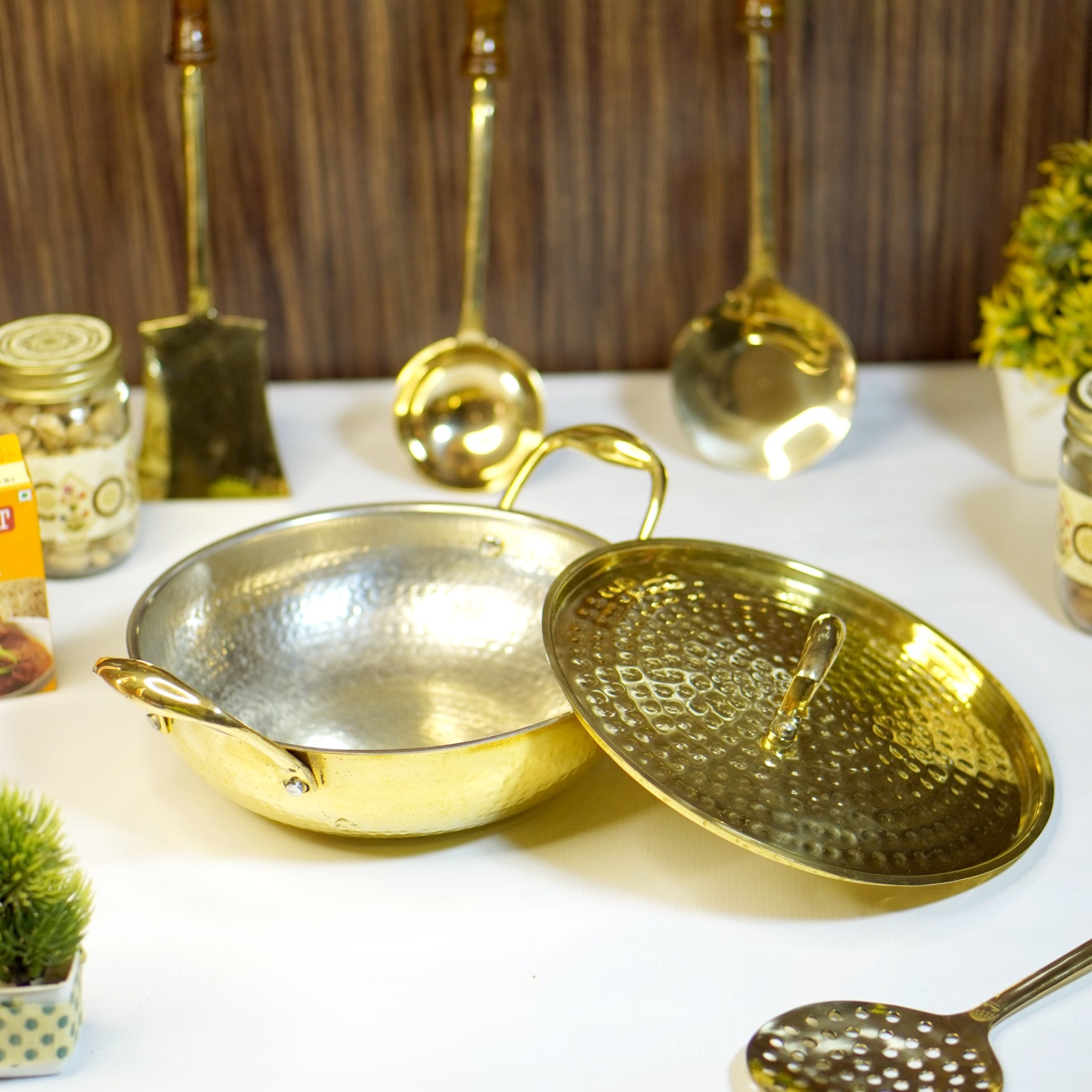
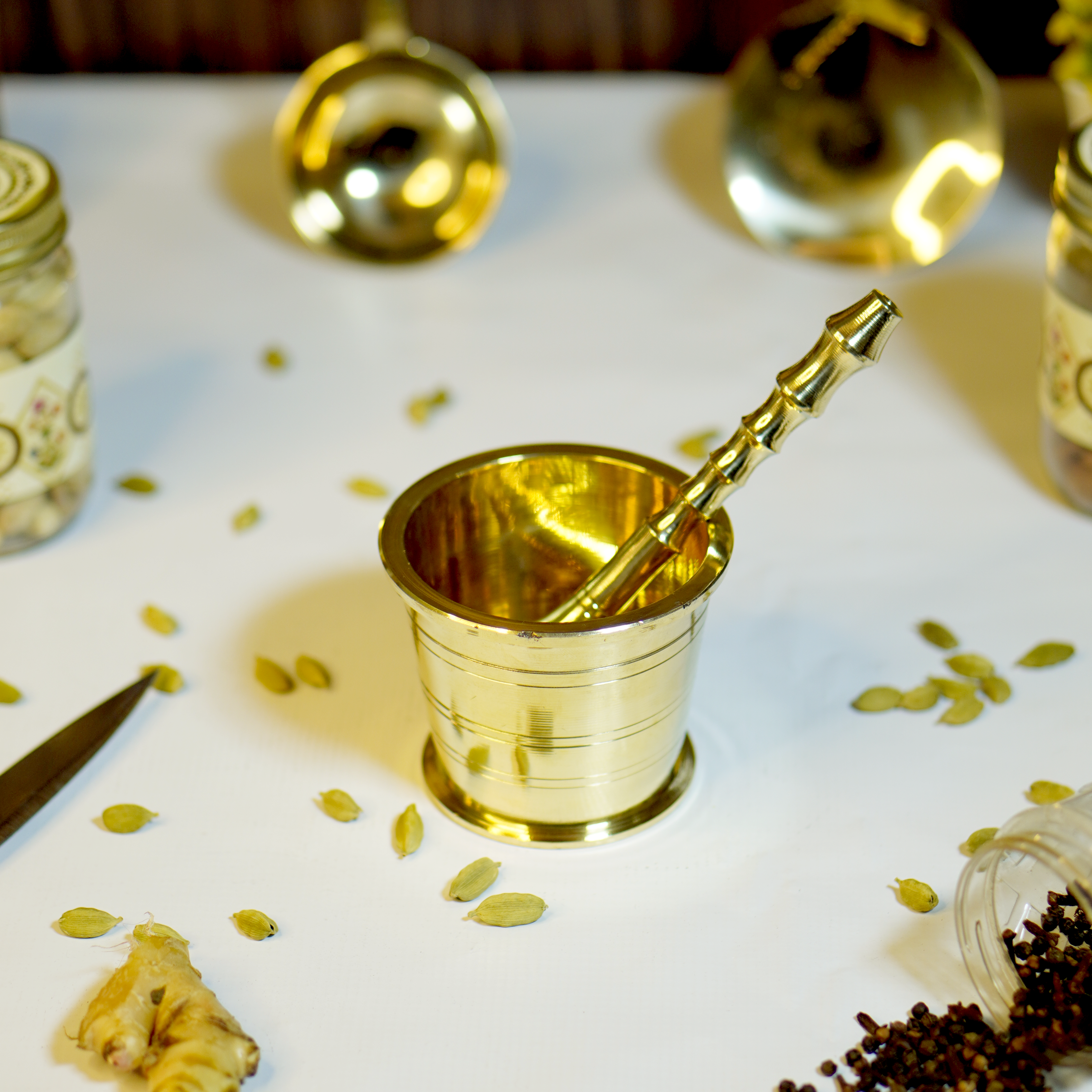
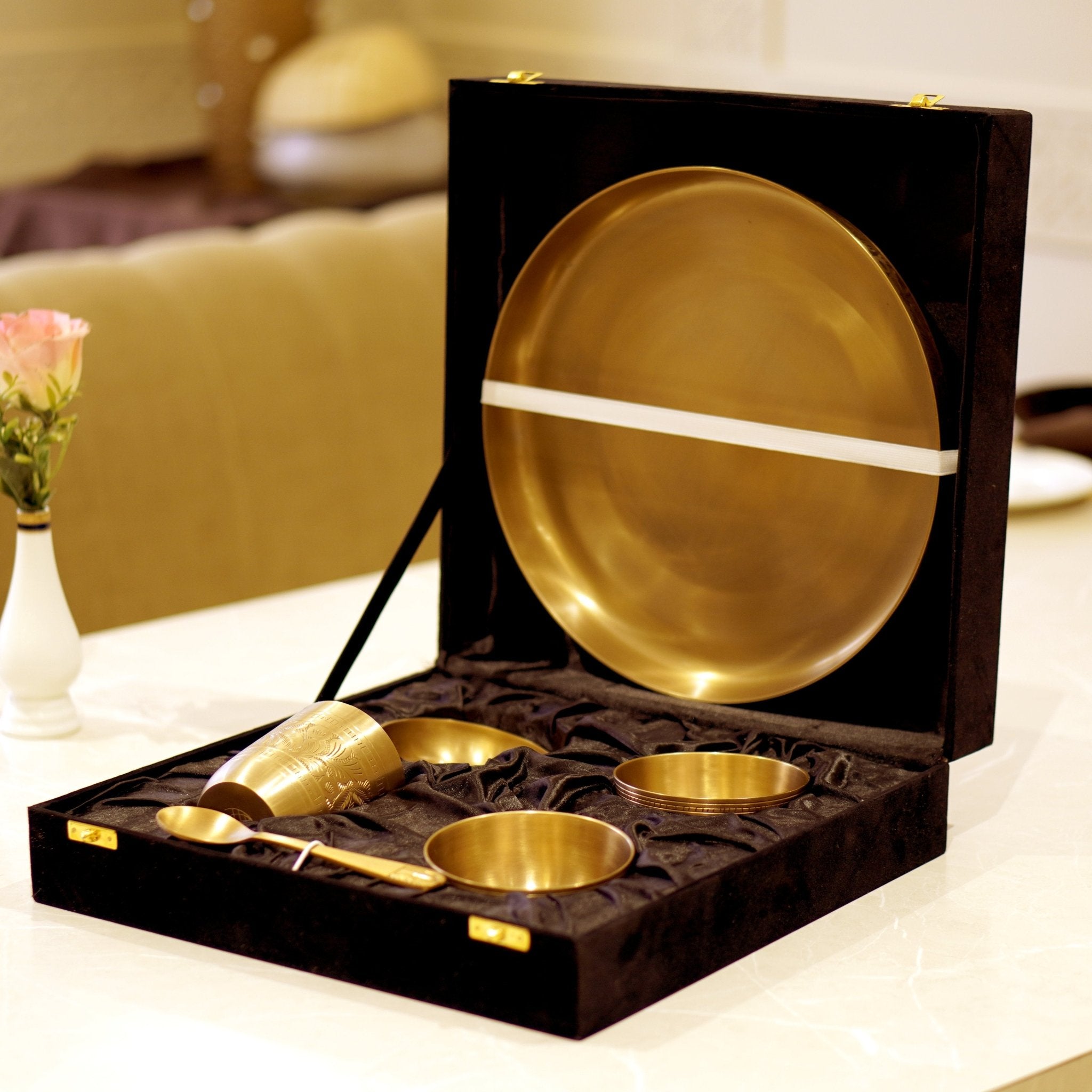
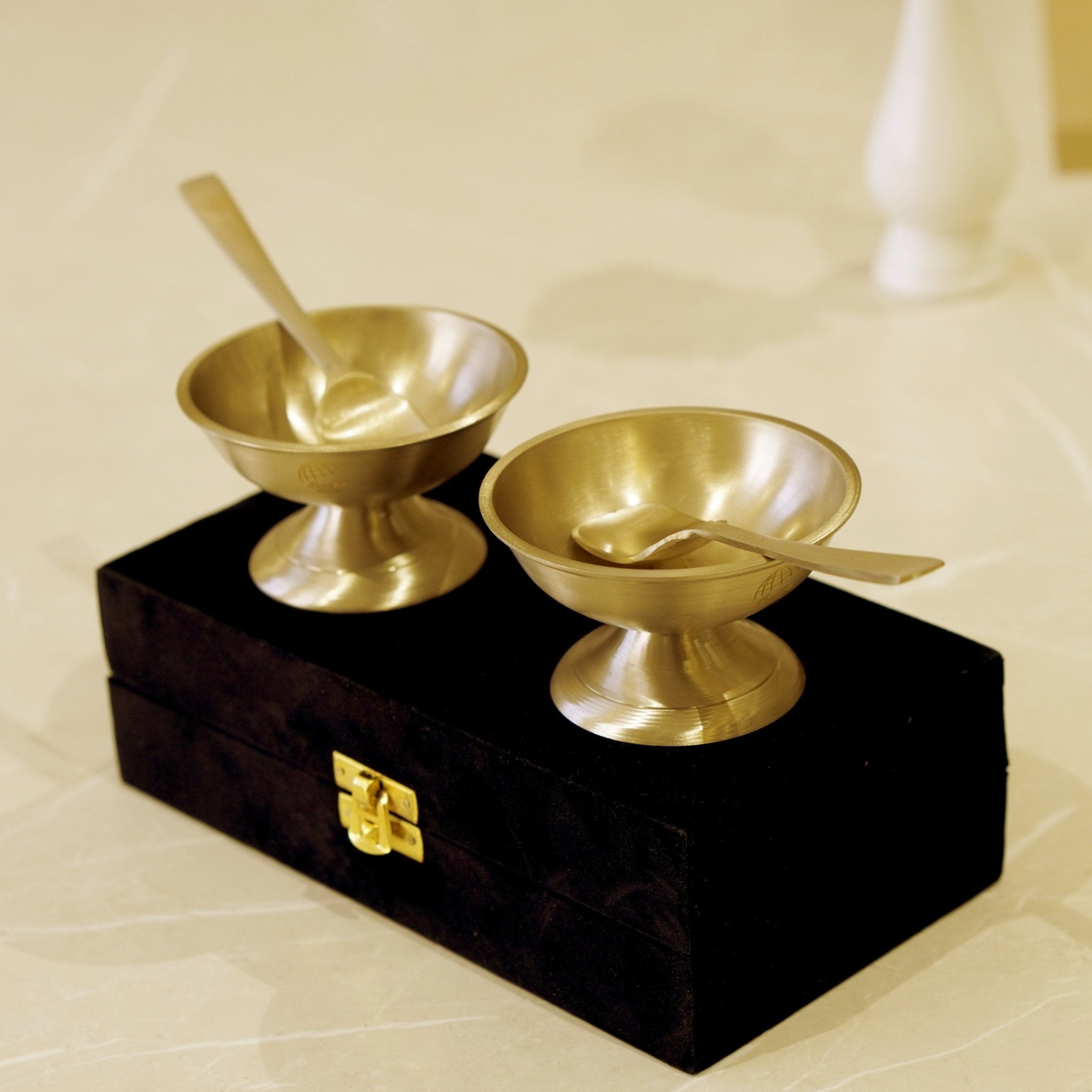
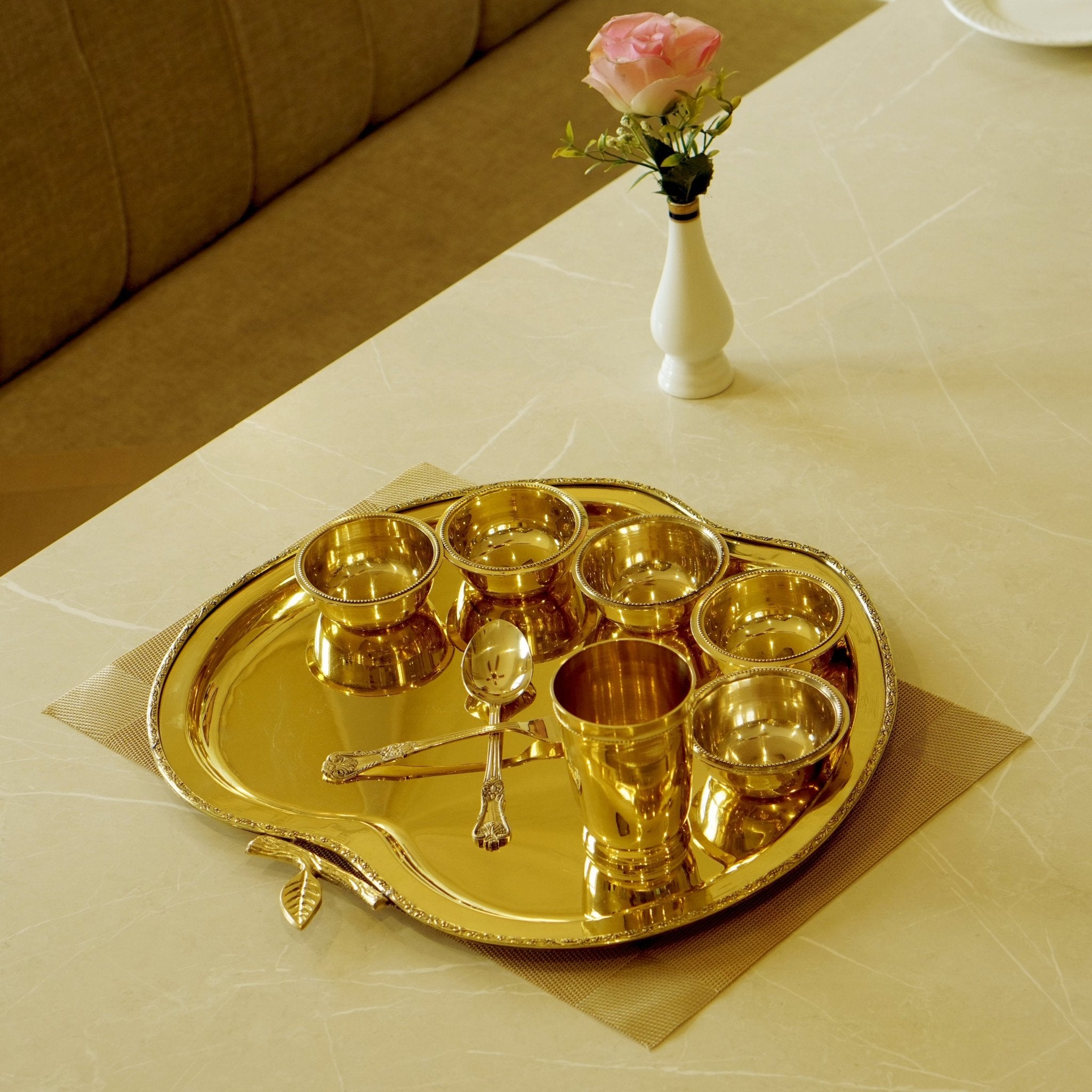
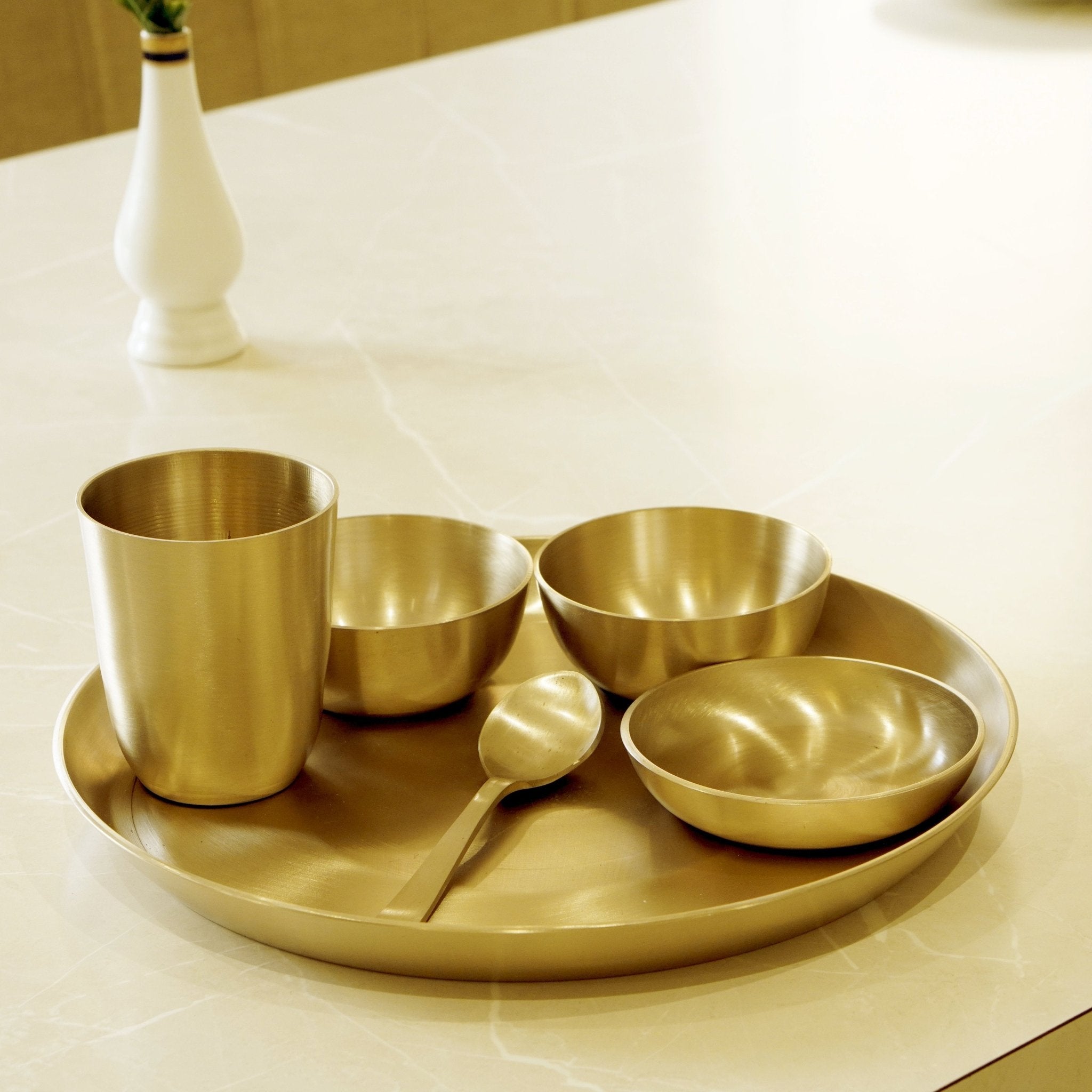
Kadhai, handi, tawa, that's the cooking side, and these usually need a protective lining before anyone actually cooks in them (details on that further down). For everyday use, you're looking at thalis, katoris, glasses, spoons, the pieces that show up at nearly every meal without anyone giving it a second thought. Lotas and matkas handle storage, and they've been holding drinking water in Indian homes for generations now.
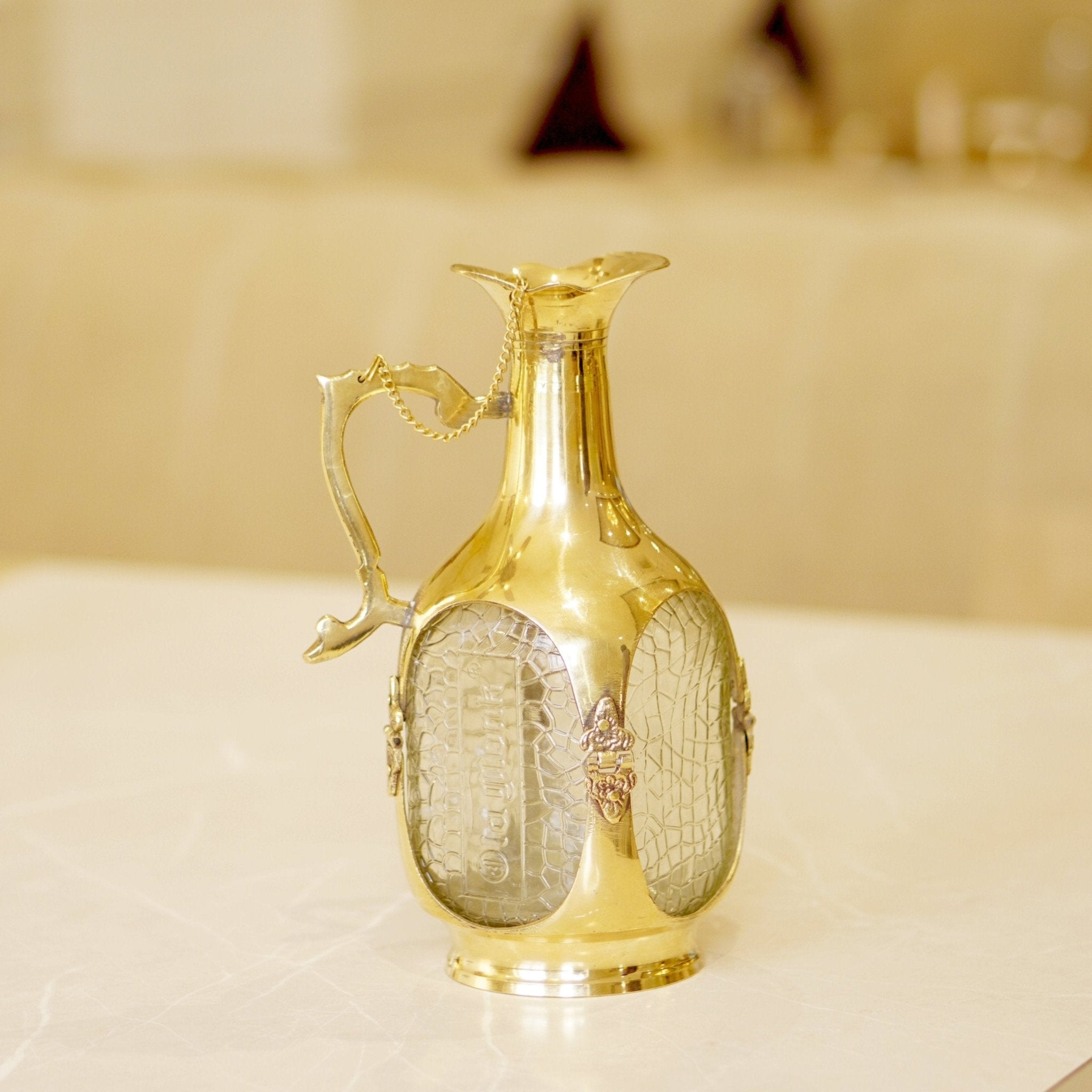
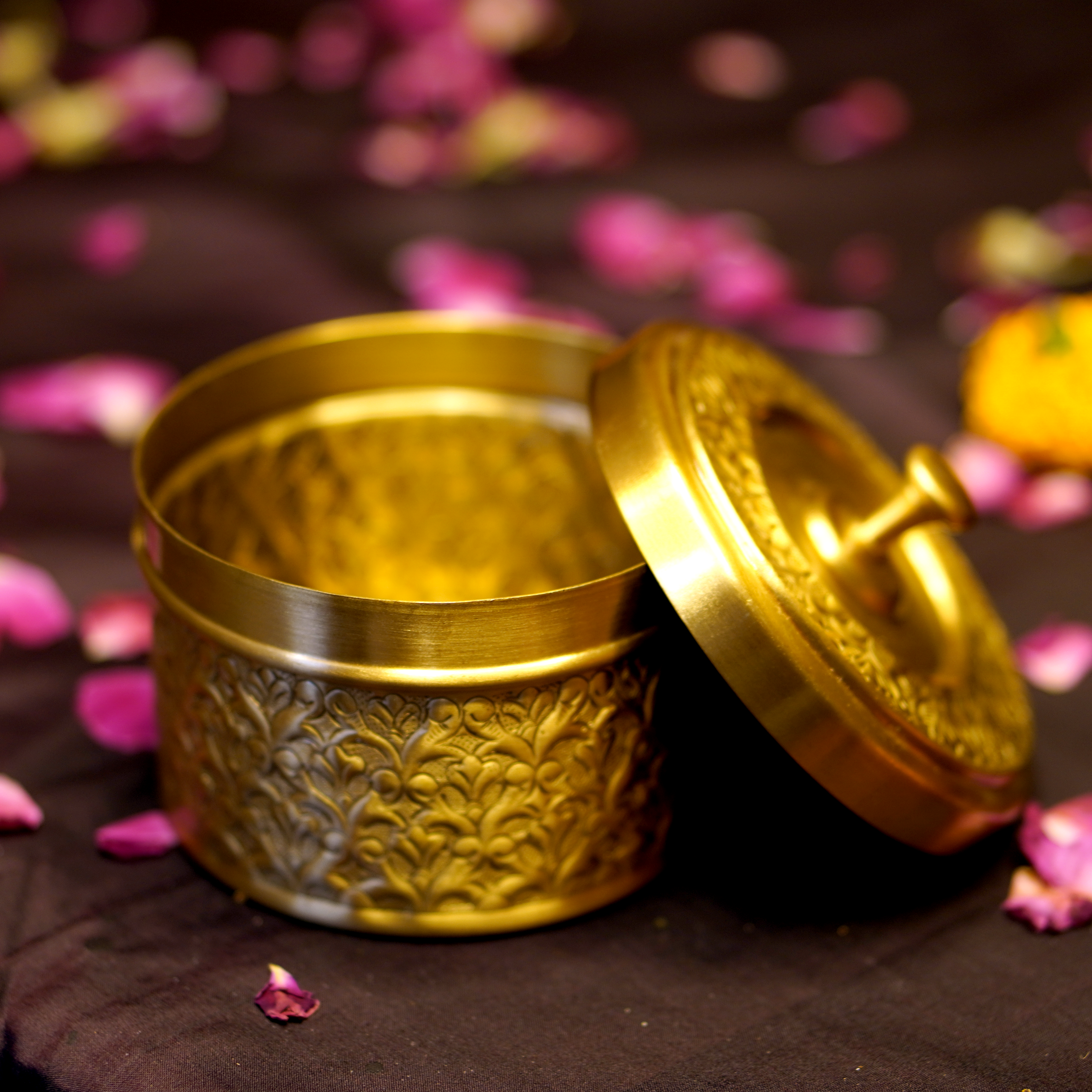
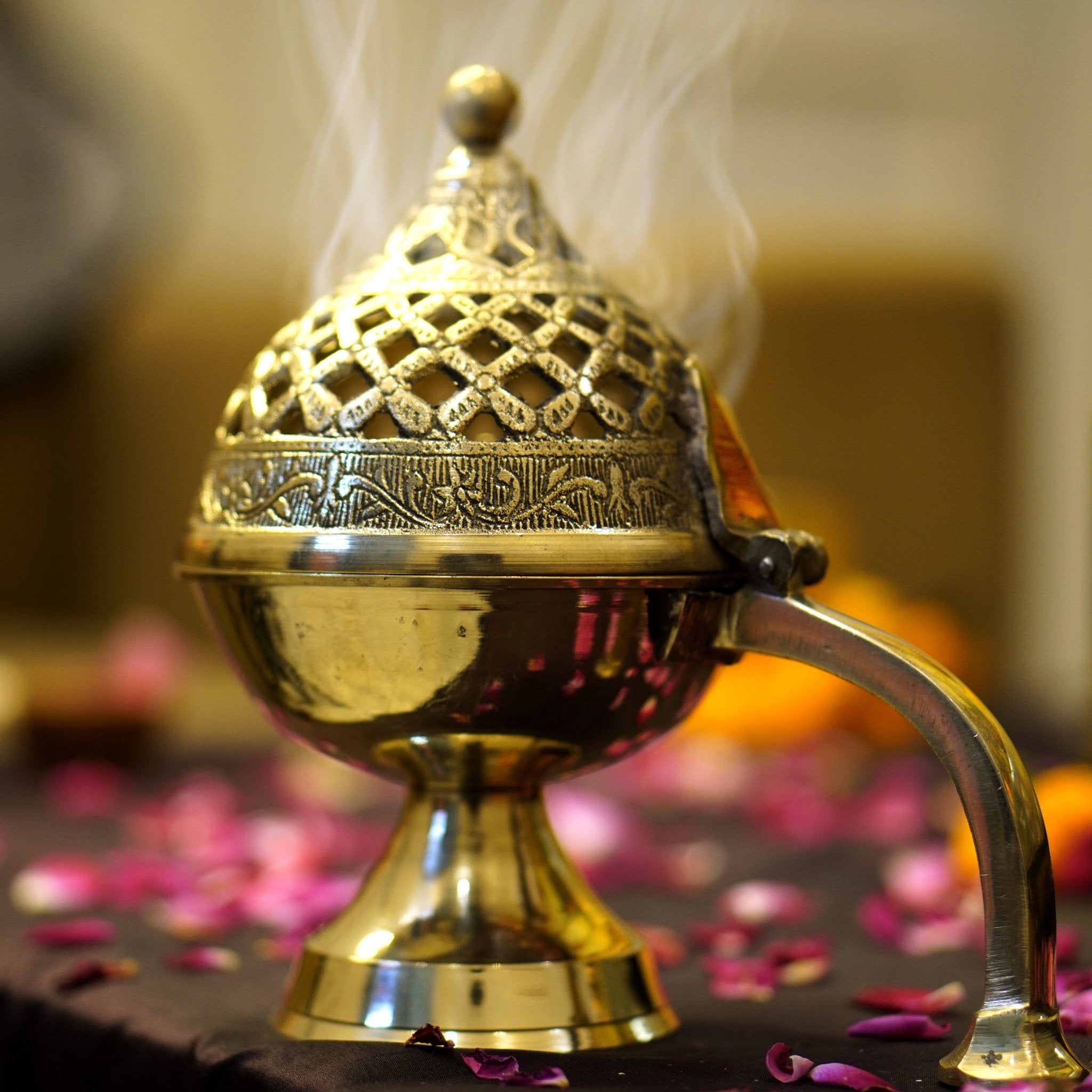
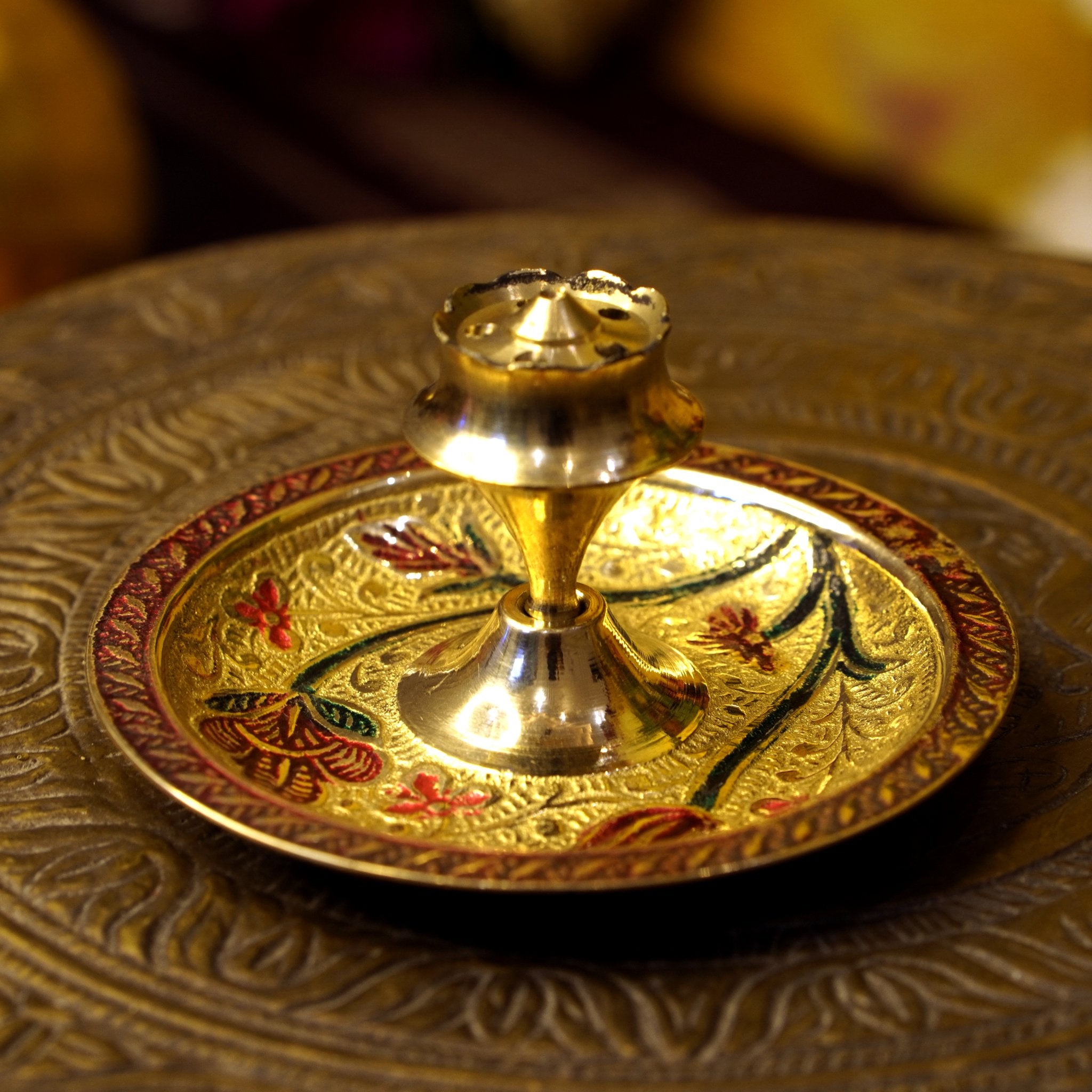
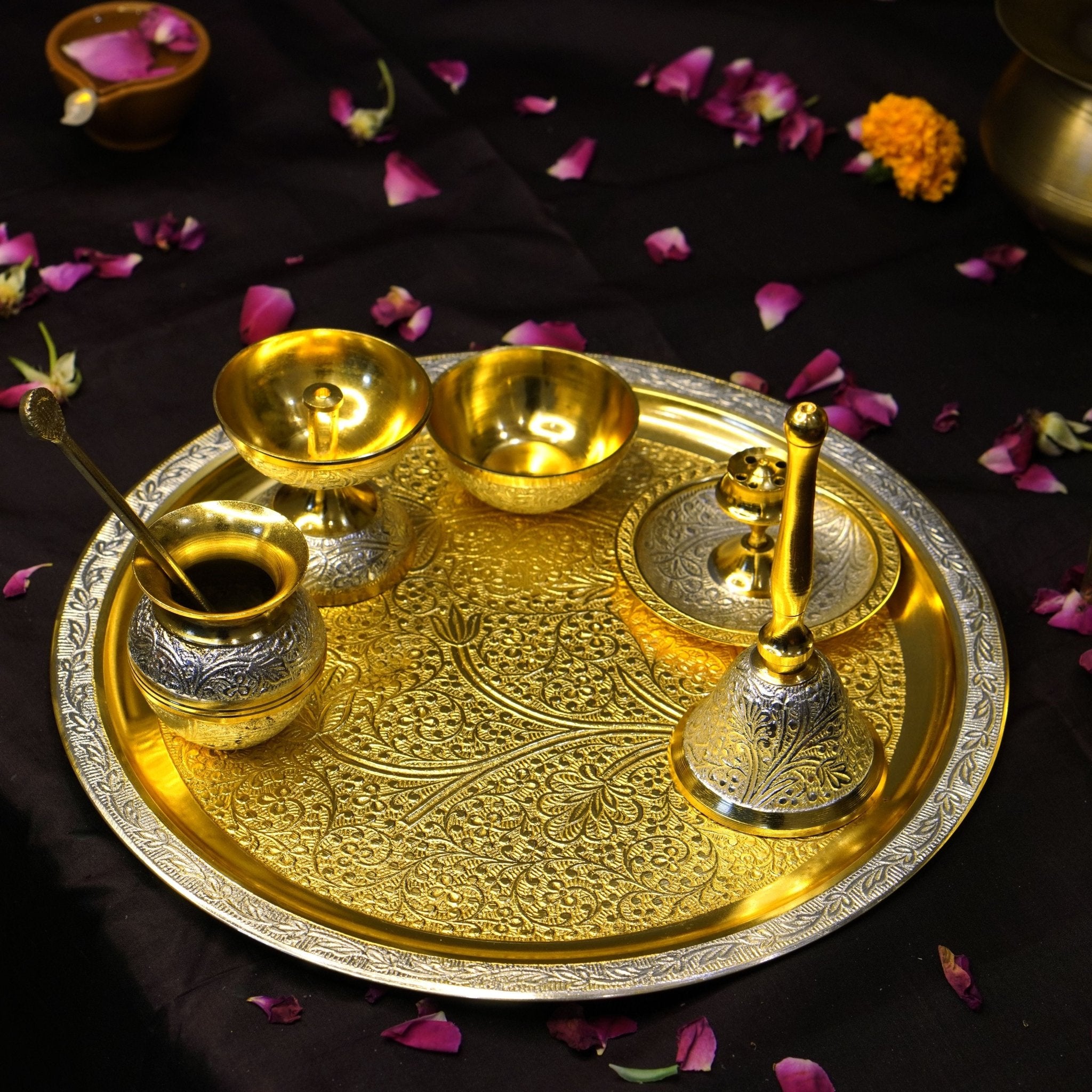
Then there's the religious side of things: diyas, kalash, bells, idols, all considered auspicious. Décor is its own category too, engraved urlis, vases, decorative bowls, often left unlacquered on purpose so a patina can build up naturally.
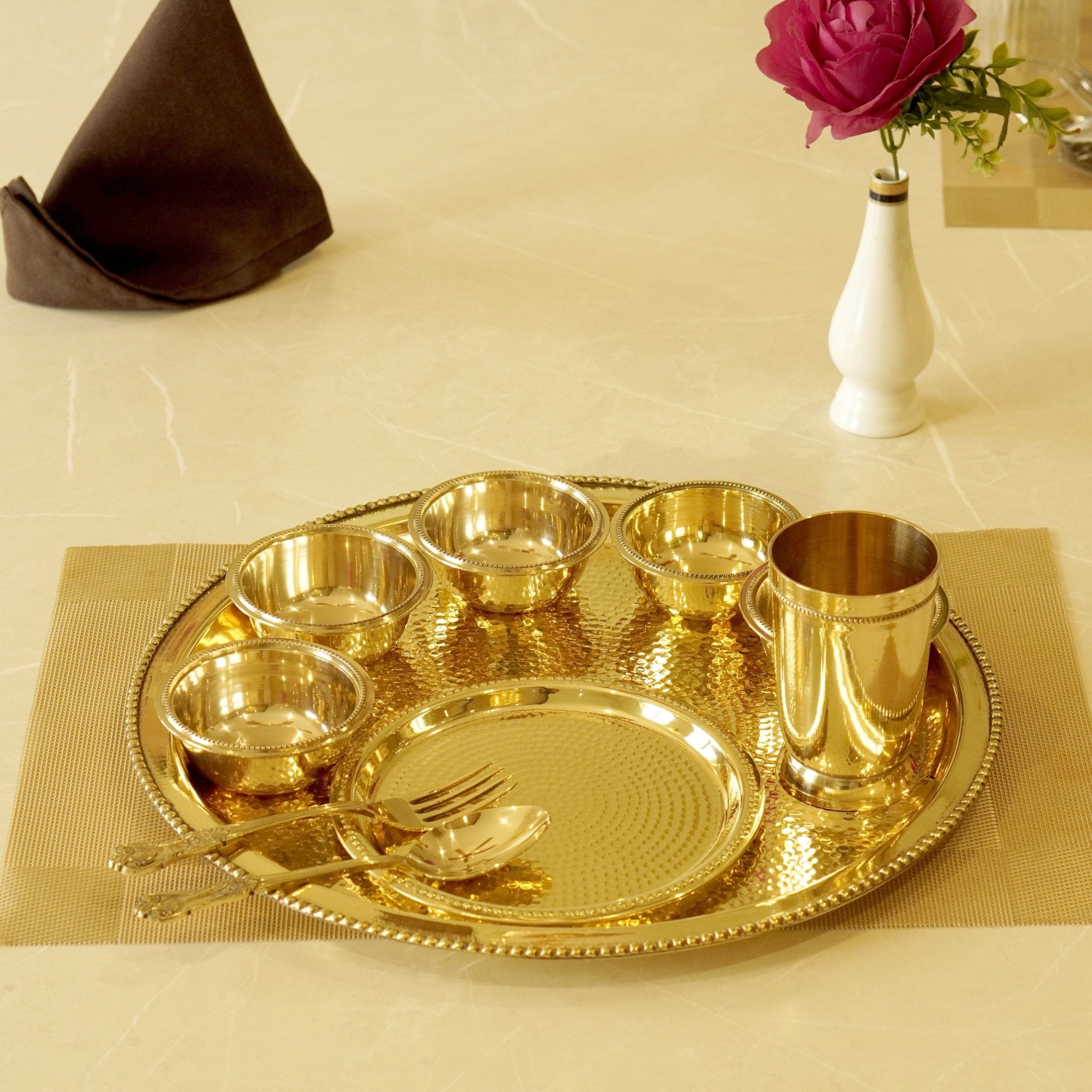
There's a split worth knowing about within all of this: handmade versus machine-made. Hand-hammered brass carries small irregularities, visible hammer marks. That's not a defect, that's just the process showing through. Machine-pressed brass looks more uniform on the shelf, but it usually feels lighter, less distinct once it's actually in your hand.
Buying Guide: What to Check Before You Buy
Pick up a real piece of brass and you know almost instantly. It just feels different. Here's what actually matters:
|
What to Check |
What It Tells You |
|
Weight |
Real brass feels heavy for its size. Too light usually means thin metal, or a cheaper alloy mixed in. |
|
Sound |
Tap it. Solid brass rings. A dull thud means something's off. |
|
Colour |
Warm, golden-yellow is what you want. Pale or grey usually signals a lower-quality mix. |
|
Finish |
Hand-hammered pieces show small, uneven marks. Machine-made ones look smooth, almost too smooth. |
|
Coating (for cookware) |
Anything for cooking or acidic food needs a kalai (tin) lining inside. More on why, just below. |
|
Seller transparency |
If they can actually tell you where and how it was made, that's usually a good sign. |
A Note on Cooking in Brass
Don't cook or store acidic food in uncoated brass. That's the one rule worth actually following. Tamarind, curd, citrus, anything vinegar-based, all of it reacts with the copper and zinc sitting in the alloy. Which is exactly why brass cookware meant for regular use gets a kalai, a tin lining, on the inside first, and always has. So if you're buying brass utensils to actually cook in, not just serve with, ask whether it's tinned before you hand over money.
How to Use Brass Utensils Day to Day
Brass isn't just a kitchen thing. Thalis, katoris, glasses, all fine for serving hot or cold food since the food's only in contact briefly. Lotas and matkas have stored drinking water for generations, still one of the safest traditional uses going. Cooking's where you actually need to pay attention: stick to tinned vessels, and stick to non-acidic dishes like dal, rice, sweets. Diyas, kalash, bells, still a fixture in daily pooja and ritual, valued as much for what they represent as for how long they physically last. And hand-hammered or engraved pieces make genuinely good gifts, housewarmings, weddings, that sort of thing, doubling as décor on their own once they're out of the gift box.
Caring for Your Brass Utensils
Brass isn't demanding. A little attention goes a long way. Tamarind, lemon with salt, or a vinegar-flour-salt paste, any one of these lifts everyday tarnish without needing anything harsh. Dry each piece properly after cleaning it; leftover moisture or acid sitting around is usually what brings tarnish right back. Skip steel wool. Skip the dishwasher. Skip strong detergents, all three scratch or dull brass in ways that don't come back. And if you actually like the aged look, just let décor pieces patina on their own. It's not dirt. Polishing it off is entirely your call.
For the full breakdown, home remedies included, there's a separate guide on cleaning brass utensils at home worth checking out.
Frequently Asked Questions
Is brass safe for everyday cooking?
Only with a kalai lining inside. Uncoated brass doesn't play well with acidic food, so daily cooking isn't really the place for it.
What's the difference between brass and kansa (bell metal)?
Brass is copper and zinc. Kansa is copper and tin, with way more tin than bronze uses. Similar to look at, not similar at all once food's involved.
Do brass utensils need to be lacquered?
Not required. Lacquer just extends the shine a bit. Plenty of people skip it on purpose so the patina can develop naturally instead.
How can I tell if brass utensils are genuine?
Pick it up first. Real brass feels heavy, rings clean when tapped, and carries that warm gold tone, not something washed-out or grey.
Are brass utensils good for gifting?
Genuinely, yes. Hand-hammered or engraved pieces carry an auspicious meaning in Indian tradition, and they're rare among gifts in that they actually improve with age instead of falling apart.

Leave a comment
This site is protected by hCaptcha and the hCaptcha Privacy Policy and Terms of Service apply.