
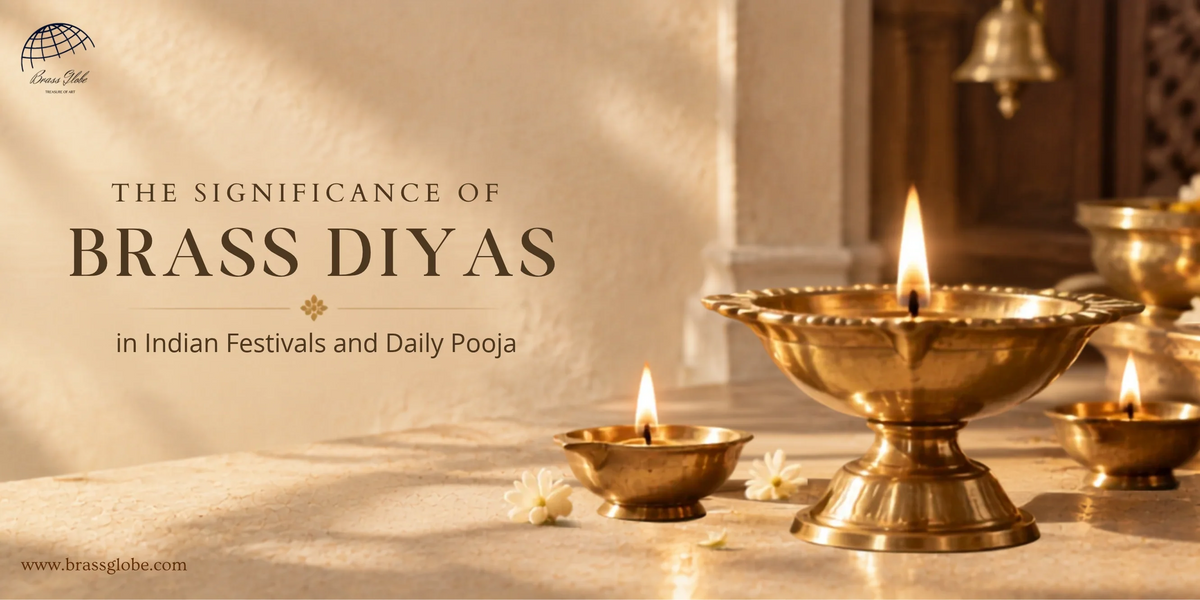
Significance of Brass Diyas in Indian Festivals and Daily Pooja
There's a small brass cup with a flame in it, and somehow that one object sits at the actual center of Hindu worship, literally, since it usually ends up placed right in the middle of the puja thali. Light it and the ritual's begun, that's genuinely how central it is. This guide gets into why brass, of all metals, has stuck around as the material for that flame, what a brass diya actually stands for, and how its job changes between an ordinary daily pooja and something as massive as Diwali.
What Is a Brass Diya?
Strip it down and a brass diya is just a small oil lamp, made of brass, shaped to hold ghee or oil plus a cotton wick. Light that wick and you get a steady, low flame sitting in the cup, none of the flickering a candle does. Some diyas are barely bigger than a thumbprint, meant for everyday use. Others are large and ornate, built to stand in temples or show up during big festival occasions.
Brass didn't become the standard metal here by accident, more on that in a second, but no matter which version you're looking at, the basic setup never really changes: a small vessel, a wick, oil, a flame.
Why Brass Is Used for Diyas
Durability comes up first when you ask why brass specifically. It holds up to repeated heat from the flame without warping or degrading the way some other materials would. It's also considered an auspicious metal in Hindu tradition, and that matters just as much as the practical side for something used in worship.
There's a craft angle too. Brass is relatively easy to shape and cast, part of why artisans have managed to produce everything from a plain daily diya to elaborate, hand-engraved temple lamps out of the same base metal for generations. And unlike some alternatives, a well-made brass diya, cleaned and looked after properly, lasts years instead of needing replacing every season.
The Spiritual Significance of the Brass Diya
Light overcoming darkness, that's the core symbol here, about as fundamental as Hindu worship gets. Lighting the diya marks the actual start of a ritual, not decoratively, it's treated as the moment worship formally begins. The flame ties into knowledge and clarity too, the idea that lighting a lamp mirrors clearing away ignorance in the person doing the lighting.
A brass diya gets lit again and again, daily in a lot of households, so it carries a slightly different weight than items used only occasionally. It becomes routine. A small, repeated act that plenty of people find grounding, whatever else is going on that day.
The Brass Diya's Place on the Puja Thali
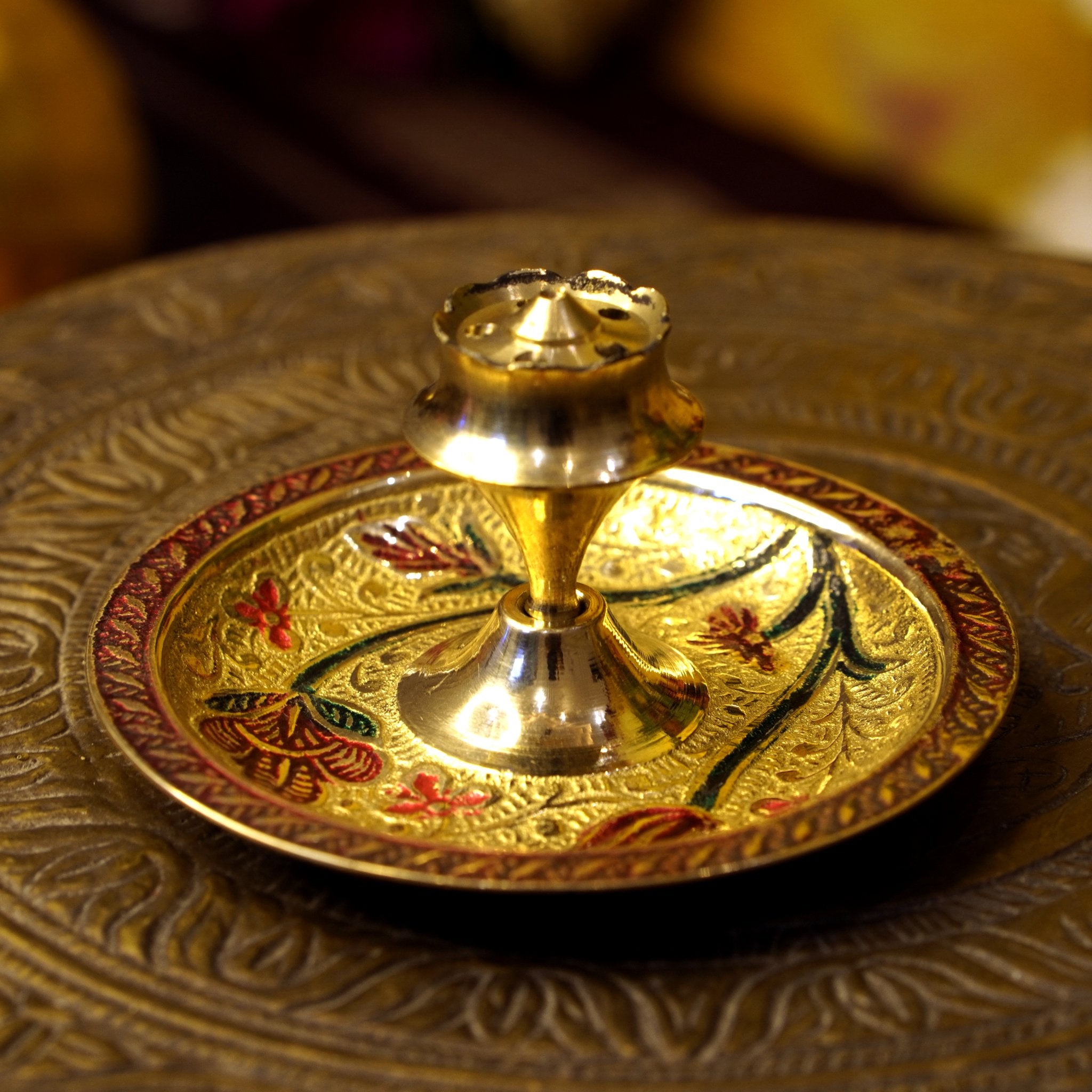
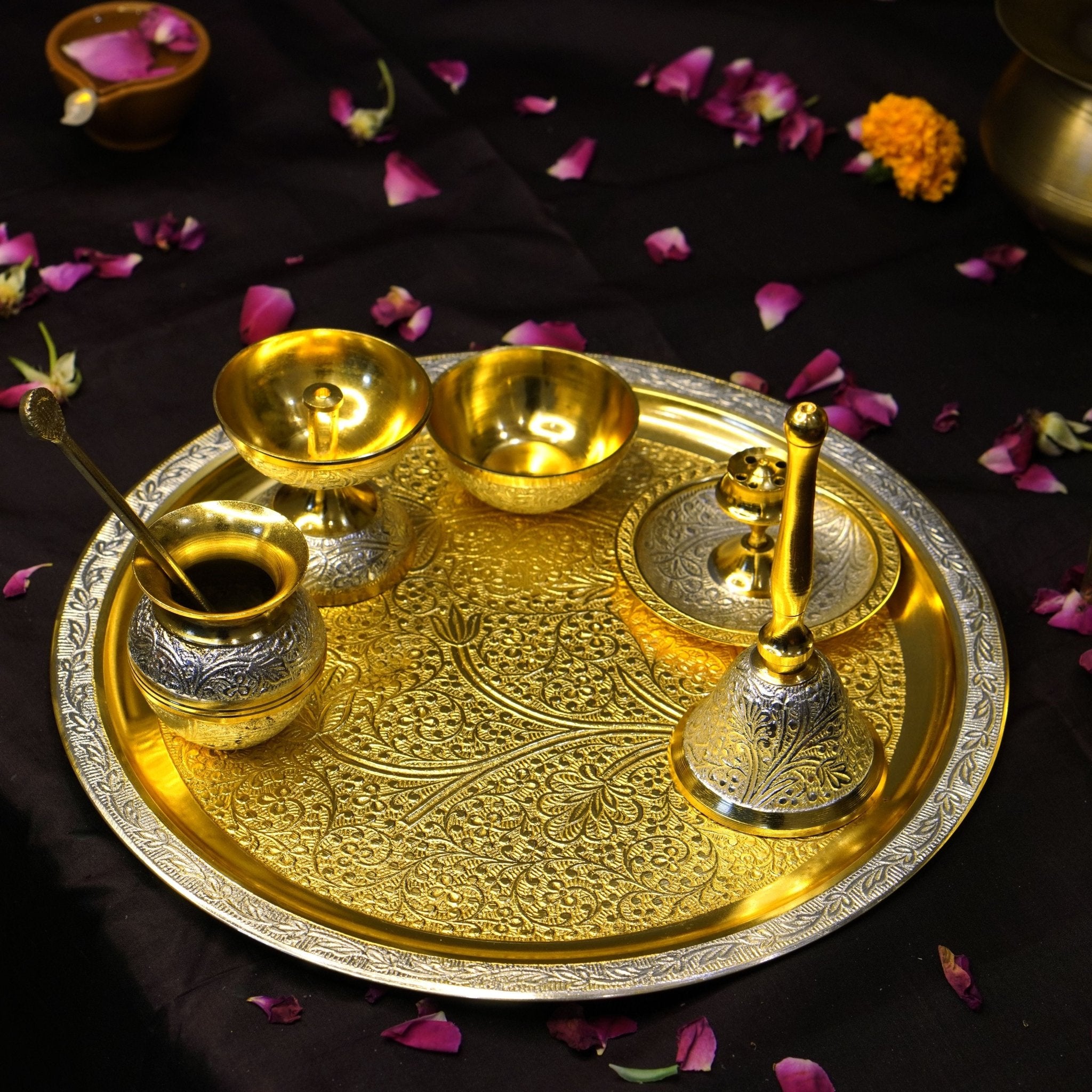
On a traditional puja thali, the diya sits at the center. Everything else, kumkum, akshat, flowers, incense, gets arranged around it. Not arbitrary. The flame gets lit first, and the rest of the ritual, offerings, aarti, prayers, follows from there.
A brass diya is usually the default pick for that central spot. Brass puja thalis are the most common setup for daily worship across a lot of Indian homes, with copper and silver kept more for specific rituals or festive occasions.
Brass Diyas in Indian Festivals
Diwali's the obvious one. Rows of lit diyas along windowsills and doorways are basically the visual shorthand for the whole festival, the same light-over-darkness idea scaled up massively, traditionally meant to welcome Goddess Lakshmi into the home.
Navratri runs differently: diyas lit during daily aarti across nine nights, often next to an akhand jyot, a flame that stays burning continuously for the full stretch.
Ganesh Chaturthi and Lakshmi Puja both build around daily aarti as well. Same brass diya, same job it does year-round, just wrapped in a more elaborate ceremony.
Karwa Chauth evenings usually bring a diya into the ritual thali used during the final prayers, right before the fast breaks.
And Griha Pravesh, the housewarming ceremony, often opens with lighting a diya as one of the very first acts in a new home. Inviting positive energy in before anything else happens, essentially.
What doesn't change across any of this is the underlying logic. What shifts is scale, one small daily diya versus dozens lit together, and duration, a few minutes of aarti versus a flame kept going for days on end.
Types of Brass Diyas
Not every brass diya looks the same. The differences usually track how it's actually meant to be used.
Most households keep a simple single-wick diya around for daily pooja, small, practical, easy to light and just as easy to clean. Panchmukhi diyas hold five wicks instead of one, useful during aarti when a bigger flame's needed for a shorter stretch of time. Akhand diyas are built for continuous burning, sometimes days at a stretch, so they run a bit deeper to hold more oil.
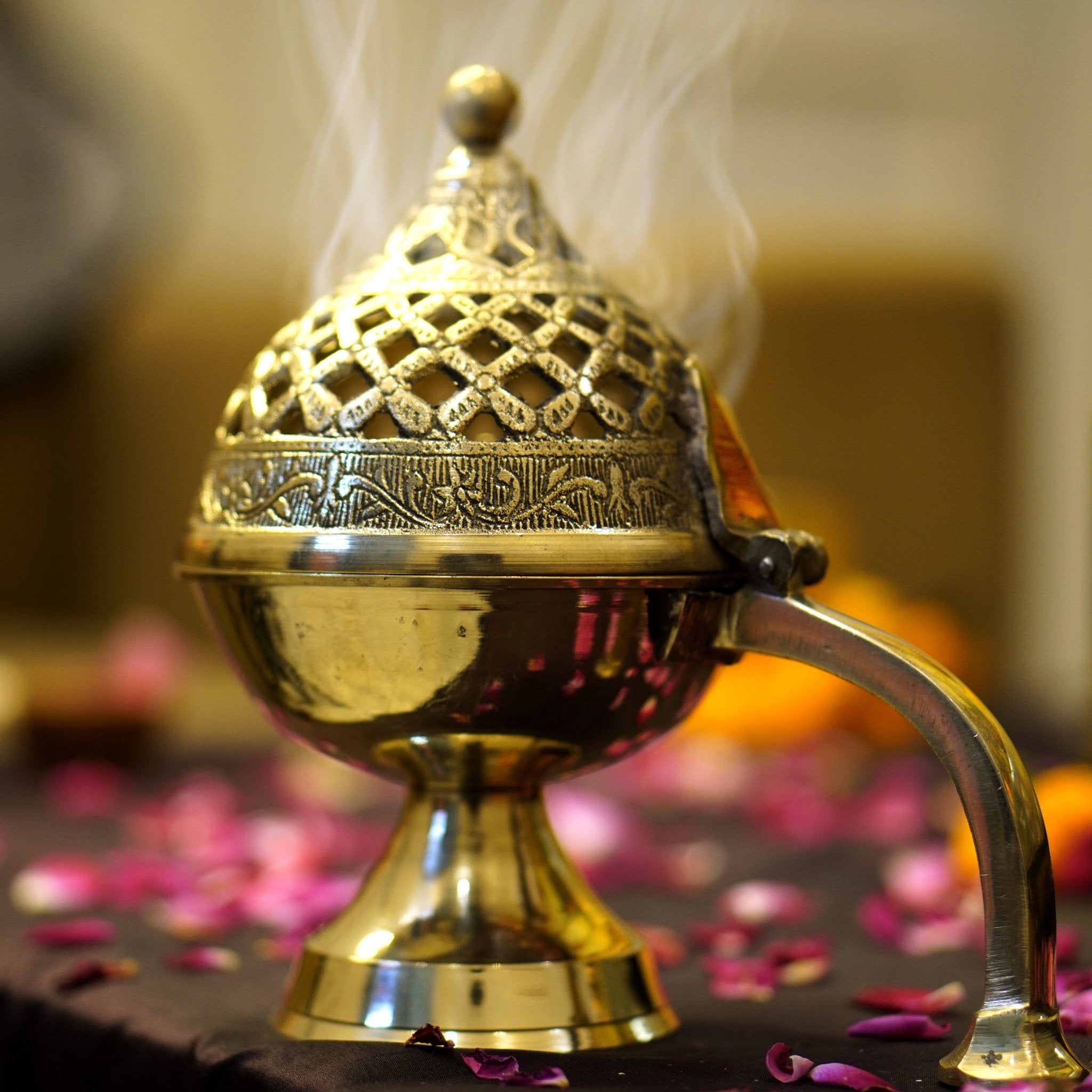
Then there's the decorative end: standing brass lamps, sometimes called deepalakshmi or deepastambha, tall enough to be a centerpiece on their own, and hanging diyas made for temple corners or doorway decoration. Peacock and lotus-shaped versions show up often too, mostly for how they look rather than doing anything functionally different from a plainer diya.
Caring for a Brass Diya
A brass diya needs a bit more attention than most other brass pieces, simply because oil and soot build up on it regularly. Let it cool completely after use, then clean off the leftover oil and wick residue before it has a chance to harden.
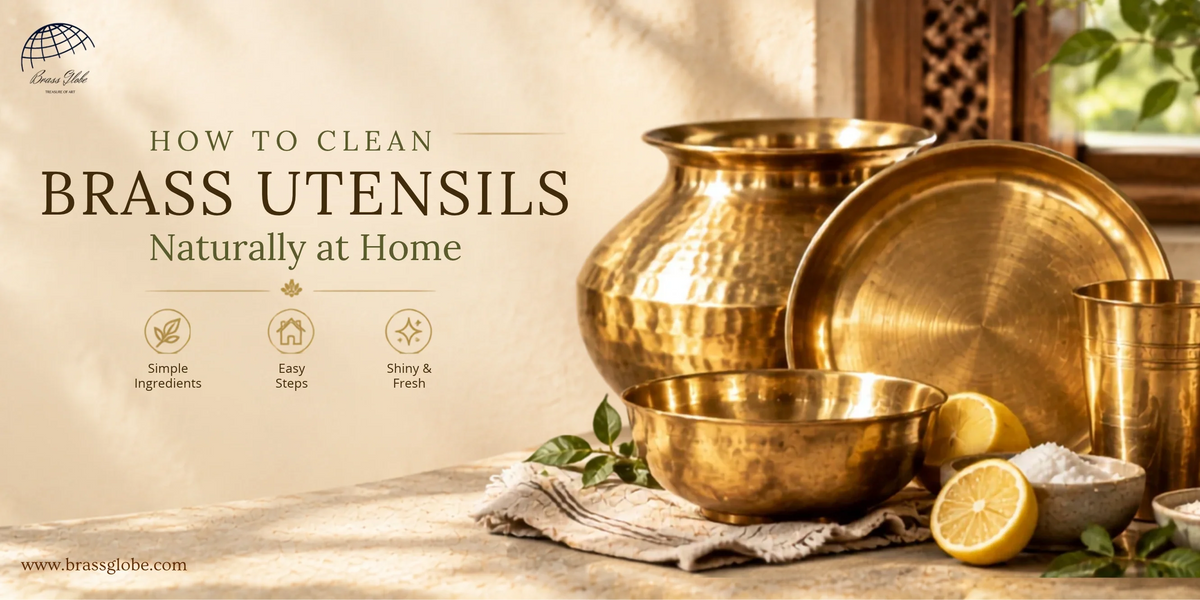
For everyday tarnish, the same natural methods that work on any brass piece work here too: tamarind, or lemon with salt, rubbed on gently and rinsed off right after. Dry it thoroughly afterward, leftover moisture is usually what brings tarnish back fastest. Skip steel wool and anything abrasive, especially around engraved or decorative diyas where scratches don't come out easily.
For the full breakdown of natural cleaning methods, there's a separate guide on cleaning brass utensils at home worth a look.
Frequently Asked Questions
Which metal is best for a diya?
Brass, mostly, for daily worship, thanks to how durable it is and how deeply it's rooted in tradition. Copper and silver diyas show up too, usually for specific rituals or festive occasions.
Why is the diya placed at the center of the puja thali?
It's lit first and treated as the actual starting point of worship, so it sits in the middle with everything else, kumkum, rice, flowers, arranged around it.
Can a brass diya be used daily?
Yes, and in plenty of households it is exactly that. A simple single-wick brass diya, cleaned regularly, holds up fine to daily lighting for years.
What's the difference between an akhand diya and a regular diya?
An akhand diya burns continuously, often for days during a festival. A regular diya gets lit and put out as part of one shorter ritual.
How do you clean a brass diya?
Let it cool fully first, wipe away the oil and wick residue, then use tamarind or lemon and salt for the tarnish, rinsing and drying thoroughly once you're done.


Leave a comment
This site is protected by hCaptcha and the hCaptcha Privacy Policy and Terms of Service apply.