
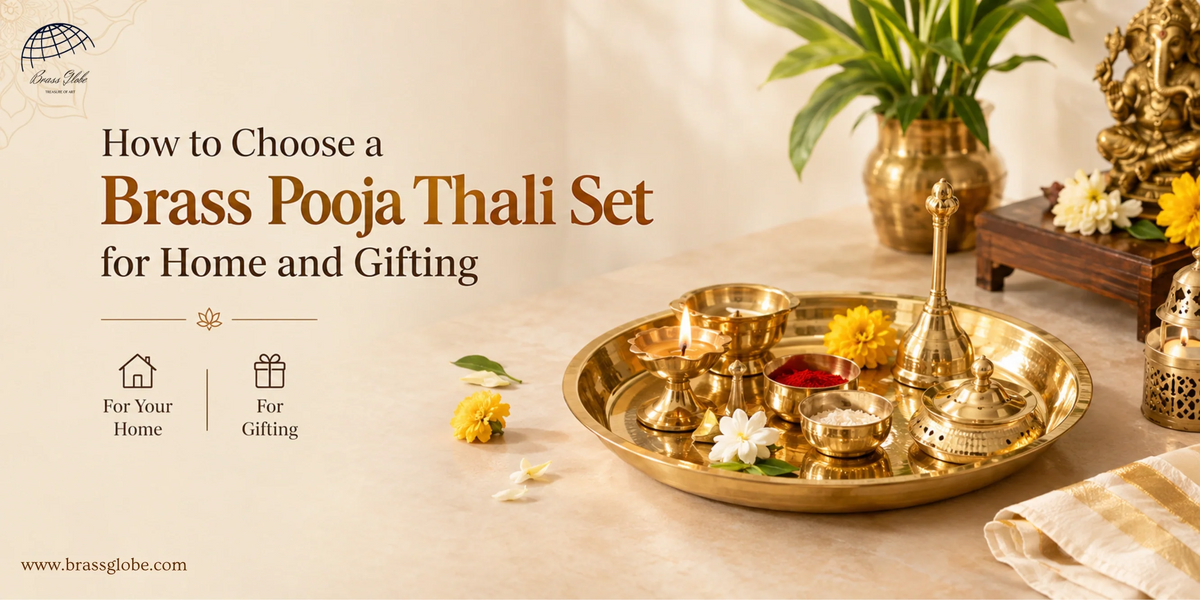
How to Choose a Brass Pooja Thali Set for Home and Gifting
A good pooja thali set pulls double duty. It holds everything worship actually needs, and it's arranged so you can move through the ritual without stopping to dig around for the haldi. Get the wrong one, wrong size, wrong weight, wrong layout, and you'll feel it every time you sit down at the mandir. This piece walks through what actually belongs in a proper set, why the arrangement's built the way it is, and what matters when you're picking one, whether it's for your own home or headed off as a wedding gift.
What's Included in a Brass Pooja Thali Set
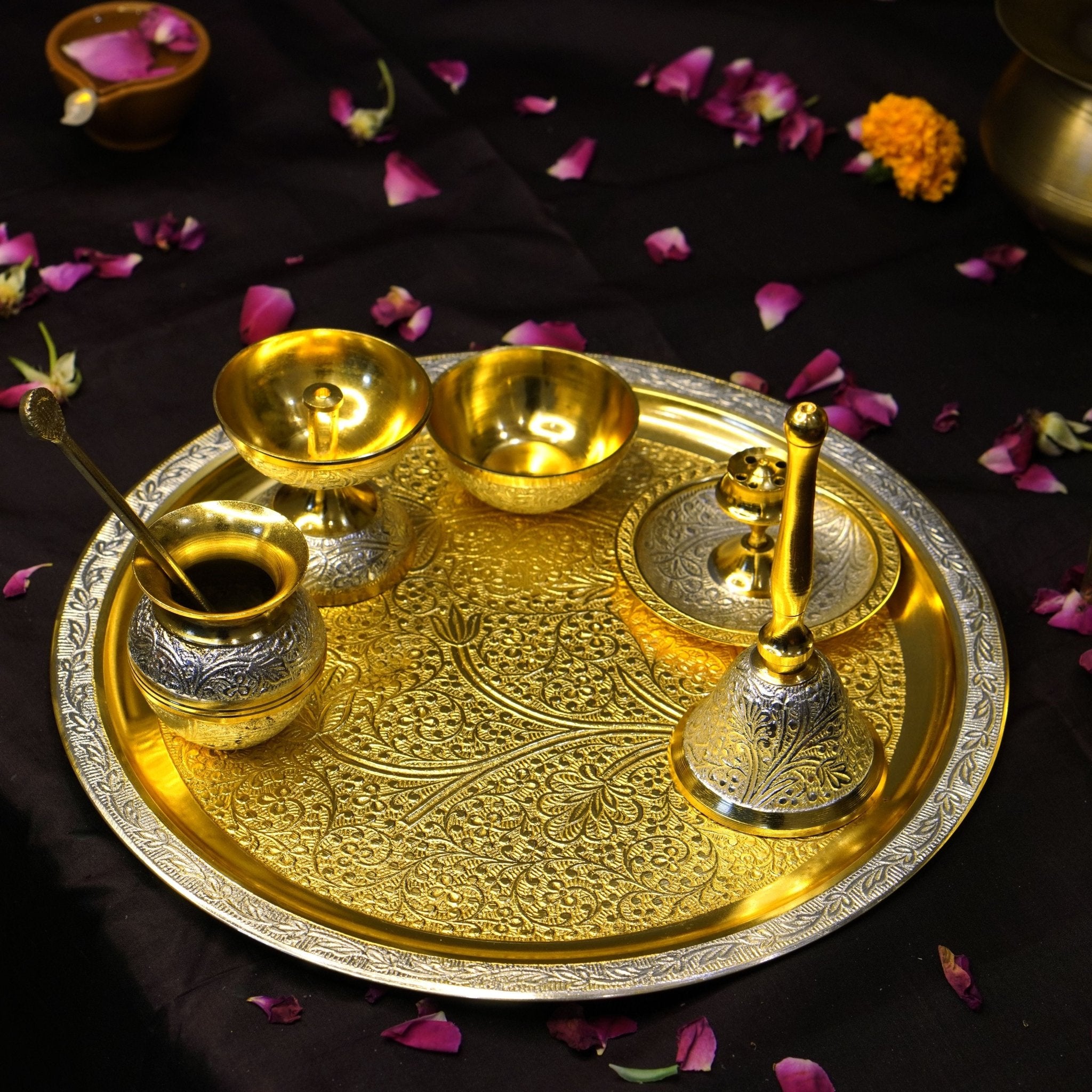
Most sets carry roughly the same core list. Region and household shift the specifics, but the backbone stays consistent.
|
Item |
What It Is |
Its Role |
|
Diya |
Ghee or oil lamp with a cotton wick |
Lit first, often kept burning through the ritual |
|
Agarbatti or dhoop |
Incense stick or cone |
The fragrance offering |
|
Kumkum |
Red powder |
Tilak and offerings to the deity |
|
Haldi |
Turmeric powder |
Offered and applied, central to many domestic rites |
|
Chandan |
Sandalwood paste |
Applied to the deity and forehead |
|
Akshat |
Unbroken rice, often tinted |
Offered by hand |
|
Flowers |
Fresh blooms or petals |
Direct offering |
|
Water (jal) |
Small lota with a spoon |
Achman, offering, sprinkling |
|
Naivedya |
Fruit, sweets, or cooked food |
Food offering, shared afterward as prasad |
|
Bell (ghanti) |
Small hand bell |
Rung during arti and at key points |
|
Camphor (kapoor) |
Tablets with a small holder |
Burned for the closing arti |
|
Kalava |
Red and yellow thread |
Tied on the wrist, used with the kalash |
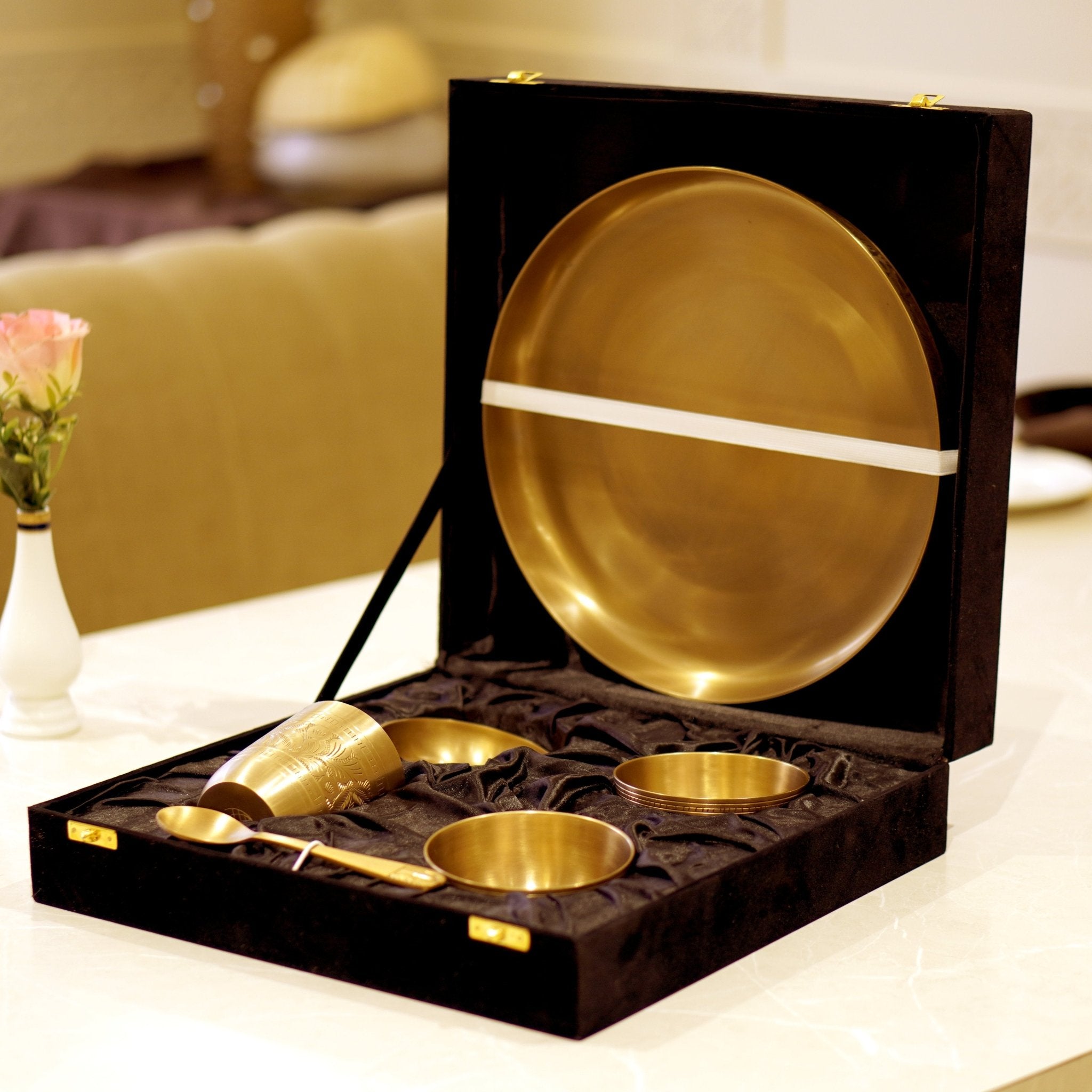
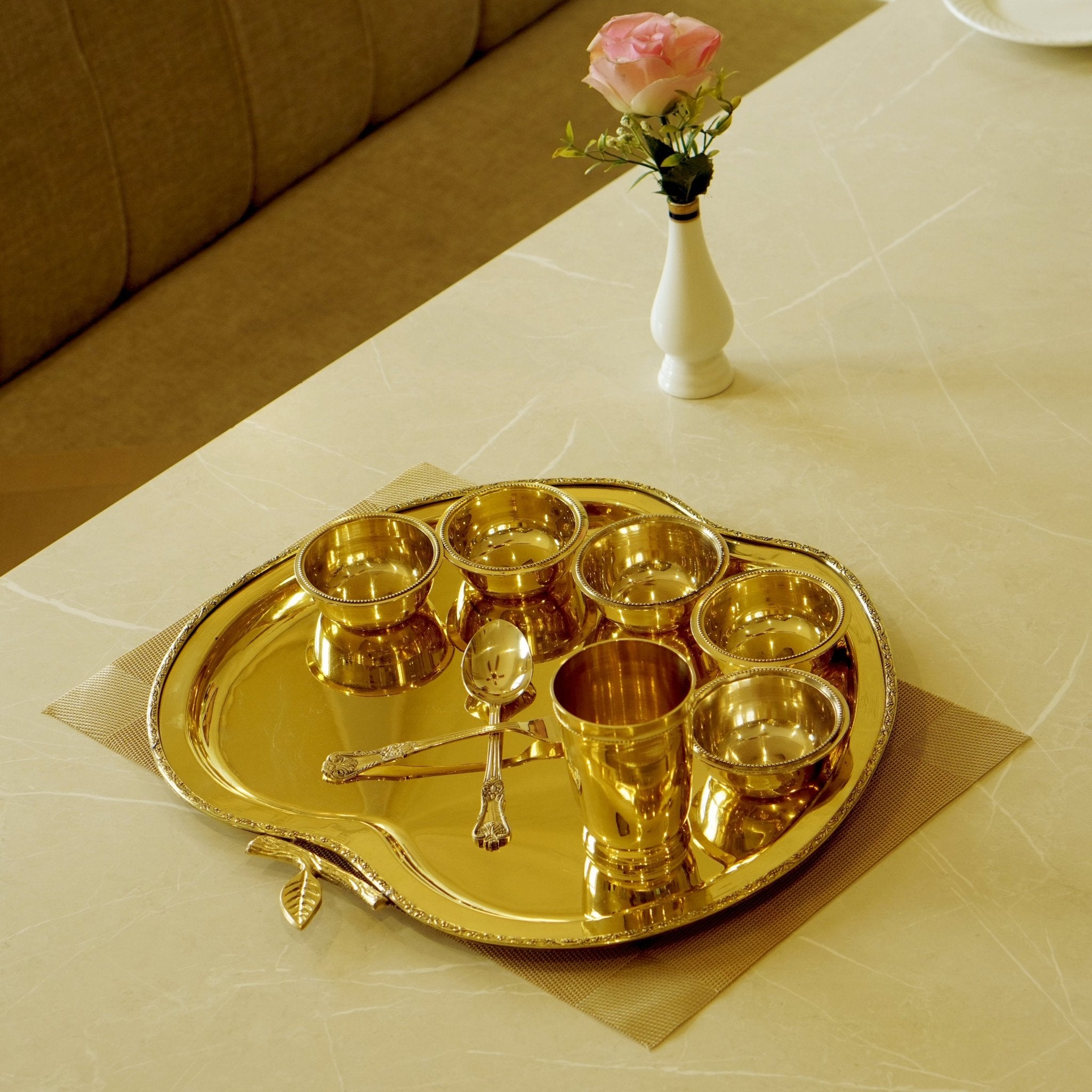
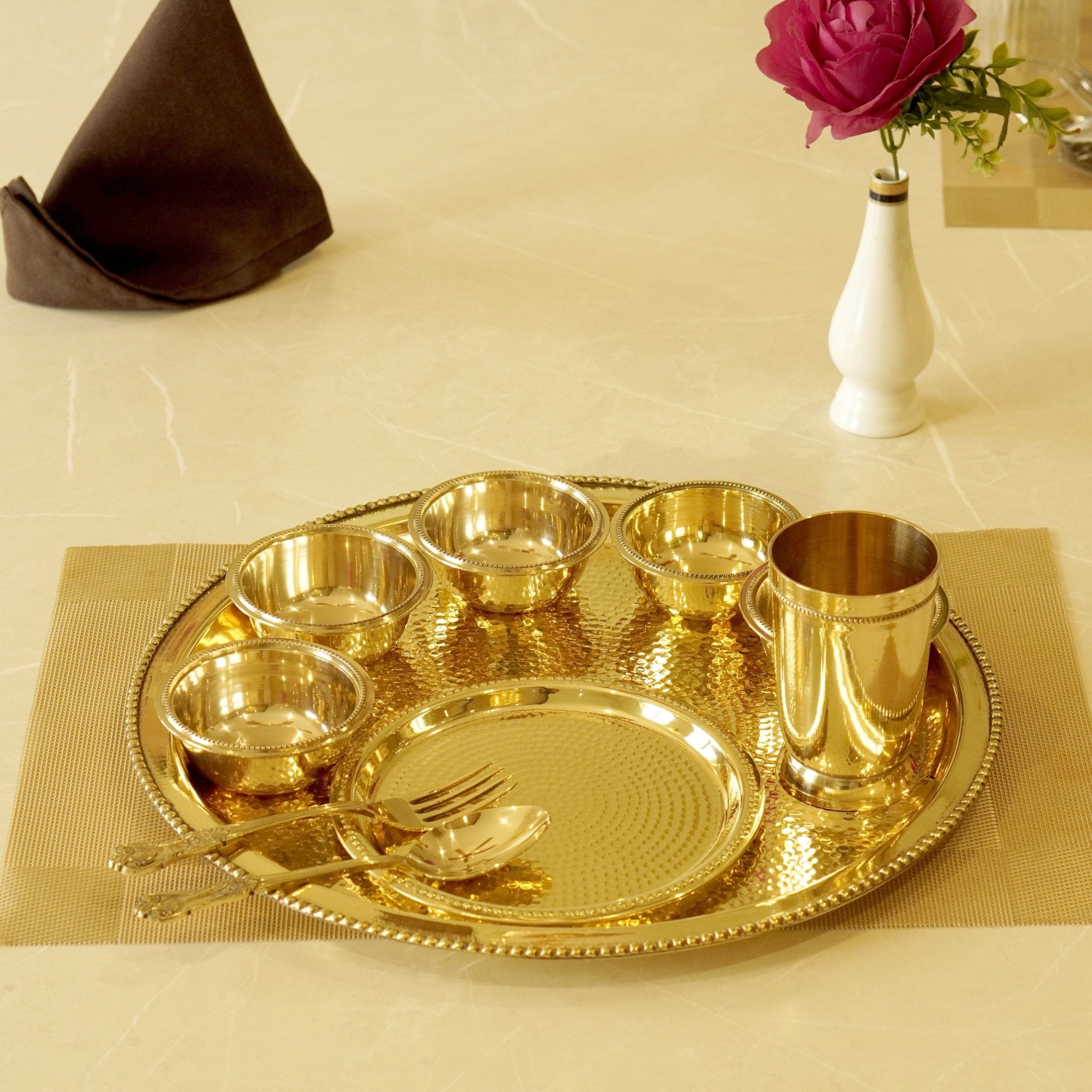
The small powders sit in katoris, little bowls, not loose on the plate. Keeps them separate. Lets you actually pick them up mid-ritual instead of fumbling. Five katoris is the usual setup, kumkum, haldi, chandan, akshat, plus one spare. Worth knowing going in, honestly, since it tells you what's actually in the box before you open it.
Why the Layout Actually Matters
There's a reason a well-built pooja thali set isn't just bowls scattered on a plate.
Right hand does the offerings and the arti. So the diya and water sit right, within easy reach. Left hand rings the bell, that goes left, or you're crossing your arms mid-ritual every time, which nobody wants. Katoris line up in the order you use them. Flowers and naivedya sit toward the front, nearest the deity. Incense and camphor stay back, both throw ash.
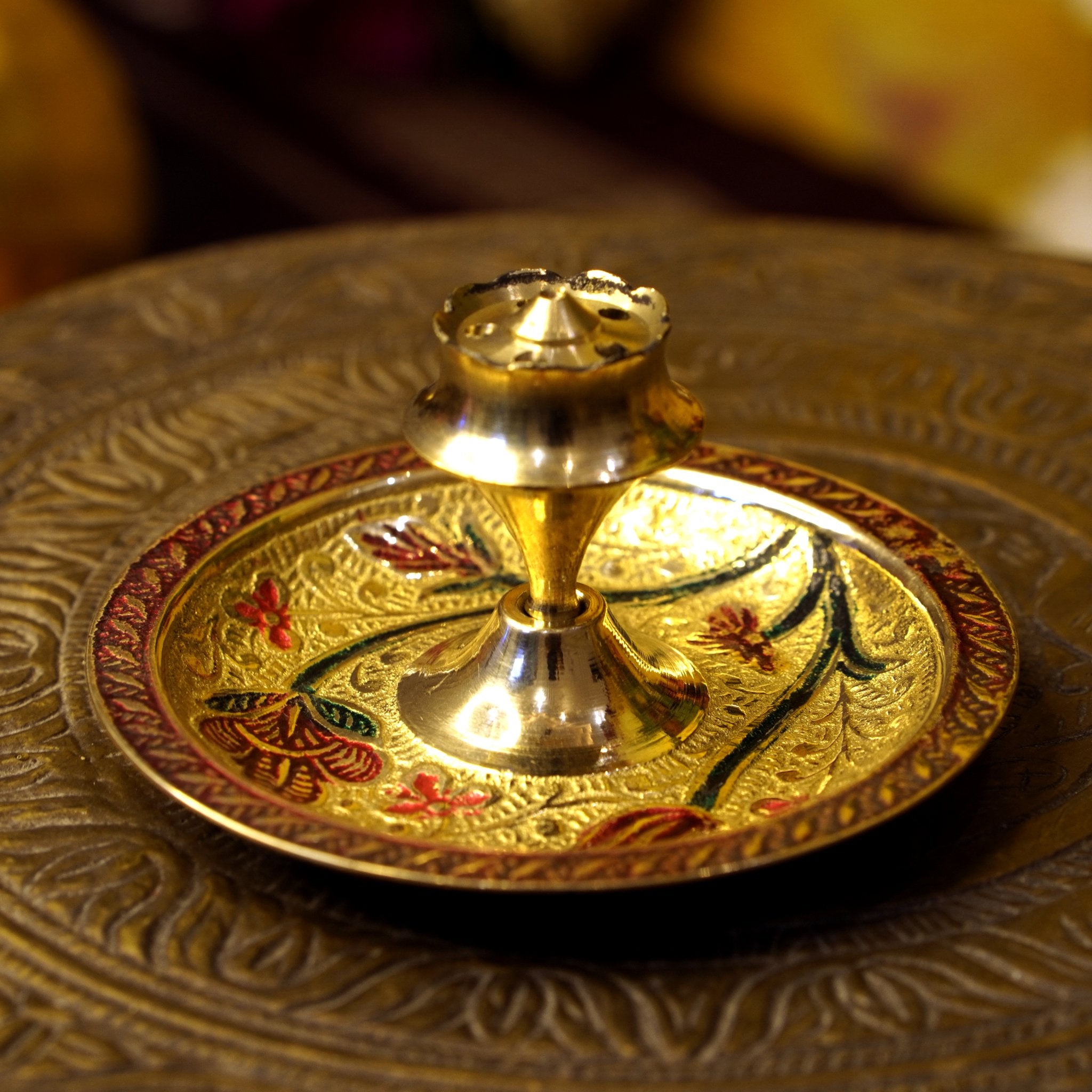
Even the shape isn't decorative. A shallow round plate, raised rim, that's not for looks. The rim holds spills. The round shape keeps everything in reach. Your attention's supposed to be on the deity during puja, not the layout, so the layout has to work without you thinking about it. Worth checking a set actually follows this logic before buying it, not just whatever looks good in a product photo.
Getting the Size and Configuration Right
Measure your mandir shelf first. Actually measure it, don't eyeball it against a photo online. A big, impressive-looking set that won't sit flat where it needs to becomes a daily annoyance, fast.
Katoris, count what your household really uses. Five's plenty for most families. Using vibhuti too, alongside kumkum and chandan? A standard five-katori set runs out of room, so look for one with extra compartments instead.
And weight, people underestimate this one every time. During arti the plate gets lifted, circled, held one-handed for a minute or more. Stunning on a shelf doesn't mean comfortable in the hand. Pick it up before buying if you can, or at least check the listed weight.
Brass, Copper, or Steel
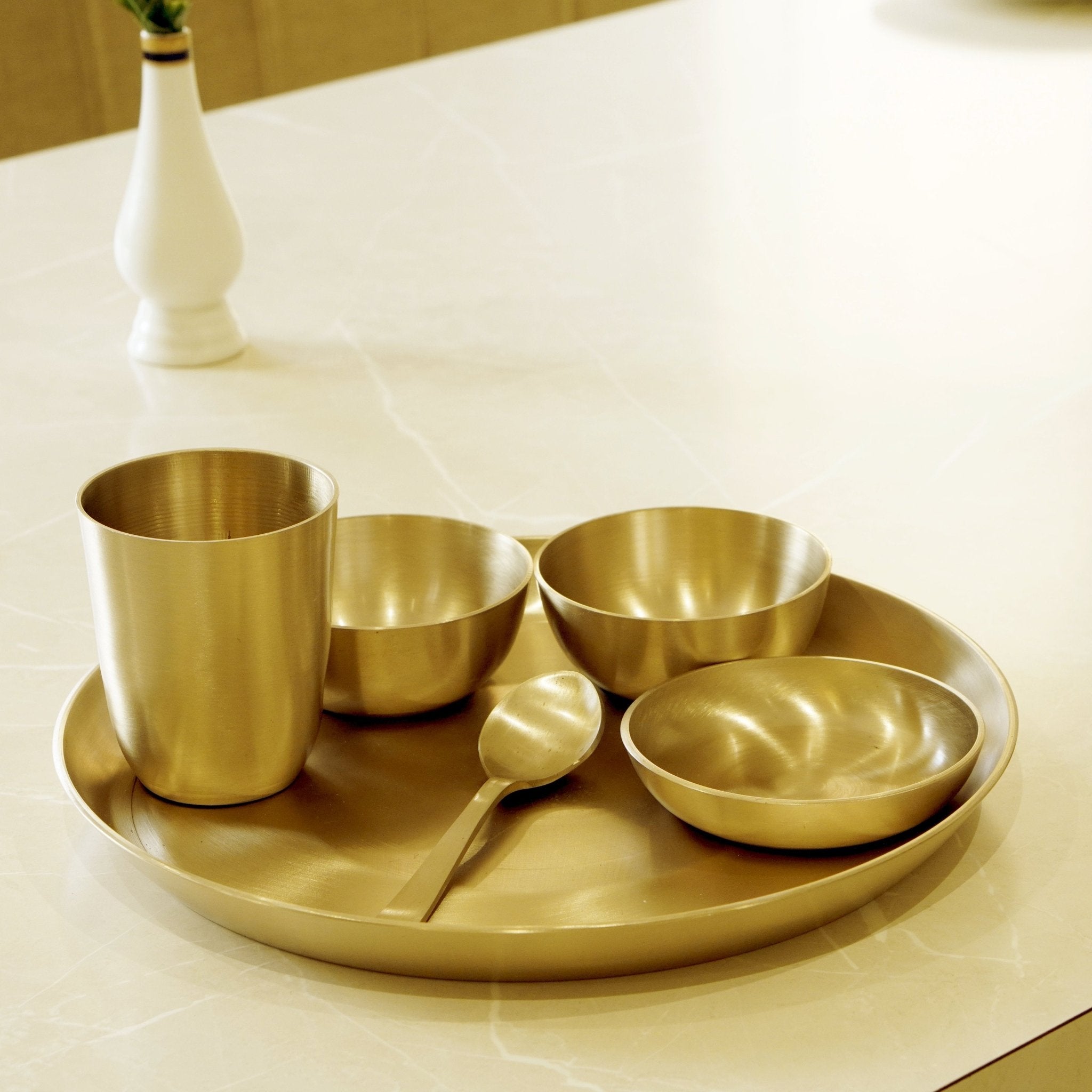
Brass is still the default, traditionally, and inside brass there's a real fork in the road: lacquered, or not.
Unlacquered darkens over time, needs the occasional clean, but it develops a patina plenty of people genuinely like, and you can polish it with traditional methods for as long as you own it. Lacquered stays bright without much effort at all, sounds like the easy win, until the coating starts wearing thin and it goes patchy, no traditional fix for that. Copper mostly shows up for Vedic or festive rituals rather than daily use. Steel's the practical choice, low maintenance, nothing wrong with picking it, loads of households do, even with brass and copper carrying more tradition behind them.
Quality Signals Worth Checking
Not every "brass" pooja thali set on the market is actually made the way it should be.
Pick it up. Weight's the fastest tell, genuine brass feels substantial for its size, and anything suspiciously light was probably made thin, or isn't really brass through and through. Tap it. A solid piece rings, a dull thud means something's off. Check the rim too, that's what your hands touch most, and rough edges get old fast. Hand-hammered pieces should show even, deliberate marks, not something rough and inconsistent. Buying more than one piece together? Make sure they actually match in proportion and finish, not just vaguely similar.
One more thing, worth a second of thought: the thali sits in front of the deity. A plate that's too ornate can end up competing with a simple murti instead of complementing it. Consider the idol it'll actually sit next to, not just the plate on its own.
Choosing a Pooja Thali Set as a Gift
A pooja thali set works as a gift in a way most decorative items don't. Mainly because it gets used, week after week, rather than shoved in a cupboard once the occasion's over.
Weddings, housewarmings, a complete set usually lands better than individual pieces, it saves the recipient from sourcing matching items themselves later. Worth thinking about their tradition too. A South Indian household might expect a standing lamp alongside the thali. A North Indian one might lean kalash-focused. A flexible, well-rounded set travels better across households than something built around very specific regional additions.
Finish matters more for gifting, arguably, than for your own use. Something that photographs well, presents nicely out of the box, tends to land better as a gift, even if the person later lets it darken naturally with use. And a set that's actually usable, right weight, sensible katori count, beats a purely decorative one almost every time. The whole point is that it gets used, not shelved.
Caring for a Brass Pooja Thali Set
Brass darkens with use. Chemistry, not neglect, worth knowing before you buy rather than being surprised by it six months in. Traditional cleaning still works best, tamarind pulp, lemon with salt. Skip the steel wool. Skip the dishwasher entirely. And if your set's lacquered, no acid-based cleaners, a damp cloth is genuinely all it needs.
For the full breakdown, there's a separate guide on cleaning brass utensils at home worth a look.
Frequently Asked Questions
How many katoris should a pooja thali set have?
Five, generally, kumkum, haldi, chandan, akshat, and a spare. Households using extras like vibhuti might want more compartments than that.
Should I choose lacquered or unlacquered brass?
Unlacquered needs occasional cleaning but can be polished indefinitely and develops a patina a lot of people like. Lacquered stays brighter with less work, but looks patchy once the coating wears down.
What size pooja thali is right for a home mandir?
Measure the shelf first, don't just go off a photo. It should sit flat and fit comfortably in the actual space you've got.
Is a brass pooja thali set a good gift?
Yes, it's practical and gets used regularly rather than stored away, which makes it a solid pick for weddings and housewarmings.
Brass vs steel pooja thali, which should I choose?
Brass carries more tradition and can be polished over the years. Steel needs almost no maintenance and doesn't react with acidic offerings. Both are perfectly acceptable.


Leave a comment
This site is protected by hCaptcha and the hCaptcha Privacy Policy and Terms of Service apply.