
Brass vs Copper Utensils: Differences, Benefits and Uses
There is a particular kind of morning that belongs to a different era of Indian homes. The kind where the first sound you heard was metal against metal in the kitchen.
A brass kadhai being set on the flame. A copper lota being filled at the tap. A kansa thali being laid on the chowki before the family sat down.
That morning did not disappear because it stopped being good. It disappeared because the world moved faster than tradition could keep up.
Brass vs Copper Utensils: The Short Version
This piece sticks to the two metals people actually ask about most: brass vs copper utensils, what each one's made of, where each earns its keep in a kitchen, and where they genuinely overlap. Kansa, the third traditional metal, gets its own comparison elsewhere. This one's specifically about brass and copper.
What Is Brass?
Brass is copper alloyed with zinc. India has a long history with both metals, separately and combined. Copper alloys appear in Indian metalwork going back thousands of years, and India later became a pioneer in zinc metallurgy. The zinc-smelting furnaces at Zawar in Rajasthan used distillation techniques that were remarkably advanced for their time. This expertise helped support the development of brass and other zinc alloys in traditional Indian metalwork.
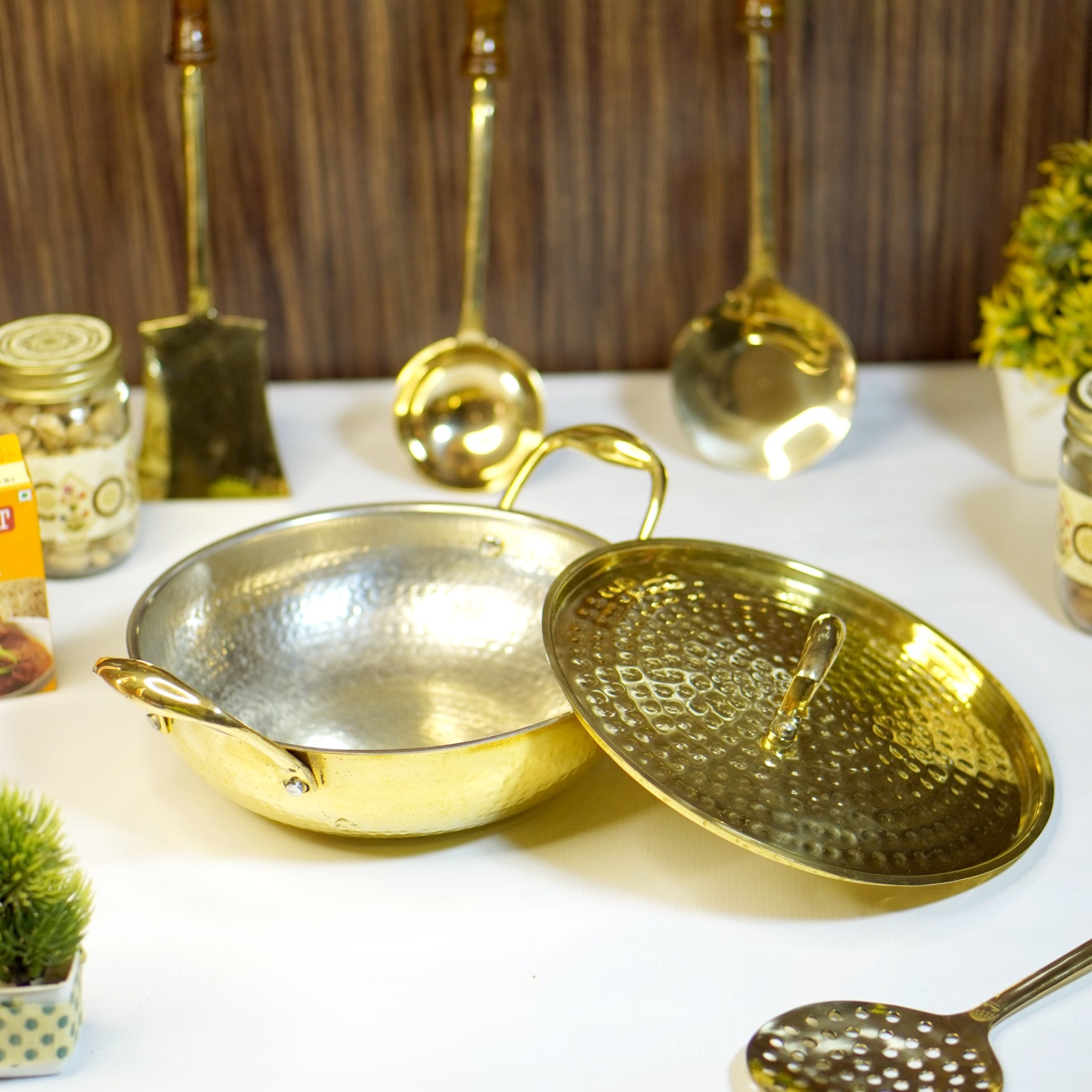
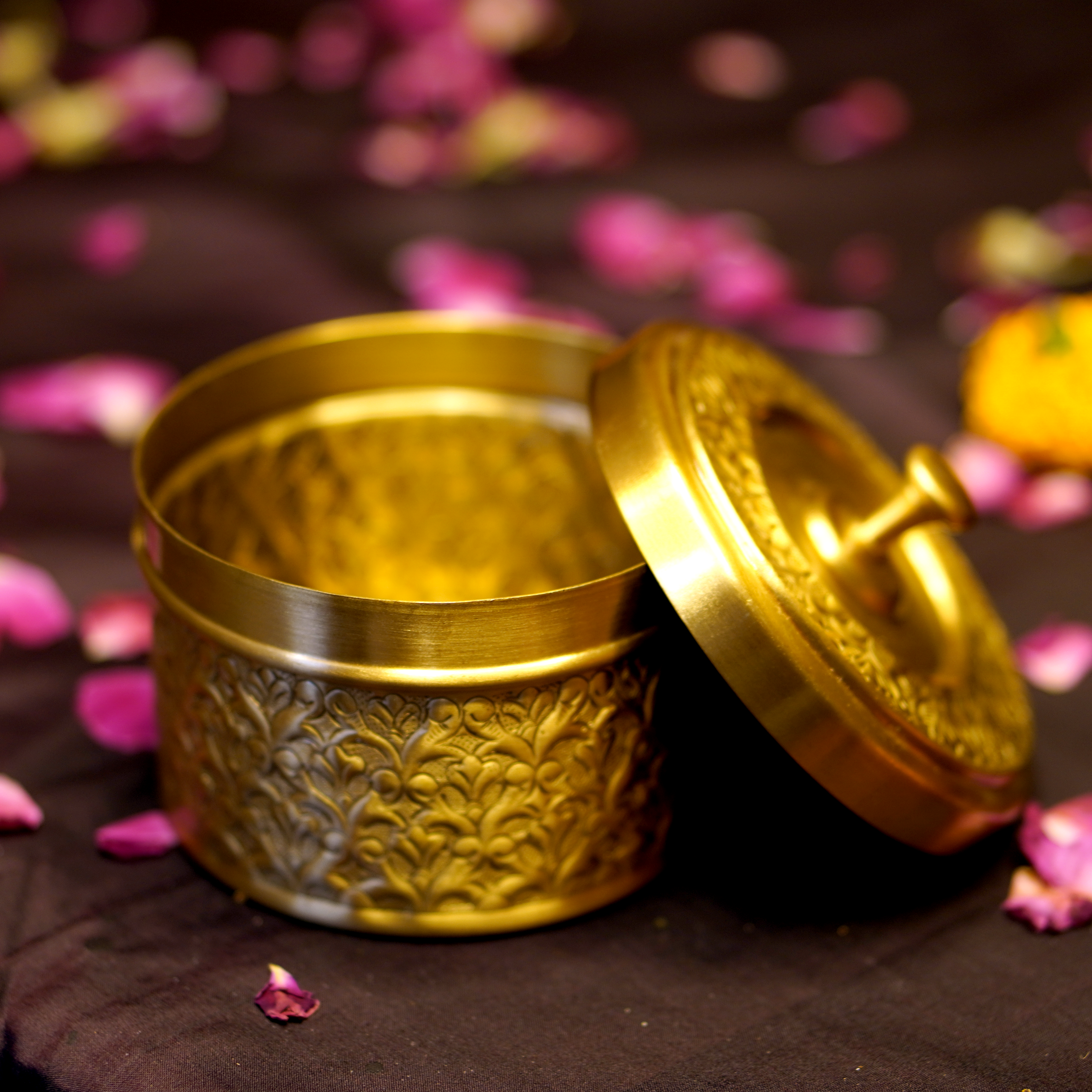
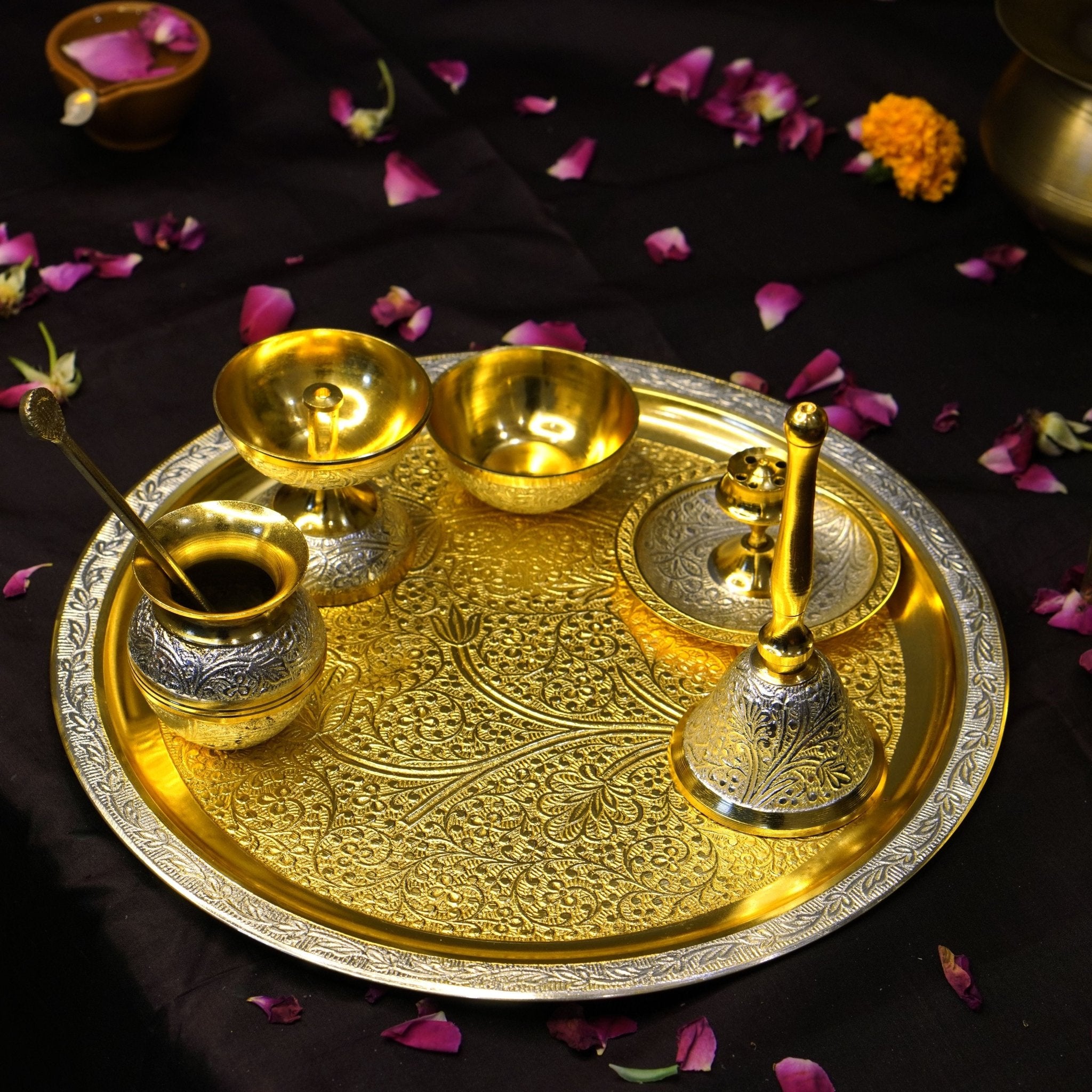
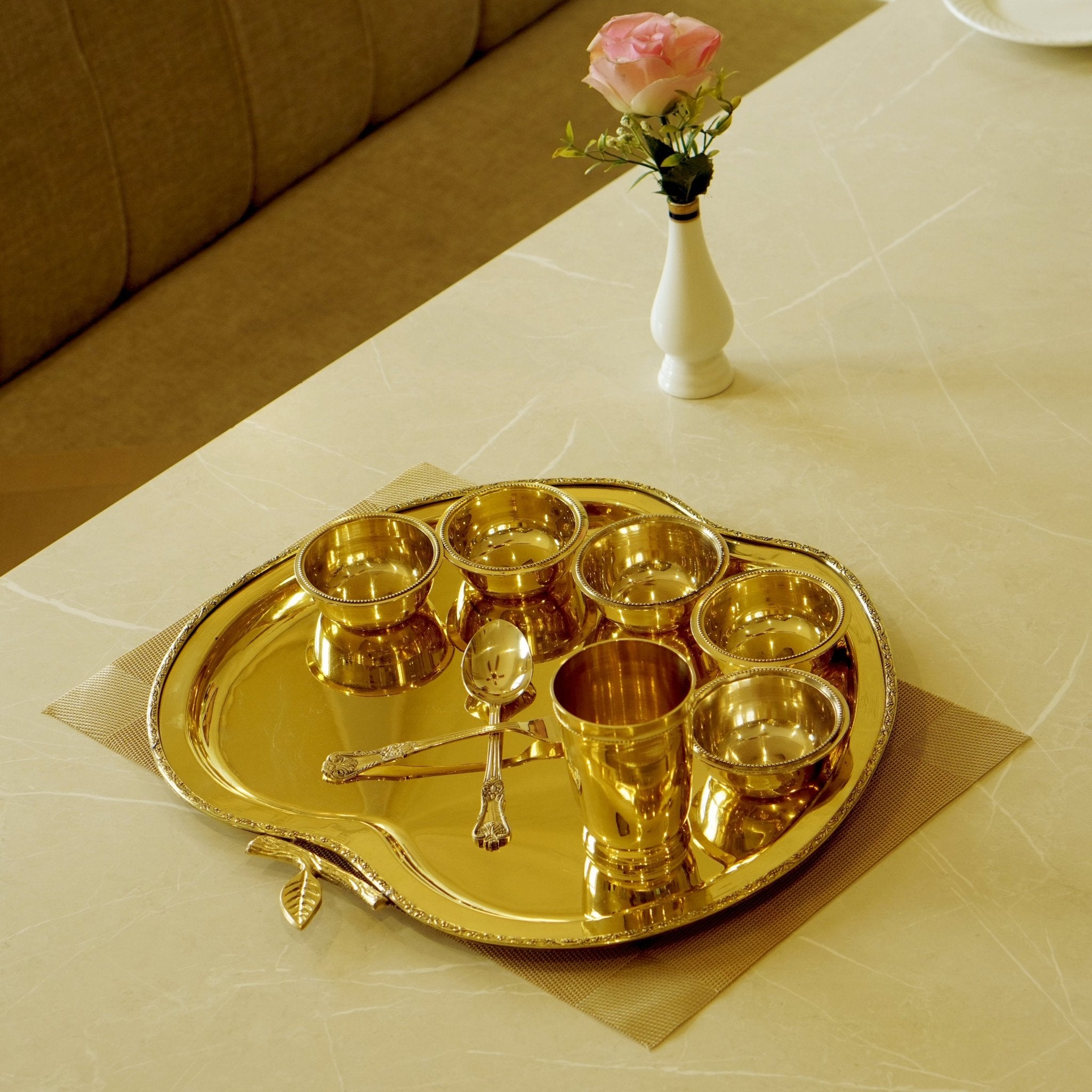
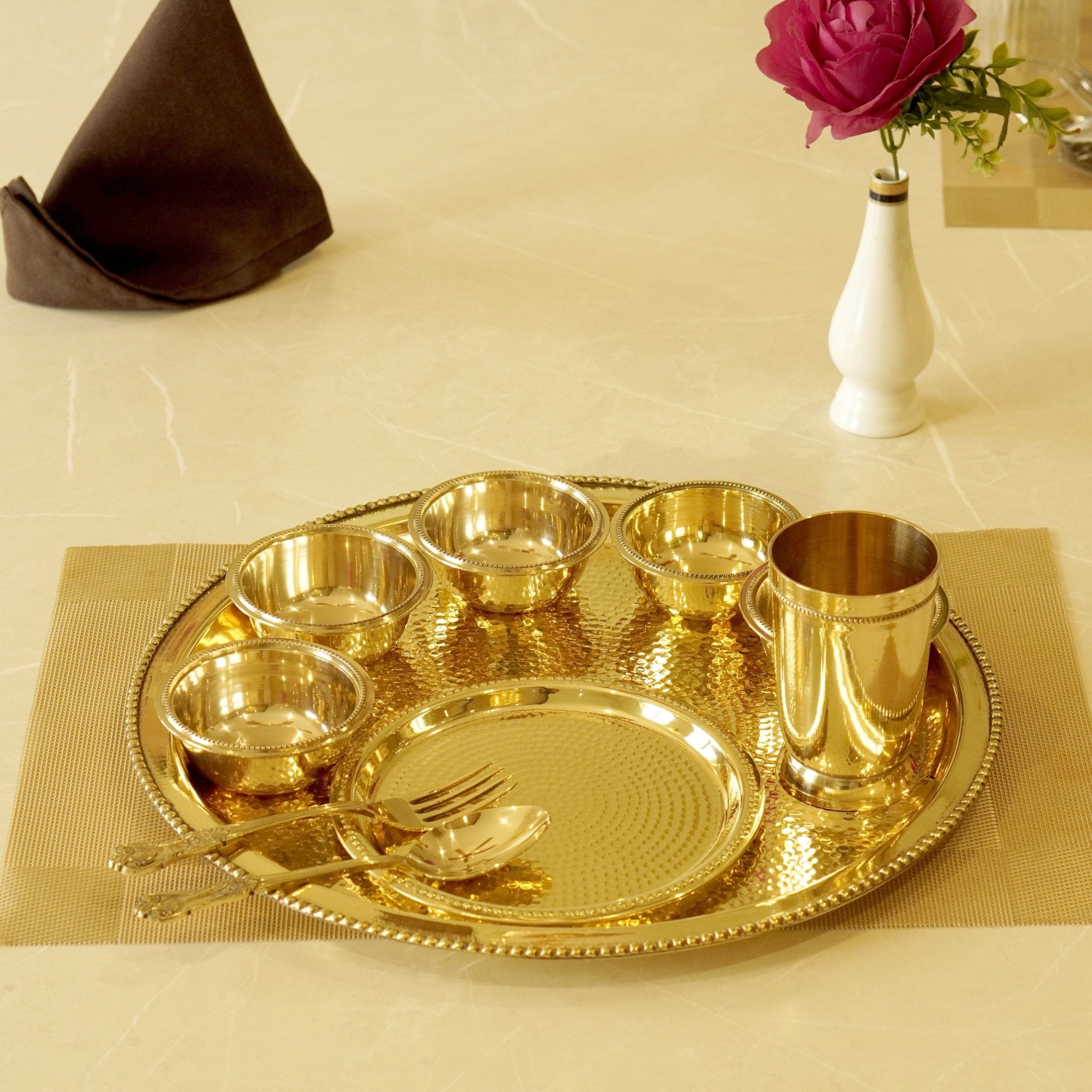
Brass is used for cookware, serving utensils, decorative objects, and religious items. Its thermal properties make it useful in certain traditional cooking vessels. Brass cookware intended for cooking is often lined with tin through a process called kalai, which helps prevent food from directly contacting the underlying alloy. Brass items used for kneading dough in a paraat or for serving do not necessarily need this lining, provided they are suitable for their intended use.
What Is Copper?
Copper is the metal behind Tamra Jal, the traditional practice of storing drinking water in a copper vessel. This practice has been described in Ayurvedic traditions for a long time.
There is scientific research into copper's antimicrobial properties. A study published in the Journal of Health, Population and Nutrition investigated the effect of storing contaminated drinking water in copper pots and reported reductions in several disease-causing bacteria after storage. Copper ions can damage microorganisms under appropriate conditions, a phenomenon associated with the oligodynamic effect.
However, the results of controlled studies should not be treated as proof that every household copper-water routine makes water safe to drink. The outcome depends on factors such as the initial contamination, contact time, water composition, and vessel condition. Copper vessels should not replace reliable drinking-water treatment when water safety is uncertain.
For everyday use, follow the vessel manufacturer's instructions and use only products intended for drinking-water storage. Plain water is the appropriate choice. Avoid storing acidic beverages, fruit juices, lemon water, milk, or carbonated drinks in an unlined copper vessel, as these can react with copper. Clean the vessel regularly using a method suitable for its finish, rinse it thoroughly, and dry it when appropriate.
Telling Them Apart at a Glance
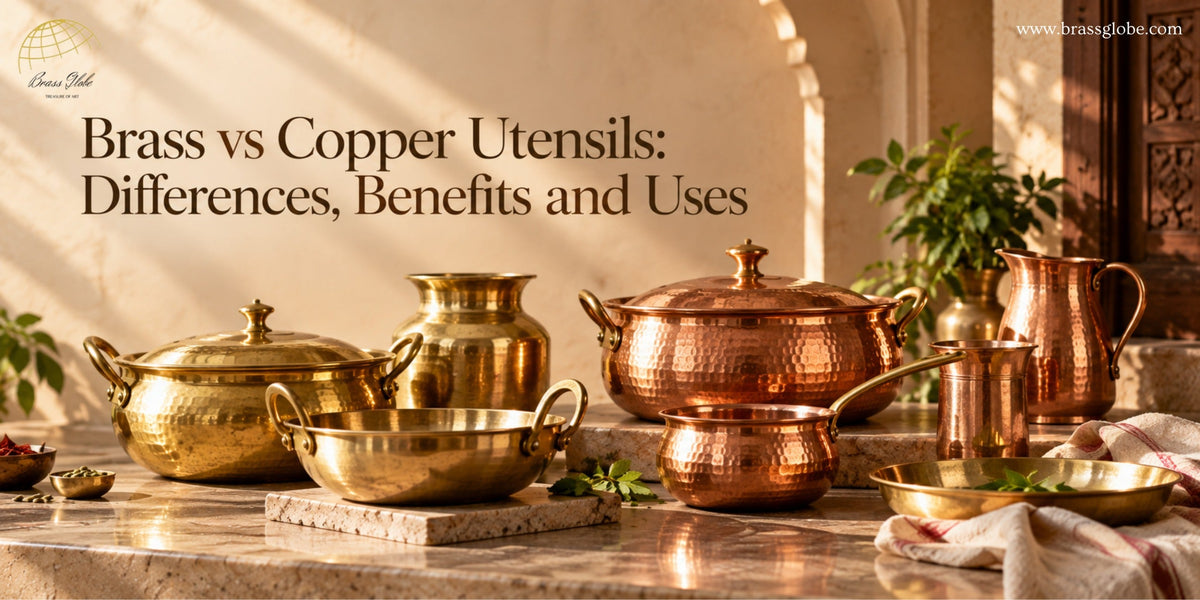
Colour gives it away fastest when you're trying to spot brass vs copper utensils side by side. It's not the only clue, though.
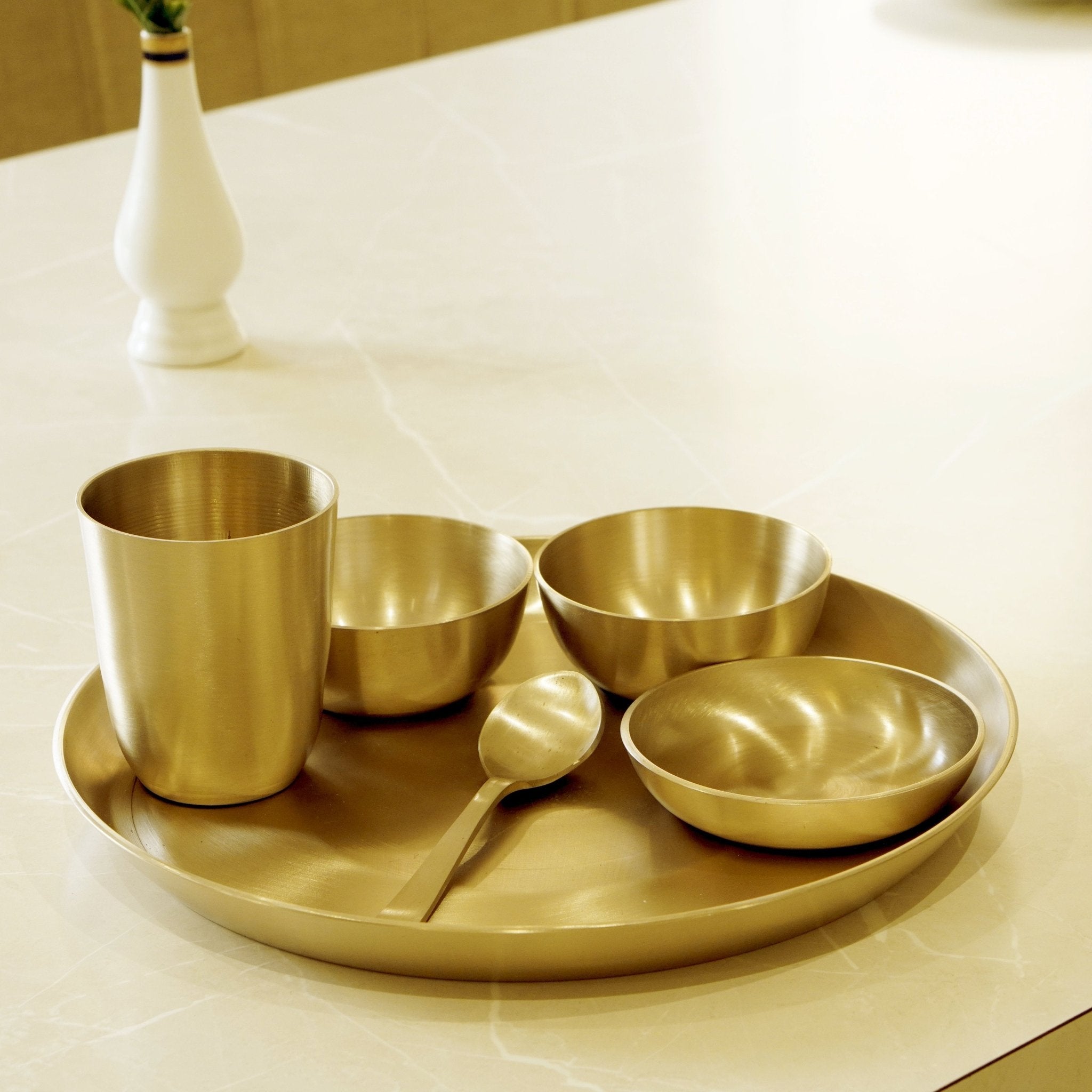
Brass generally leans bright, yellow-gold, almost golden straight out of the box. Copper is more reddish-orange, with the warm, earthy tone most people picture when they hear the word copper.
Weight can offer another clue, but it depends on the shape, thickness, and alloy composition of each piece. Sound can vary with the same factors, so tapping utensils is not a reliable way to identify their material.
Over time, both metals can change colour as their surfaces react with air and moisture. Brass may darken, while copper can develop brown or green surface compounds. Green corrosion should not automatically be considered harmless, especially on a surface that comes into contact with food or drinking water. Clean and inspect the item according to the manufacturer's guidance.
These visual differences can help with an initial comparison, but they are not a laboratory test. If you need to confirm the material, check the manufacturer's specifications or ask a qualified metalware supplier.
Brass vs Copper Utensils: Key Differences
| Feature | Brass | Copper |
|---|---|---|
| Made from | Copper and zinc | Copper, generally used in a high-purity form for traditional vessels |
| Typical colour | Bright yellow-gold | Reddish-orange |
| Common traditional uses | Cookware, dining, pooja items, and decor | Water-storage vessels, cookware, and decorative items |
| Lining for cooking | Often tin-lined where required for food-contact safety | Usually lined with a suitable material when required for cooking |
| Serving and kneading | Suitable products are available for these uses | Suitable products are available for these uses |
| Antimicrobial properties | Copper-containing alloys can have antimicrobial properties | Copper has documented antimicrobial activity under appropriate conditions |
| Heat behaviour | Thermal performance varies by alloy and construction | High thermal conductivity |
Benefits Worth Knowing
Brass brings genuine versatility. It is used for cooking vessels, serving items, decor, and religious objects. Its appearance changes over time as the surface develops patina, which some people appreciate as part of the material's character.
Copper is especially well known for its excellent thermal conductivity, making it useful in cookware designed to distribute heat efficiently. It also has antimicrobial properties that have been studied in controlled settings, including research on copper surfaces and water-storage vessels. These properties should not be confused with a guarantee that copper utensils prevent disease or make unsafe drinking water safe.
In short, brass offers versatility across many traditional household uses, while copper offers excellent heat conduction and a long history of use in water-storage vessels. The best choice depends on the particular product, its construction, and how you plan to use it.
Using Brass and Copper Safely in the Kitchen
A handful of practical rules apply to both metals, worth following regardless of which one's in your hand.
- Choose suitable cookware: Use brass or copper cooking vessels only when the manufacturer confirms that they are intended for cooking and food contact.
- Check the lining: Where a lining is required, make sure it is intact. Tin is traditional, while some modern products use other suitable materials.
- Avoid exposed metal where inappropriate: Acidic foods can react with exposed copper and certain copper alloys. Follow the product's food-contact instructions.
- Inspect regularly: Thinning, flaking, peeling, or exposed underlying metal can indicate damage. Stop using the vessel for cooking until it has been assessed and repaired if necessary.
- Wash carefully: Avoid steel wool, harsh abrasive cleaners, and dishwasher cycles unless the manufacturer explicitly confirms that they are suitable.
- Use copper water vessels correctly: Store plain drinking water only in vessels designed for that purpose. Do not use a copper vessel as a substitute for safe water treatment.
Care Guide: Brass vs Copper
| Care Step | Brass | Copper |
|---|---|---|
| Routine cleaning | Mild soap and a soft cloth | Mild soap and a soft cloth |
| Polishing | Use a suitable metal polish or manufacturer-approved method | Use a suitable copper polish or manufacturer-approved method |
| Avoid | Dishwasher use and steel wool unless specifically permitted | Prolonged contact with acidic liquids in unlined vessels |
| Inner coating | Required where the cookware design and intended use call for it | Required where the cookware design and intended use call for it |
Traditional cleaning methods sometimes use tamarind, lemon, or salt to remove tarnish. These methods may affect particular finishes, coatings, or decorative treatments, so check the manufacturer's instructions before using them. For drinking-water vessels, rinse thoroughly after cleaning and ensure that no cleaning residue remains.
How to Bring Both Back Into the Kitchen
Starting with traditional metalware doesn't have to mean overhauling the whole kitchen in one go.
Start with a Copper Water Vessel
If you enjoy traditional copper water vessels, choose one specifically designed for drinking-water storage. Follow its care instructions, store plain water only, and remember that proper drinking-water treatment remains essential whenever the water's safety is uncertain.
Add a Brass Paraat
If rotis are a regular part of your home cooking, a brass paraat can be a useful addition for kneading dough. Choose a well-finished product designed for food contact and clean it thoroughly after use.
Build Your Collection Gradually
Give yourself time to understand how each piece fits into your routine before expanding your collection. One useful, regularly used item may be more valuable than several pieces that remain unused on a shelf.
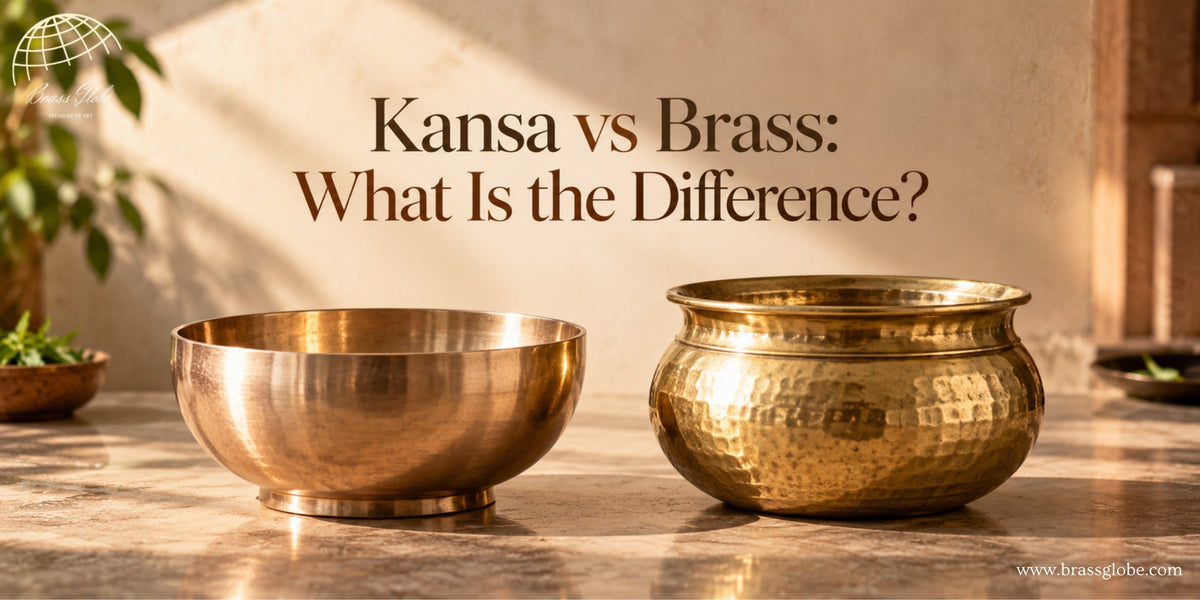
For a deeper look at how these metals compare with the third traditional option, explore our guide on kansa vs brass. Our complete guides to brass utensils and copper utensils also cover the characteristics and uses of each metal individually.
If you're deciding where to start, it does not necessarily have to be either-or. Copper may appeal to you for its thermal properties and traditional water-storage use, while brass offers a broad range of cookware, serving pieces, pooja items, and decor. Choose products based on verified material quality, food-contact suitability, and your actual daily needs.
Frequently Asked Questions
What's the main difference between brass and copper utensils?
Brass is an alloy of copper and zinc, while copper utensils are generally made from copper in a high-purity form. Brass typically has a more yellow-gold appearance, whereas copper is more reddish-orange. Their appropriate uses depend on their construction and intended purpose.
Is copper actually proven to kill bacteria in stored water?
Research has found that copper can reduce certain microorganisms under controlled conditions, including in studies of contaminated water stored in copper vessels. However, results depend on contact time and other conditions. Copper storage should not replace reliable drinking-water treatment when water safety is uncertain.
Do brass and copper utensils need an inner coating?
It depends on the product and its intended use. Some cooking vessels require an appropriate lining to keep food from directly contacting the underlying metal. Follow the manufacturer's instructions and avoid using damaged or unsuitable vessels for cooking.
Can I store any liquid in a copper vessel?
No. Use only vessels designed for drinking-water storage, and store plain water according to the manufacturer's instructions. Avoid storing acidic drinks, fruit juice, lemon water, milk, or carbonated beverages in unlined copper vessels because these liquids can react with copper.
Should I choose brass or copper for my kitchen?
It depends on your needs. Brass is available in a wide range of cookware, serving, decorative, and religious items. Copper is valued for its thermal conductivity and traditional use in water-storage vessels. For cooking or drinking-water use, prioritise verified food-contact safety and the manufacturer's care instructions.

Leave a comment
This site is protected by hCaptcha and the hCaptcha Privacy Policy and Terms of Service apply.