
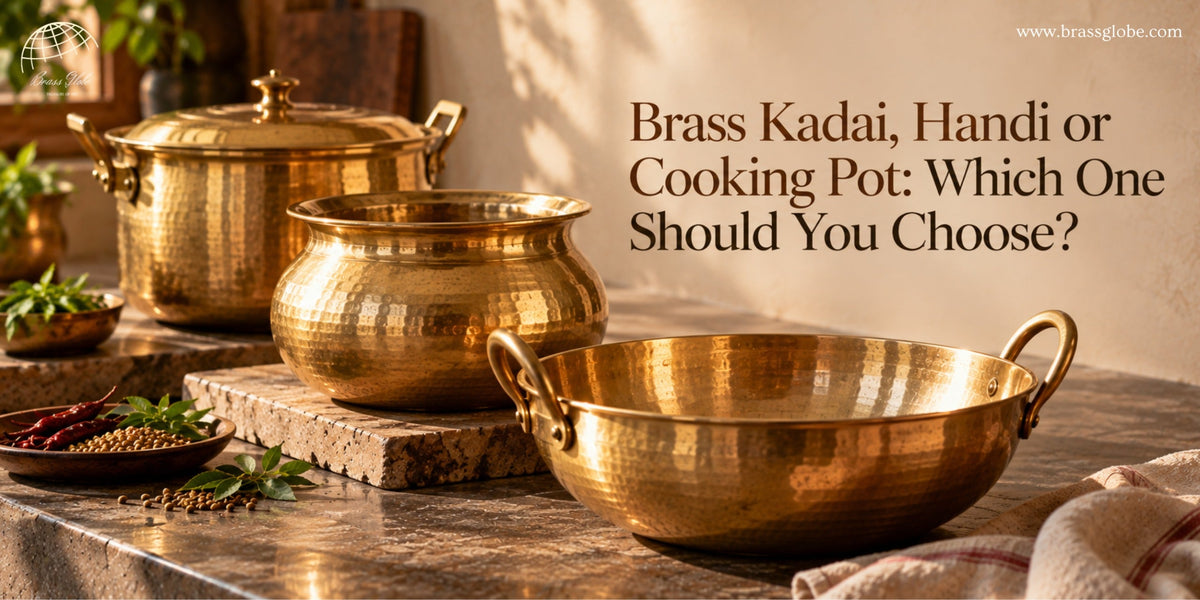
Brass Kadai, Handi or Cooking Pot: Which One Should You Choose?
Pure metal. No shortcuts. That's the whole appeal of brass cookware, and it's exactly why picking the right piece matters more than most people expect. A brass kadai, a handi and a cooking pot can sit on the same shelf, cost about the same, look like close cousins. In the kitchen, they behave nothing alike.
Here's how the names, the shapes and the jobs actually line up, with pieces from the Brass Globe range as real examples. By the end you'll know which one to buy first and which can wait.
The Quick Answer
| If You Mostly Cook... | Start With |
|---|---|
| Sautéed vegetables, thick gravies, fried snacks | A brass kadai |
| Slow-cooked lentils, layered rice dishes, sealed-pot cooking | A brass handi |
| Rice, everyday lentils, soups, milk | A brass cooking pot |
| Large family or festival batches | A wide lidded pot or a bigger handi |
Buying just one? Make it the kadai. It offers the widest range of everyday cooking uses.
First, the Names (They Overlap)
Traditional cookware never followed one neat naming system. A single vessel can carry three names depending on the region, and shop listings mix them freely. Brass Globe's own handi is listed as "Handi (Bhagona / Patila)". Normal, not a slip.
Here's the working taxonomy most kitchens actually use:
| Vessel | Shape | Traditionally Used For |
|---|---|---|
| Kadai | Deep, rounded, two loop handles | Frying, sautéing, thick curries |
| Handi | Round belly, narrower mouth | Slow cooking, sealed-pot dishes, gravies |
| Cooking pot | Taller, straighter sides | Boiling, rice, lentils |
| Wide lidded pot | Broad and relatively shallow, with a lid | Big-batch, slow-cooked dishes |
| Flat griddle | Flat plate | Flatbreads |
Brass Globe's kitchenware collection covers nearly all of these, from the Brass Kadahi (Tin Coated) and Brass Handi to a tin-coated cooking pot, saucepan, wide lidded pot and flatbread griddle. The company is based in Moradabad, a city associated with brassware for generations, so these are traditional, established vessel designs rather than novelty shapes.
The Brass Kadai: The All-Rounder
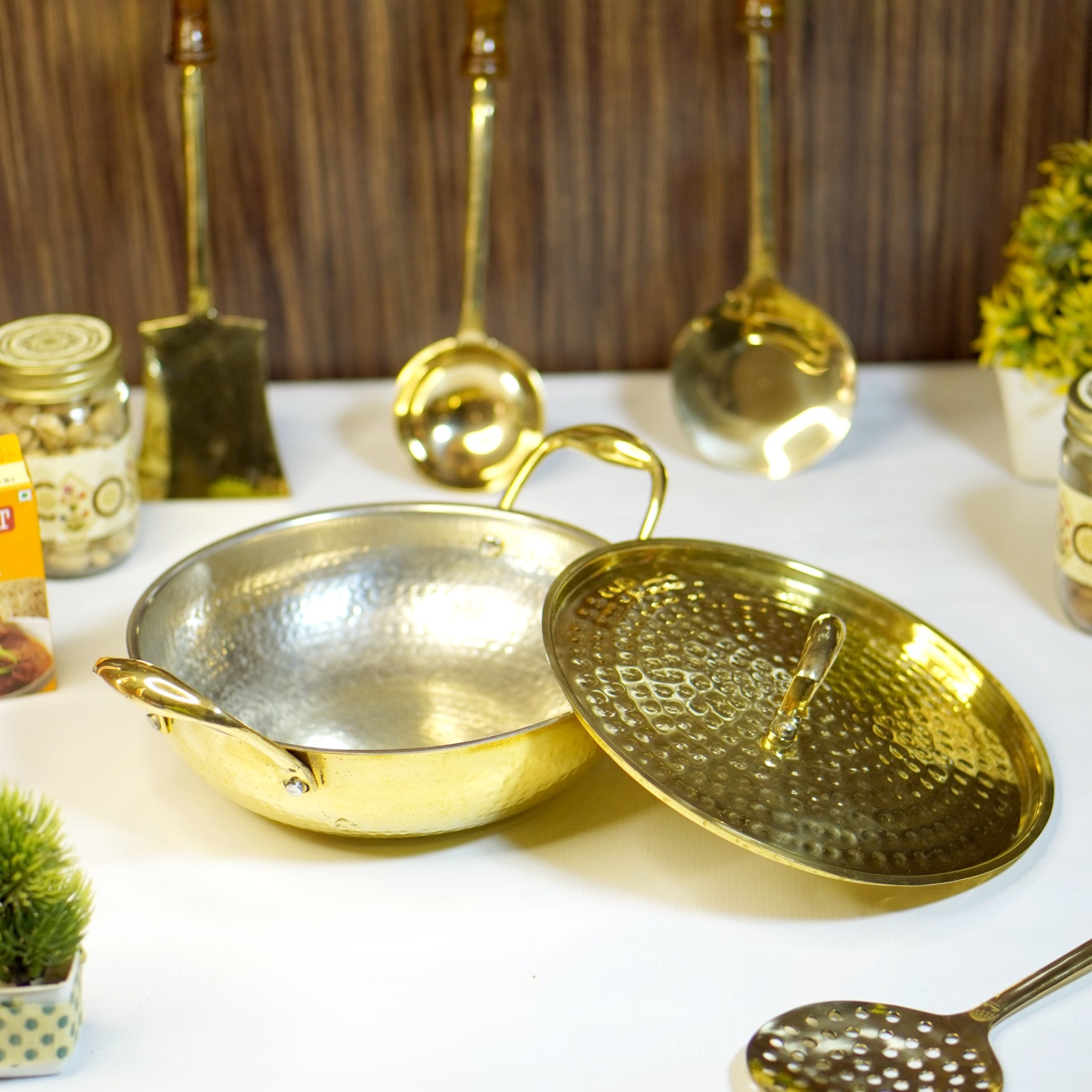
Deep bowl. Curved sides. A loop handle on each end. That curve isn't just for looks. Over a gas flame, it helps distribute heat along the sides, making the vessel useful for frying, sautéing and simmering gravies.
Stir-fried vegetables, thick gravies, dry-style curries, fritters and fried breads are all well suited to a kadai. Sweets that require constant stirring can also be prepared in one.
Brass Globe lists its Brass Kadahi (Tin Coated) in five sizes, with weight increasing alongside diameter:
| Size | Listed Weight |
|---|---|
| 9 inch | 1 kg |
| 10 inch | 1.2 kg |
| 11 inch | 1.5 kg |
| 12 inch | 2 kg |
| 13 inch | 2.5 kg |
As a rough guide, smaller sizes suit couples and small families, while 12- and 13-inch kadais make more sense for larger households or batch cooking. There's also a Brass Kadahi With Lid (Tin Coated), useful if simmering happens as often as frying.
One honest note: A full 13-inch brass kadai gets heavy once it's loaded with food. If you have difficulty lifting heavy cookware or mostly cook for two, consider sizing down.
The Brass Handi: Built for Slow Cooking
Round-bellied, with a narrower opening than a kadai, that's a handi in a sentence. Its shape and lid help retain heat and steam, which is why it has remained a traditional choice for lentils, layered rice dishes and anything cooked low and slow.
Brass Globe's Brass Handi, available in Punjabi and Rajasthani designs with tin coating, comes in two listed sizes:
| Capacity | Diameter | Height | Weight |
|---|---|---|---|
| 3 litre | 10 inch | 6 inch | About 2,650 g |
| 5 litre | 12 inch | 9 inch | About 3,315 g |
Dimensions can shift by around 10%, according to the listing, which is normal for handmade pieces. Even the 3-litre handi is relatively heavy, so consider how often you'll need to lift it and how full it will be.
A handi earns its keep if your cooking leans toward slow gravies and layered rice. Skip it if most meals are quick sautés; a kadai will feel far more natural for those.
The Brass Cooking Pot: Rice, Lentils and Everyday Boiling
The workhorse of daily cooking, plain and simple. Its taller, straighter sides make it useful whenever the job is boiling or simmering rather than frying.
Brass Globe lists the Brass Patila / Bhagona with Tin Coating, along with a Brass Saucepan (Tin Coated) and lid for smaller quantities. For larger batches, consider the Brass Lagaan with Tin Coating instead.
Typical uses include:
- Cooking rice
- Preparing everyday lentils and dal
- Making soups and simmered dishes
- Boiling milk in a suitable, properly lined vessel
Building a set slowly? This is often a useful second purchase. The handi and kadai get the attention, but a plain cooking pot can quietly end up in use most days.
Brass Kadai vs Handi vs Cooking Pot at a Glance
| Feature | Brass Kadai | Brass Handi | Brass Cooking Pot |
|---|---|---|---|
| Shape | Wide, deep, curved | Round belly, narrow mouth | Tall, straight sides |
| Best for | Frying, sautéing, thick gravies | Slow cooking, sealed-pot dishes | Rice, lentils, boiling |
| Lid | Optional | Usually | Usually |
| Weight (Brass Globe examples) | 1 to 2.5 kg | About 2.7 to 3.3 kg | Varies by size |
| Easiest to handle | Yes, at smaller sizes | Heavy, especially when full | Moderate, depending on size |
| Good first buy? | Yes | If you slow-cook often | Yes, as a second piece |
Which Should You Buy First?
Match the vessel to what actually ends up on the stove, not to what looks best on the shelf.
- Mostly vegetables and quick curries on a weeknight? The kadai is the obvious pick.
- A pot of lentils simmering all Sunday afternoon or a layered rice dish? That's handi territory.
- Cooking rice daily and want brass in the everyday rotation? The cooking pot earns its spot quickly.
- Feeding a crowd? Look at the wide lidded pot or the 5-litre handi rather than stretching a smaller vessel beyond its capacity.
Most kitchens end up owning two or three of these over time. That's more or less how traditional households built their cookware collections, too.
The Non-Negotiable: Tin Lining
Brass cookware intended for cooking needs a suitable, intact food-safe lining, traditionally tin. This is known as kalai. The lining helps prevent food from touching the brass directly. Bare brass can react with acidic foods such as tomatoes, tamarind and citrus, so the tin layer is an important safety feature, not just a finishing touch.
Every Brass Globe cooking piece mentioned above is listed as tin-coated. Always confirm the lining and intended use of the specific product you purchase.
A handful of habits help protect the lining:
- Never heat an empty vessel on a high flame. Tin melts at approximately 232°C, and an empty pan can overheat quickly.
- Use wooden, bamboo or silicone spoons. Metal utensils can scratch the coating and wear it down sooner.
- If the lining thins, flakes or exposes bare brass, stop using the vessel for cooking until it has been professionally re-tinned.
- Keep it out of the dishwasher and away from abrasive scrubbers.
- Buy from sellers who can explain the lining, material and origin of the cookware.
Sourcing matters, too. The US FDA has warned about certain imported, untraceable cookware that tested positive for lead leaching, including some brass products. Check current official alerts when buying imported cookware, especially if the manufacturer or material specifications are unclear.
Everyday Care
Hand-wash brass cookware with mild soap and a soft cloth, then dry it thoroughly. Leftover moisture can contribute to tarnishing.
Polish the exterior with a suitable brass polish and a cotton cloth, or use a traditional cleaning method such as tamarind and salt where appropriate. Keep abrasive materials and harsh cleaning methods away from the tin-lined interior.
A darker exterior patina is normal and does not automatically mean the cookware is damaged. For more information, see our guide on how to clean brass utensils at home.
Frequently Asked Questions
What is the difference between a brass kadai and a handi?
A kadai is wide and deep, with curved sides, making it suitable for frying and sautéing. A handi has a round belly and a narrower mouth, which suits slow cooking and gravies.
Which brass vessel is best for daily cooking?
A brass kadai is the most versatile because it handles vegetables, gravies and frying. A cooking pot is a strong second choice for rice and lentils.
Does a brass kadai need a tin lining?
Yes. Brass cookware intended for cooking should have a suitable, intact food-safe lining. The tin coating helps keep food from touching bare brass, particularly when cooking acidic ingredients.
Can I deep-fry in a tin-lined brass kadai?
Only if the manufacturer confirms that the vessel is suitable for the intended frying method and temperature. Never heat the vessel empty, because tin melts at approximately 232°C. Follow the manufacturer's heat-use instructions and avoid overheating.
What size brass kadai should I buy?
A 9- or 10-inch kadai may suit couples and small families. Choose a 12- or 13-inch kadai for larger households or batch cooking, while keeping its weight in mind.
Final Thoughts
A brass kadai, handi and cooking pot each serve a different purpose. The kadai is the versatile everyday option, the handi is ideal for slow-cooked recipes, and the cooking pot handles regular boiling and simmering.
If you're buying your first piece, start with the vessel that matches your cooking habits. Choose properly lined cookware from a traceable seller, take care of the lining, and build your traditional cookware collection gradually.

Leave a comment
This site is protected by hCaptcha and the hCaptcha Privacy Policy and Terms of Service apply.