

Kansa Dinner Set Buying Guide: What to Look for Before You Buy
Most of us first ate off kansa at a grandparent's house. A heavy thali that rang a little when the spoon hit it, katoris that never stayed in the same spot twice, and some elder telling you not to leave the curd in it. So when it's finally your turn to buy a kansa dinner set, there's a bit of nostalgia mixed in with the shopping. Fair enough. But nostalgia won't tell you whether the set in front of you is any good.
That's what this guide is for. We'll go through what kansa actually is, how it compares with brass and steel, and what's worth checking before you pay for any kansa dinnerware, whether you're standing in a shop or scrolling a website.
So What Is a Kansa Dinner Set, Really?
Kansa is bronze. It's the name Indian kitchens have traditionally used for it. The metal is copper mixed with tin. People often confuse it with brass, but brass is copper mixed with zinc, and once you've handled both, you can feel the difference.
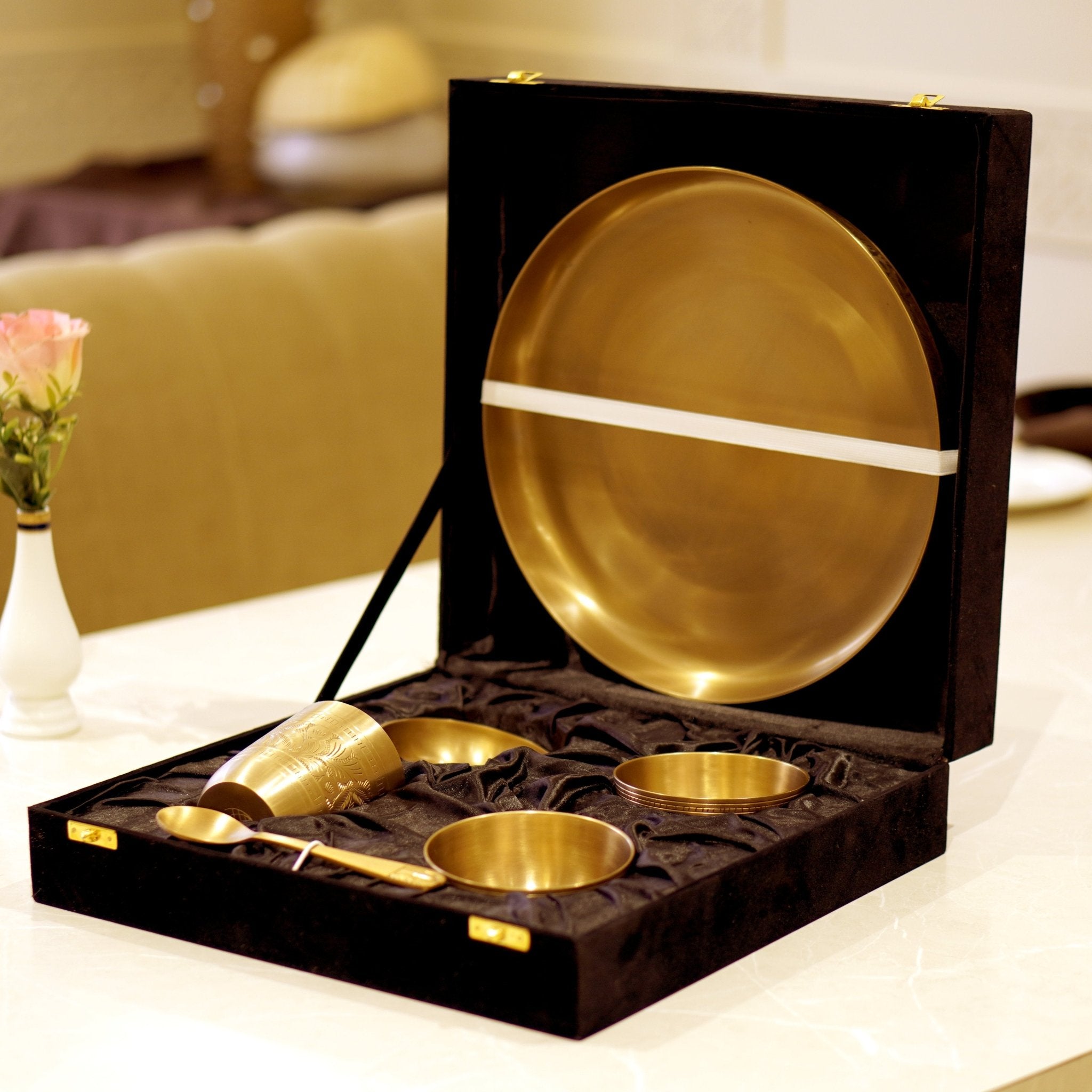
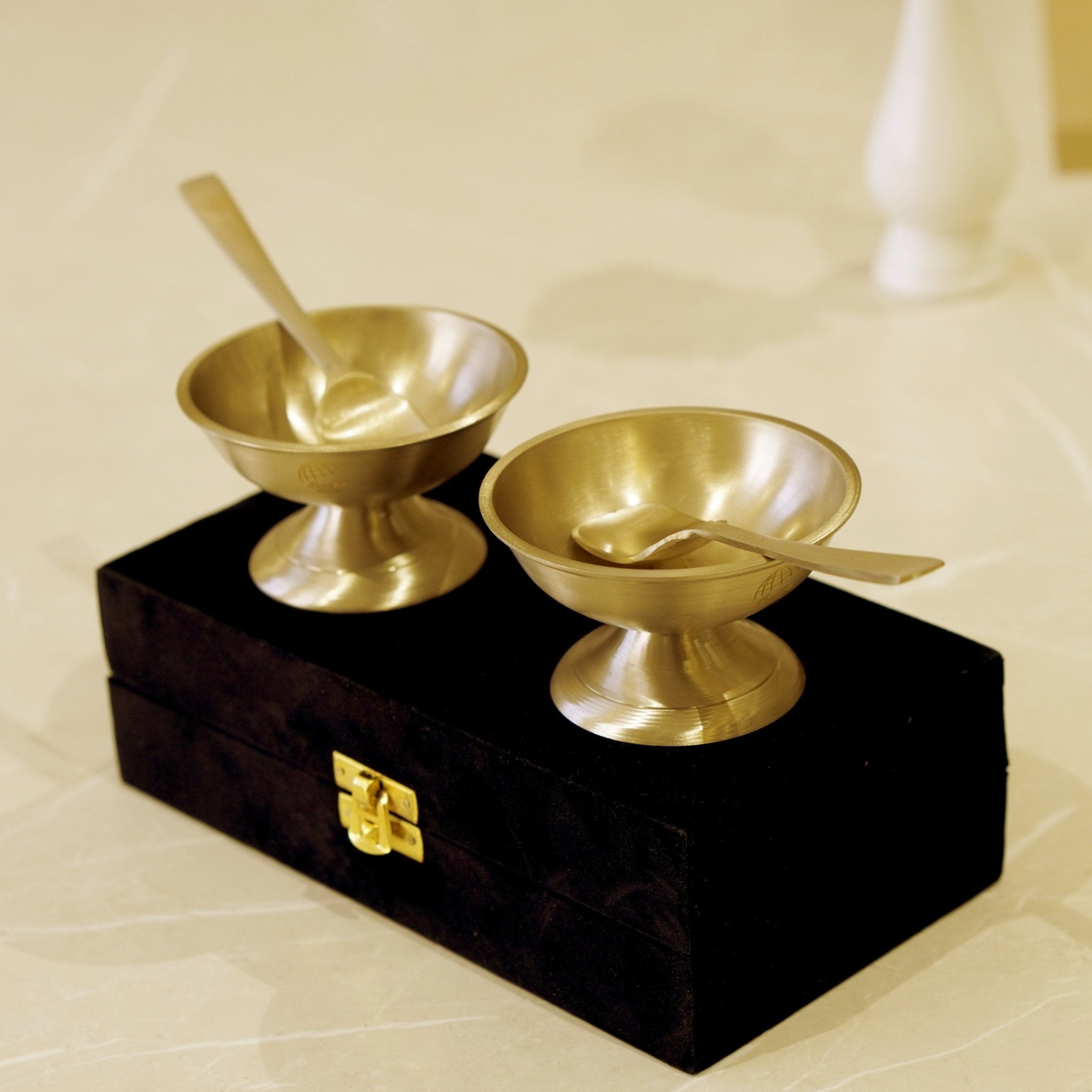
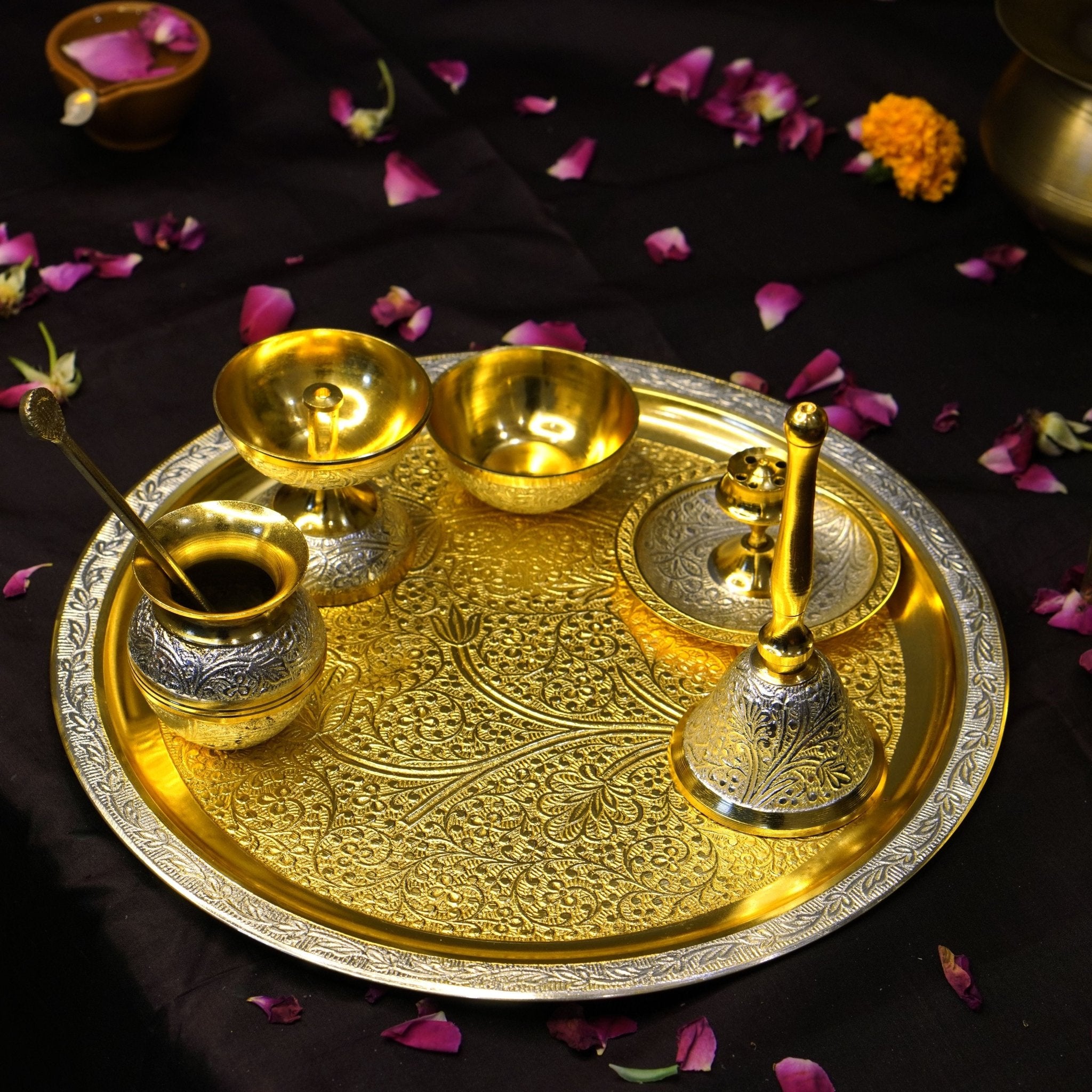
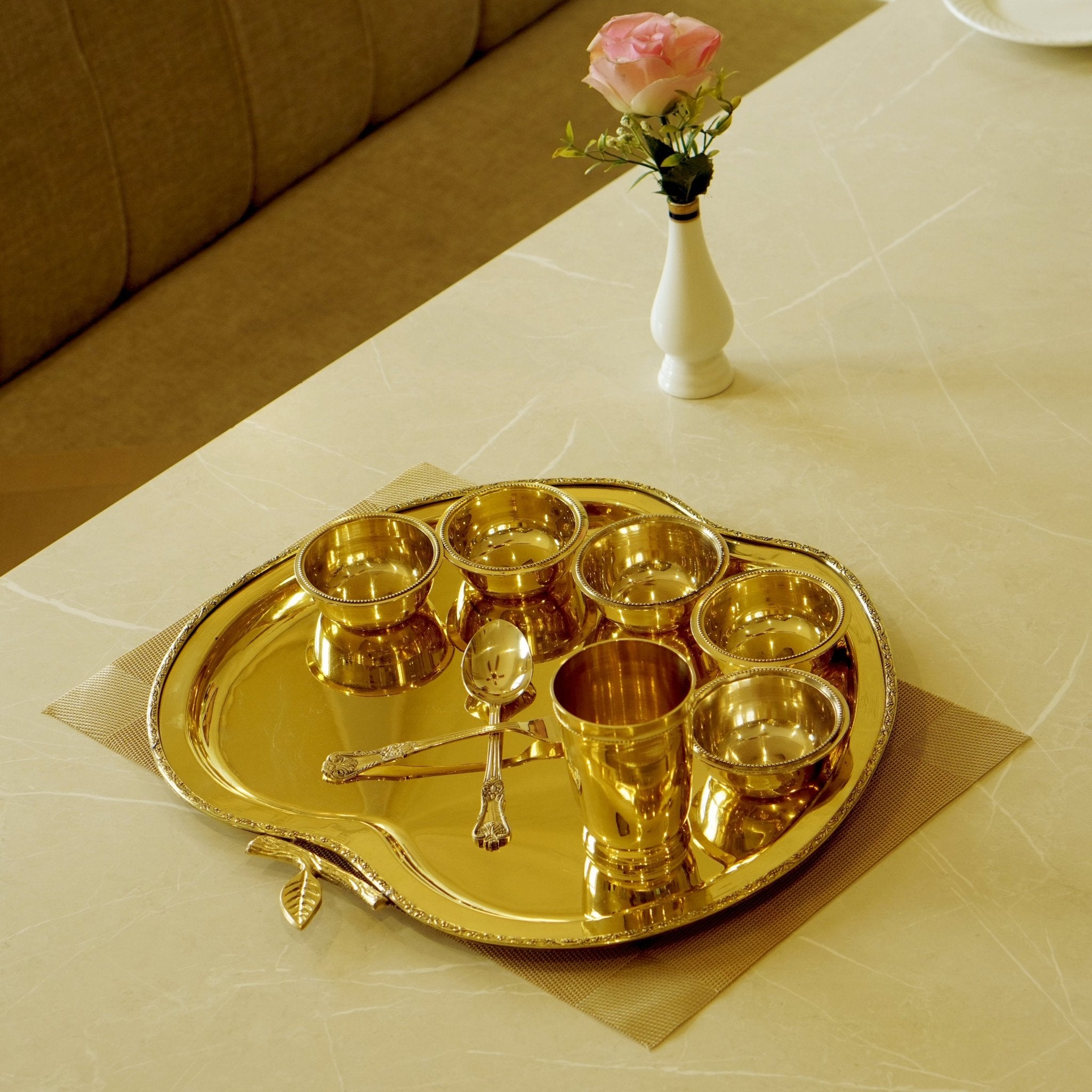
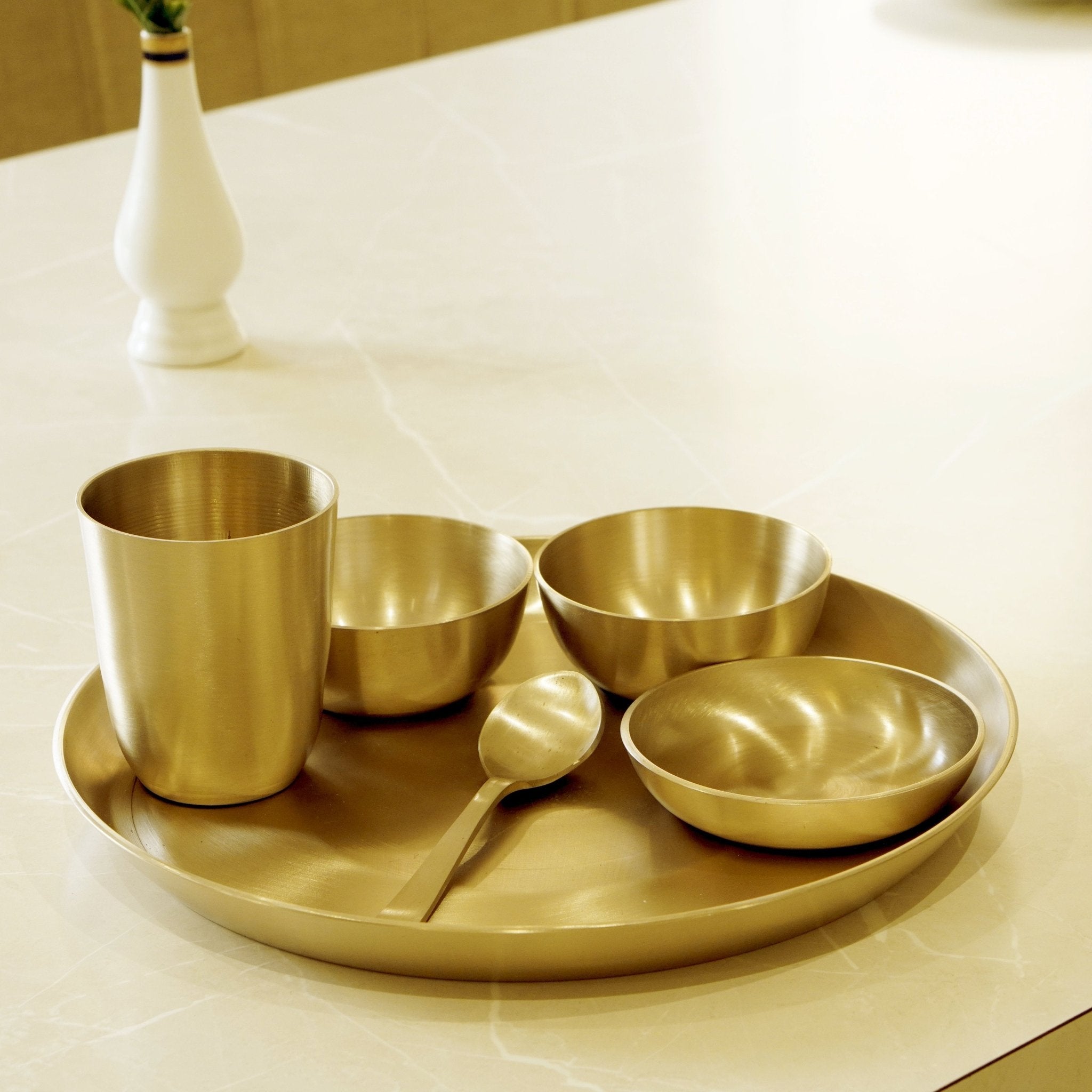
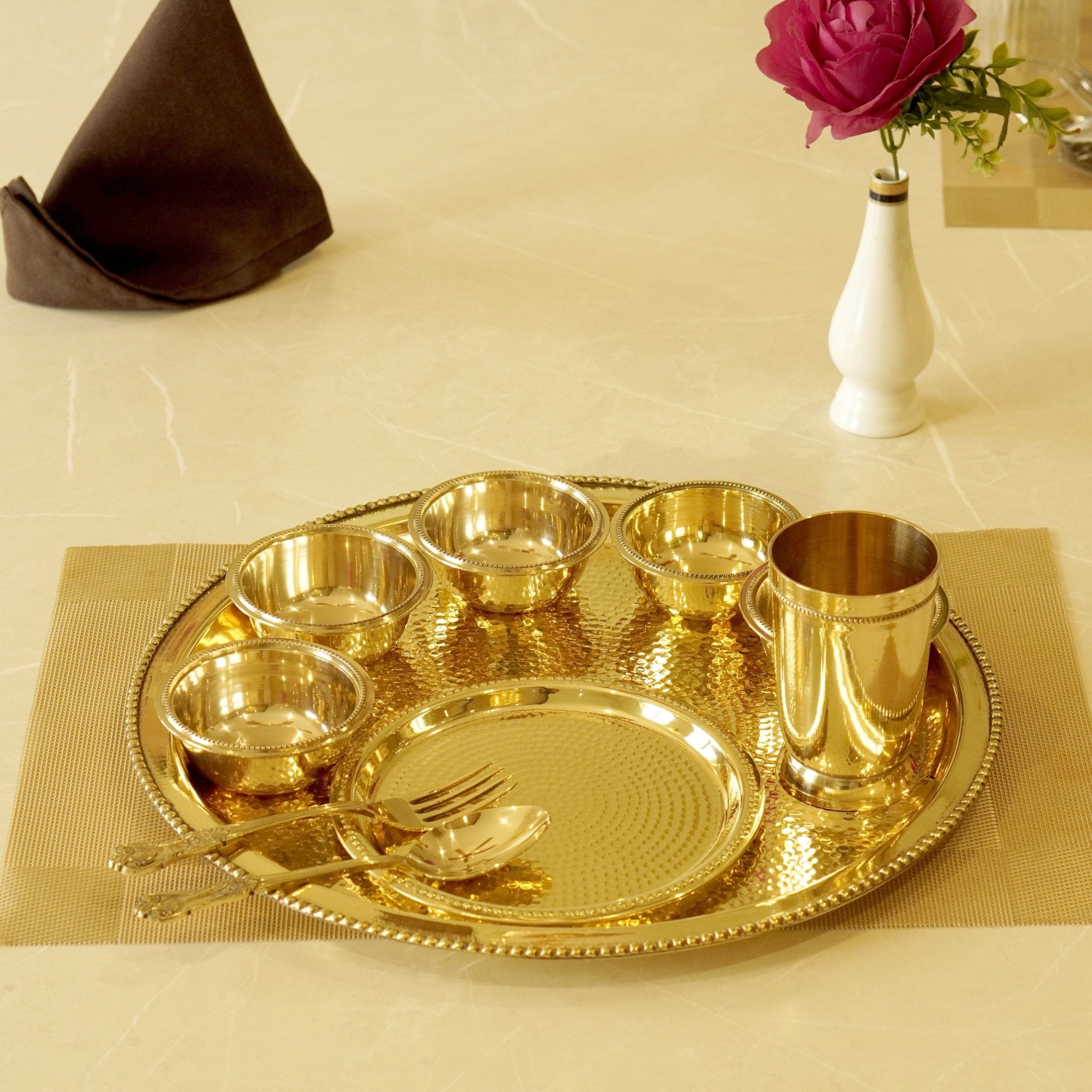
A kansa dinner set is a collection of bronze pieces sold together so they match. The usual lineup includes a thali, some katoris, a tumbler and a spoon. Bigger sets add serving bowls and ladles.
How do you tell kansa from brass by eye? Colour is the first clue. Kansa has a duller, deeper gold, a bit like an old temple lamp. Brass is brighter, nearly yellow. Then pick it up. Kansa is heavier than you might expect. Finally, give the edge a light flick with your fingernail. Good bronze rings for a second or two, while brass generally sounds different. Our brass vs bronze guide has more details.
Full Set or One Piece at a Time?
Lots of homes build their kansa collection slowly. A thali from someone's wedding. Two katoris bought on a trip to a temple town. A glass that turned up as a gift, and nobody remembers from whom.
It's a lovely way to collect. It also means nothing matches. One bowl is shinier than the rest, the glass is a slightly different shade, and the katoris don't sit properly on the thali.
Buying a complete kansa dinner set gets around all of that. Pieces made together are more likely to have a consistent finish, the katoris are sized for the plate, and you may pay less than you would for the same items bought individually. If you're starting fresh, buy the set. Nothing stops you adding to it later.
How Does Kansa Compare with Brass and Steel?
If you haven't settled on bronze yet, this comparison puts a kansa dinner set next to the two other metals found in many Indian kitchens.
| Feature | Kansa (Bronze) | Brass | Stainless Steel |
|---|---|---|---|
| Made from | Copper and tin | Copper and zinc | Iron-based alloy with chromium |
| Colour | Deep, soft gold | Bright yellow-gold | Silver-grey |
| Weight | Generally heavy | Fairly heavy | Varies by construction |
| When tapped | May produce a clear ring | Sound varies by shape and alloy | Sound varies by shape and thickness |
| Care | Hand wash, dry and polish occasionally | Hand wash and polish occasionally | Generally easy to maintain |
| Sour food | Avoid prolonged contact | Avoid prolonged contact with unlined brass | Generally suitable for food contact |
| Common uses | Family meals, festivals and gifting | Serving and pooja items | Everyday use and storage |
Steel is easier to maintain, and nobody's arguing that. You can put it in the sink and forget about it. Kansa asks a little more of you and brings weight, warmth and a table that feels like an occasion. Brass falls somewhere in the middle.
Before You Buy a Kansa Dinner Set, Check These Things
Shops love showing you the engraving. Engraving is nice, but it tells you very little about whether a kansa dinner set will last. These are the checks worth doing.
1. Is It Genuine Bronze?
Not everything labelled kansa is genuine bronze. Some sellers may pass off brass or sell a cheaper alloy with a bronze-coloured coating. Ask the seller directly whether the item is made from copper-and-tin bronze.
You can check a few clues yourself. Look for a muted gold colour rather than bright yellow. A light tap may produce a clear ring, although sound alone cannot confirm the alloy. A magnet test is also not definitive, so ask for reliable material information or documentation when possible.
Buying online? Read the description carefully. A golden finish and solid bronze are not the same thing.
2. How Heavy Does It Feel?
Pick up the thali. A substantial kansa thali should feel solid for its size. If it feels unusually light, the metal may be thin, and thin bronze can bend or dent more easily.
Online listings for a kansa dinner set may mention the weight of each piece. If the information is missing, ask the seller before purchasing.
3. Does Every Piece Match?
Spread the whole set out on a counter in good light. Every piece should have a reasonably consistent colour and finish. Polished, matte or hammered finishes can all work, as long as the overall set is consistent.
Look for blotchy patches, small pits, scratches left by tools, or a coating that looks different from the metal underneath. If you're paying for matching kansa dinnerware, it should look coordinated.
4. Are the Rims Smooth?
Run a fingertip carefully around the edge of the thali and each katori. You touch the rims at every meal and during every wash, so they should be smooth and rounded. Sharp spots or rough edges can indicate poor finishing.
5. Does the Thali Sit Flat?
Place it on a flat table and press the edge in a few places. If it rocks, reconsider the purchase. Check the katoris and tumbler for stable bases too. It seems minor in the shop, but it can be irritating at every meal.
6. How Many Pieces Do You Really Need?
Think about who's eating: just you, a couple, or a joint family with relatives visiting regularly? Also consider how many katoris you use at an ordinary lunch. Buying too few pieces can mean having to find matching additions later.
7. Will It Fit Your Table and Cupboard?
Ask for the thali diameter and the capacity of each katori. Four katoris on a small thali can feel cramped. A very large thali might not fit your dining table or the shelf you had in mind. Laid out together, the set should feel comfortable rather than crowded.
8. What Does the Seller Say About Care?
Ask how to clean the set and which foods should not be left in it for long periods. A knowledgeable seller should be able to explain the material and its care requirements clearly.
How Many Pieces Come in a Kansa Dinner Set?
Sets vary, but many fall into one of these general categories.
| Set Type | Usually Includes | Best Suited For |
|---|---|---|
| Single | 1 thali, 2–4 katoris, 1 tumbler and 1 spoon | One person or a personal gift |
| Couple | 2 thalis, 4–6 katoris, 2 tumblers and 2 spoons | Newlyweds and small homes |
| Family | 4–6 thalis with matching katoris, tumblers and spoons | Everyday family meals |
| Full Dining | A family set plus serving bowls and ladles | Festivals and entertaining guests |
If you might want more pieces later, choose a range that sells individual matching items. Then your kansa dinner set can grow without becoming a mismatched collection.
Giving a Kansa Dinner Set as a Gift
Many families still eat from the bronze set they received at their wedding. That's the appeal of a kansa dinner set as a gift: it doesn't have to stay locked away in a showcase. It can be used for years.
Match the size to the recipient. Newlyweds may appreciate a couple set, while a new home may benefit from a family set. Check the packaging too, because bronze can dent during transport. Include a care note if the recipients are new to kansa and may not know that it should be kept out of the dishwasher.
Taking Care of Your Kansa Dinner Set
It sounds like a lot of work, but it isn't.
- Hand wash with mild soap and water.
- Dry immediately with a soft cloth.
- Avoid steel wool and rough scrubbers.
- Do not store food in the set for extended periods.
- Avoid leaving sour or highly acidic and salty foods in it for long periods, including curd, pickles and lemon-based dishes.
- Polish occasionally using a suitable method recommended for the alloy.
Your set may darken slowly and develop a soft patina. Don't panic. That's a natural change in the surface of bronze, and many people prefer the aged appearance. Our bronze (kansa) care guide covers polishing in more detail.
Common Mistakes When Buying Kansa Dinnerware
A few mistakes come up repeatedly when people shop for kansa dinnerware.
- Choosing a set only because it is cheap: A price far below comparable products may indicate thinner metal, uncertain composition or lower-quality finishing.
- Confusing brass with bronze: Check the material rather than relying on colour alone.
- Focusing only on engraving: Check the weight, rim, base and finish too.
- Forgetting to measure: Confirm that the thalis and serving pieces fit your table and storage space.
- Buying individual pieces from several shops: Differences in alloy, finish and dimensions can leave you with a mismatched collection.
Kansa Dinnerware from HV Metals
HV Metals makes bronze kansa dinnerware, including thalis, katoris, tumblers, serving pieces and complete kansa dinner set collections. The range also includes brass, copper and stainless steel products.
For coordinated dining metalware, explore the available range or contact HV Metals to enquire about the trade catalogue.
Frequently Asked Questions
What Comes in a Kansa Dinner Set?
Most sets include a bronze thali, two or more katoris, a tumbler and a spoon. Family and full dining sets may include additional thalis, serving bowls and ladles.
How Can I Tell If a Kansa Dinner Set Is Real?
Ask the seller to confirm that it is made from copper-and-tin bronze. Check the colour, weight and finish, but do not rely on sound or a magnet test alone. Reliable material details from the seller are more useful.
Is a Kansa Dinner Set Suitable for Daily Use?
Yes, provided it is suitable for food contact and cared for correctly. Hand wash it, dry it promptly, avoid prolonged contact with sour foods, and polish it occasionally as needed.
Is Kansa Dinnerware the Same as Brass?
No. Kansa is traditionally bronze, made from copper and tin. Brass is made from copper and zinc. Their colour, properties and care requirements can differ.
How Many Pieces Should I Buy?
Choose according to your household size and dining habits. A single set suits one person or a gift, a couple set suits a small household, and a family set may work better for regular family meals.
Can Kansa Go in the Dishwasher?
Hand washing is recommended. Dishwasher detergents and high temperatures may dull the finish or leave marks. Wash the set by hand, dry it thoroughly and polish it when needed.


Leave a comment
This site is protected by hCaptcha and the hCaptcha Privacy Policy and Terms of Service apply.