


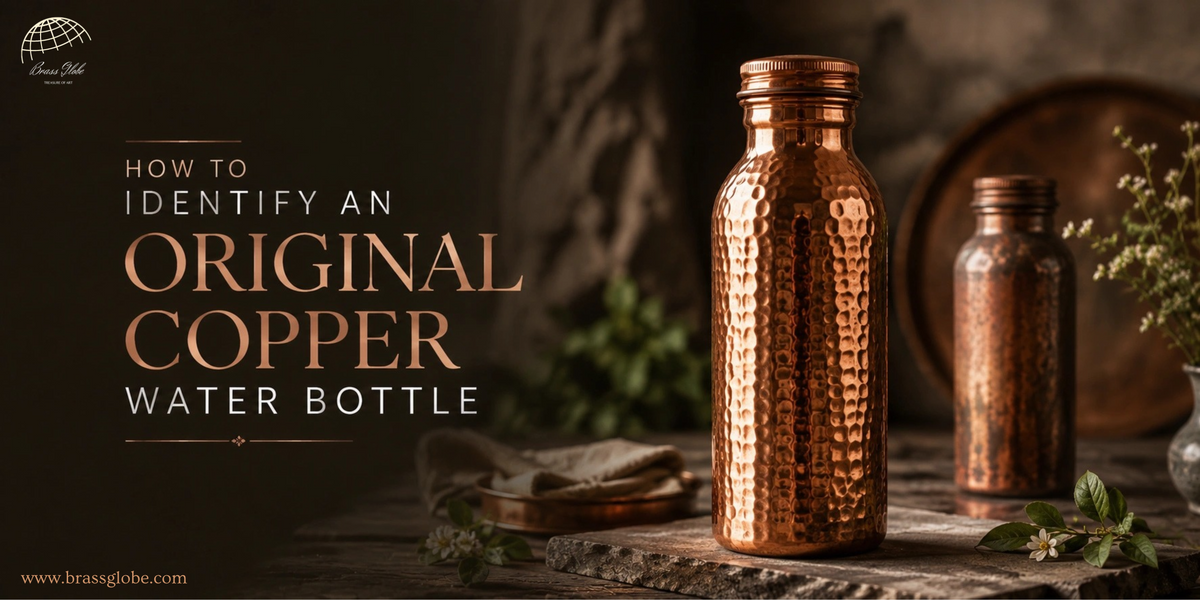
How to Identify an Original Copper Water Bottle
Copper water bottles are everywhere now. Wellness pages, Ayurvedic brands, and online marketplaces all seem to list them constantly, but a lot of “pure copper” listings are not what they say. Some items are copper plated on top of a steel base, and others are alloys that cosplay as original copper while basically not doing the same job.
So yes, learning how to recognise copper is the difference before you buy which helps both your health, and your money.
What Makes Original Copper Different From Fake Alternatives
Real original copper is elemental. Not a blend, not a coating thing.
Basically a copper plated product has a thin copper sheet above different metals under it. That thin layer can chip and fade, and the water still never fully touches authentic copper.
With a true pure copper water dispenser bottle, the stored liquid contacts the copper itself, and that is what supports the antimicrobial effect people talk about. A plated bottle can’t quite replicate that.
In practice, you’re checking five clues: color, mass/weight, sound, magnetism, and oxidation.
The Color Test: What Pure Copper Actually Looks Like
Original copper usually shows a warm reddish-brown tone. Not gold, not silver grey, and not that “chrome” vibe. It has an earthy red look, with a softer matte sheen.
|
Metal |
Appearance |
|
Pure Copper |
Reddish-brown with a matte, warm tone |
|
Brass |
Yellow-gold with a brighter finish |
|
Steel |
Cool silver-grey, often shiny |
|
Copper-Plated |
Uneven tone, especially near seams |
Do a quick zoom on the seams, and especially the inner rim. Plated fakes often reveal the base metal near edges, where the coating gets thin or breaks. If we notice grey shifting near joints , that’s a big warning sign.
Weight and Sound: Two Quick Tests You Can Do Right Now
Pick up the bottle. Original copper has genuine heft to it. For example, an 850ml pure copper water dispenser bottle commonly lands around 290 grams and a 950ml bottle weighs 320 grams most probably. Just to make sure that it sounds denser, if the bottle is light weighted or flimsy it means it's not the real one.
Now tap it lightly. Pure copper makes a low dull ring. Steel gives you a brighter, sharper sound. Copper tends to sound denser, almost muted, like the note gets swallowed. That difference is surprisingly easy to judge within seconds.
If it feels too light, and rings too bright , chances are high it is not genuine.
The Magnet Test: Simplest Way to Know How to Recognize Copper
Another way of testing is that one should grab a small piece of magnet and stick to the bottle. If the bottle is made up of original copper it will not stick to it , as we know copper is non magnetic in nature. So the magnet should not cling.
As we know other metals like iron, steel and ferrous components react to magnets easily. That means it’s not pure copper no matter what the label claims.
This test is basically instant , three seconds may be, as how to recognise copper easily. A fridge magnet works. An original copper bottle shows zero magnetic pull anywhere on its outer surface.
Oxidation and Patina: Signs of an Original Copper Bottle
Original copper bottles show different signs of their purity.Such as if a bottle has been used for a longer time it turns its colour from reddish brown to darker brown,due to moisture shifts. Later green or blue grey patches appear on the bottle.This natural tarnishing process declares copper authenticity.
If the bottle stays uniformly shiny even after regular washing, that can mean it’s plated, or it has some sort of protective coating.
Also pay attention to the “feel” of it. Copper can dent more easily than steel. If the walls feel rigid, with no give at all, it may be a harder hidden base metal underneath that layer.
Price, Brand, and Sourcing: Where You Buy Matters
Authentic original copper usually costs more. The raw material isn’t cheap, and the handcrafting requires real skill. So a price that looks too good to be true almost always hints at a purity compromise.
Look for brands that openly disclose the material makeup, show product weight clearly, and explain sourcing without vague wording. Brass Globe’s copper water bottle collection[copper water bottle](https://brassglobe.com/products/copper-water-bottle)—like the [sleek copper bottle](https://brassglobe.com/products/sleek-copper-bottle), [curved copper bottle](https://brassglobe.com/products/curved-copper-bottle), and a variety of unique copper water bottle designs—are described as crafted from pure copper with stated weights and no “vague” information.
And about the wellness angle: copper-stored water only gets those claimed benefits when the metal is actually pure, and the water makes direct contact with it. If it’s plated or an alloy, you’re not getting the same direct-contact result.
If you’re also into traditional kitchen choices, Brass Globe also carries brass cookware, plus pital utensils, all built around a similar standard for purity and craftsmanship.
FAQs
Q: Can I test copper at home without a magnet?
Yes. Use the color check, the weight check, and the tap test. If it looks reddish-brown, feels heavier than expected, and makes a dull lower sound , those together are strong signs it’s genuine copper.
Q: Does a copper bottle need to be 100% pure copper?
Yes. Alloys and plated versions block the direct water contact. Because of that, the antimicrobial properties people mention simply won’t apply the same way.
Q: What color is original copper?
The original colour of copper is reddish brown with a rough tone on it. Later on it turns to dark green or greyish blue patina.
Q: How long should I store water in a copper bottle?
6 to 8 hours of time for storing water before drinking is sufficient. Don't store it for a longer duration like 10 hours.
Q: Does authentic copper have a smell?
In pure copper bottles faint or slight metallic scent is normal. As we know gentle mineral smell will appear if the water is stored overnight.
Q: My bottle turned green. Is it still safe to use?
Yes, it is still safe to use because a green layer called patina is a natural product of copper oxidation. One should always clean the copper bottles regularly with lemon and salt and it works fine.



Leave a comment
This site is protected by hCaptcha and the hCaptcha Privacy Policy and Terms of Service apply.