
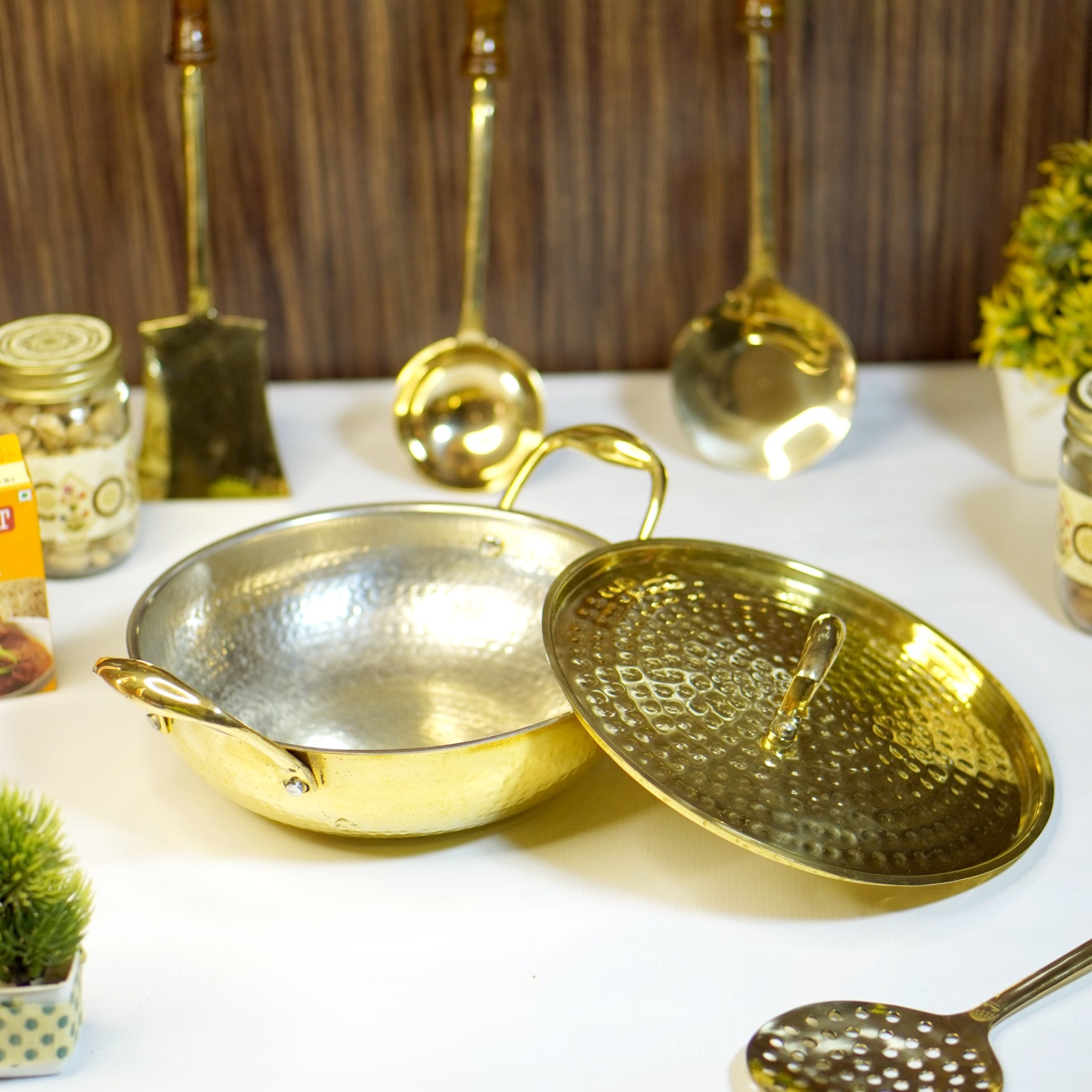
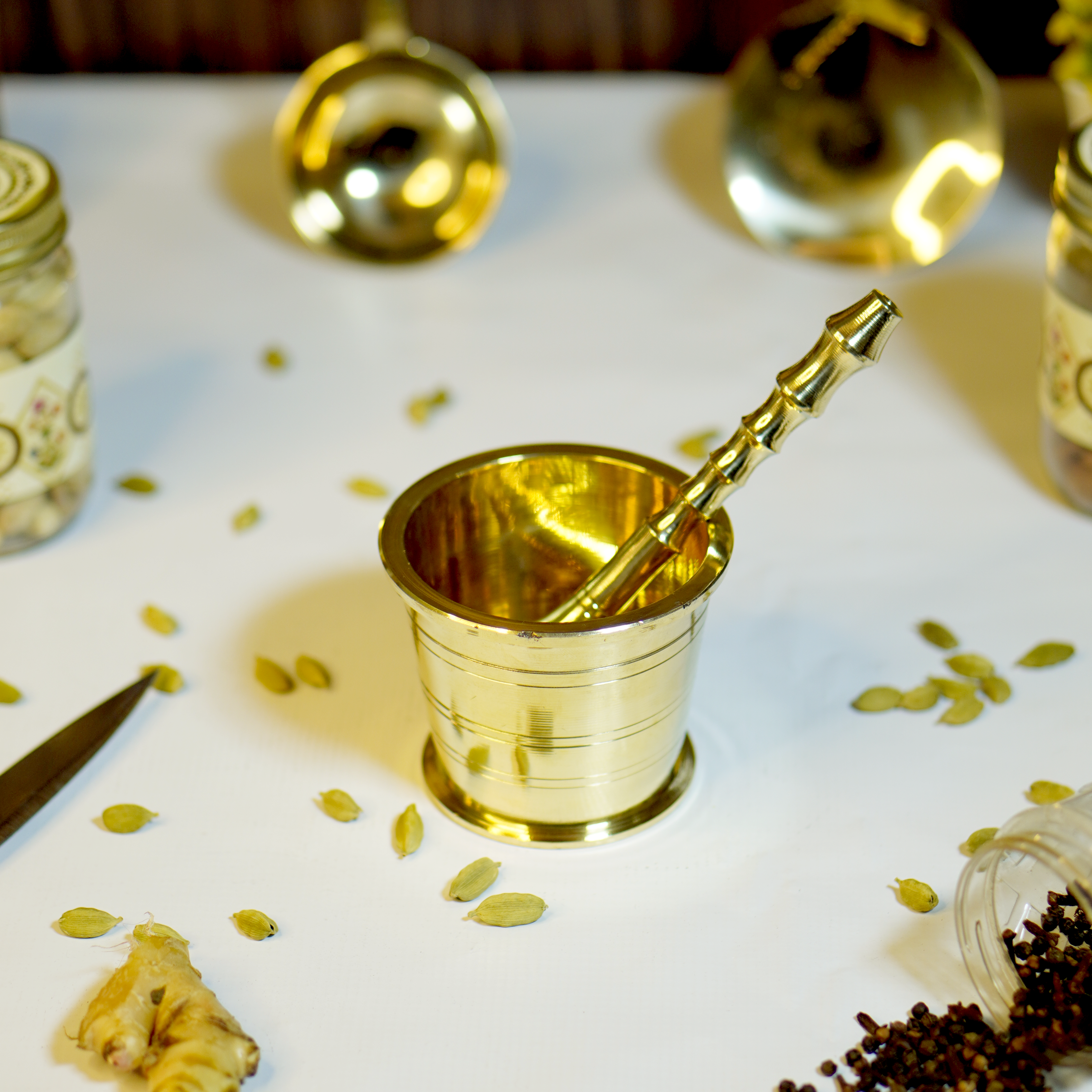
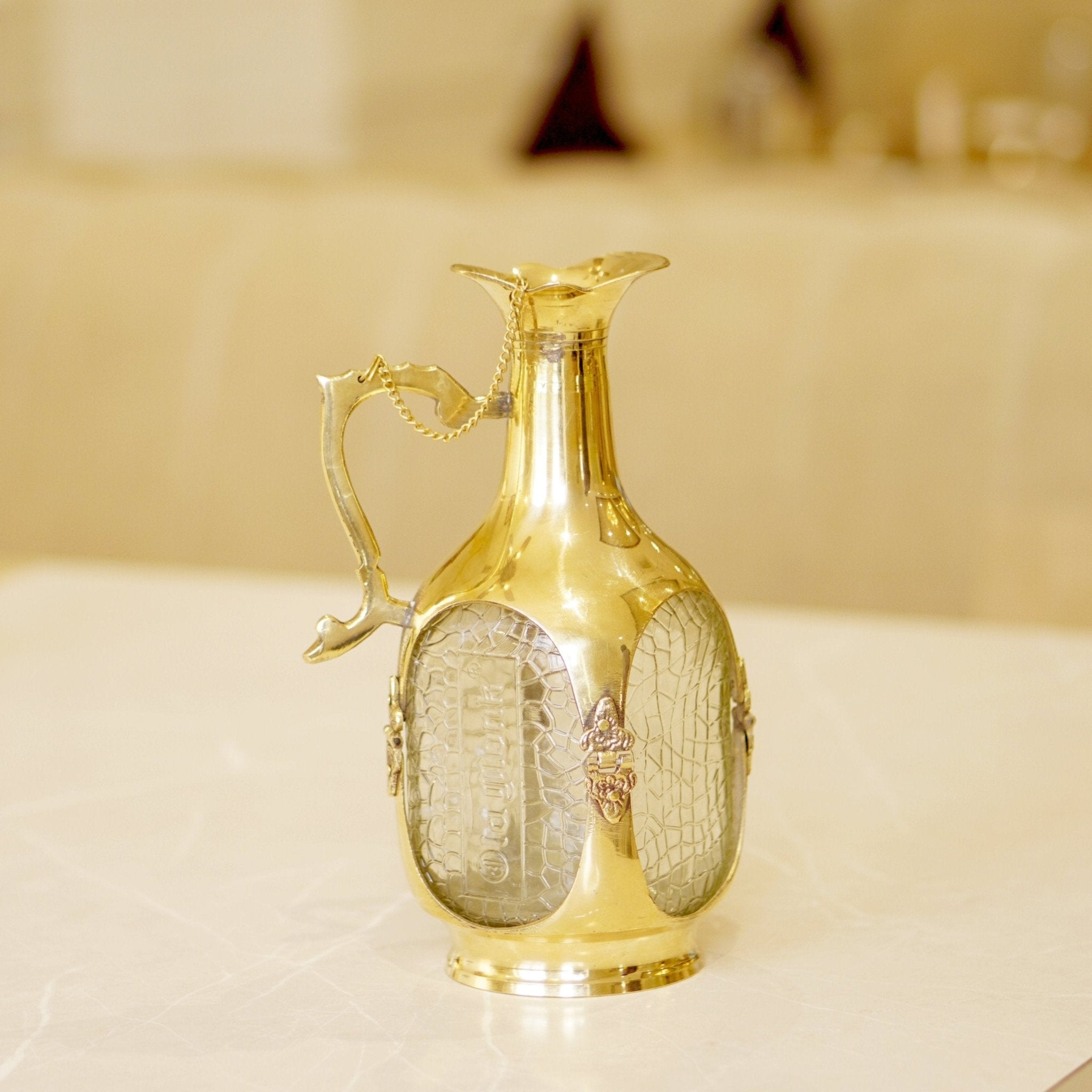
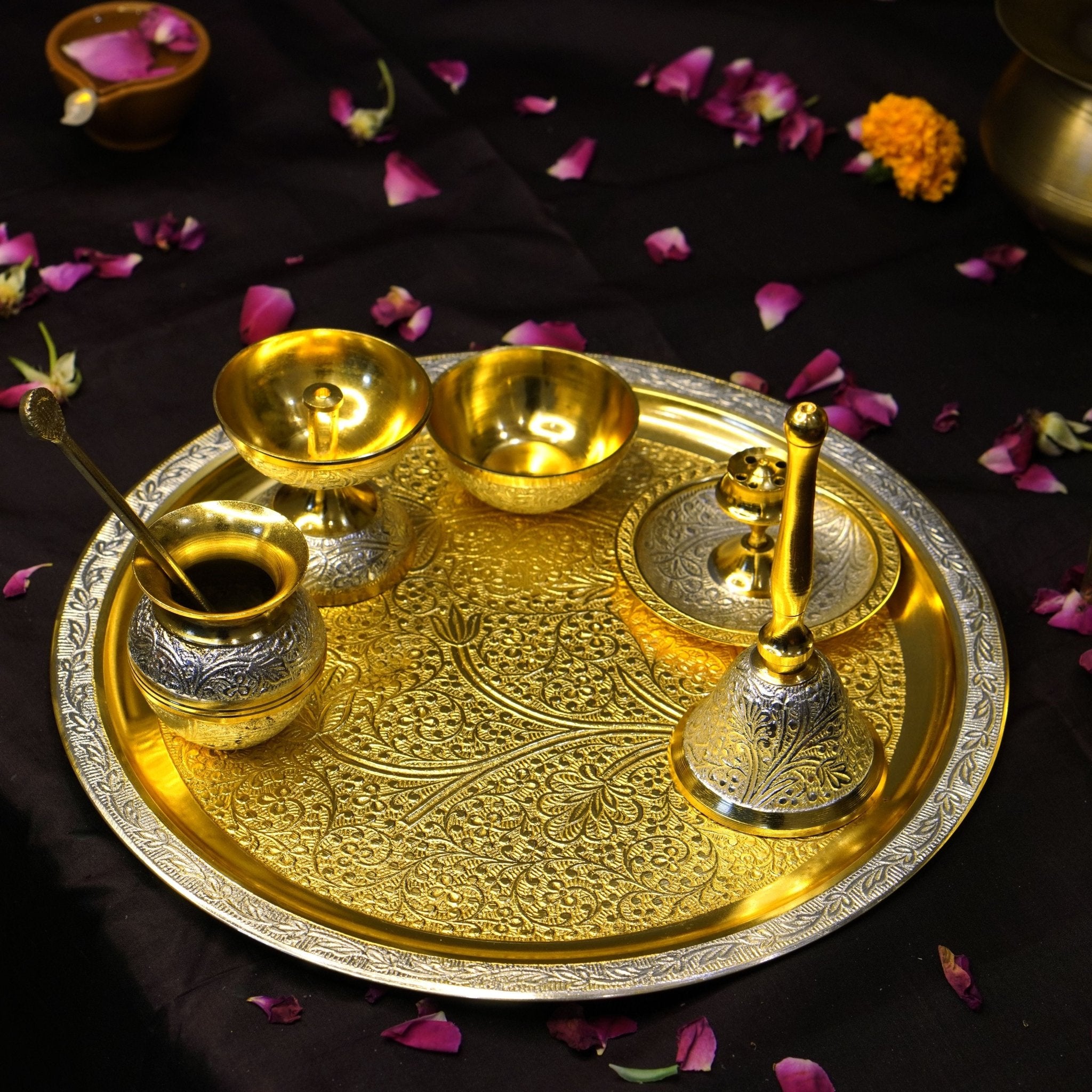
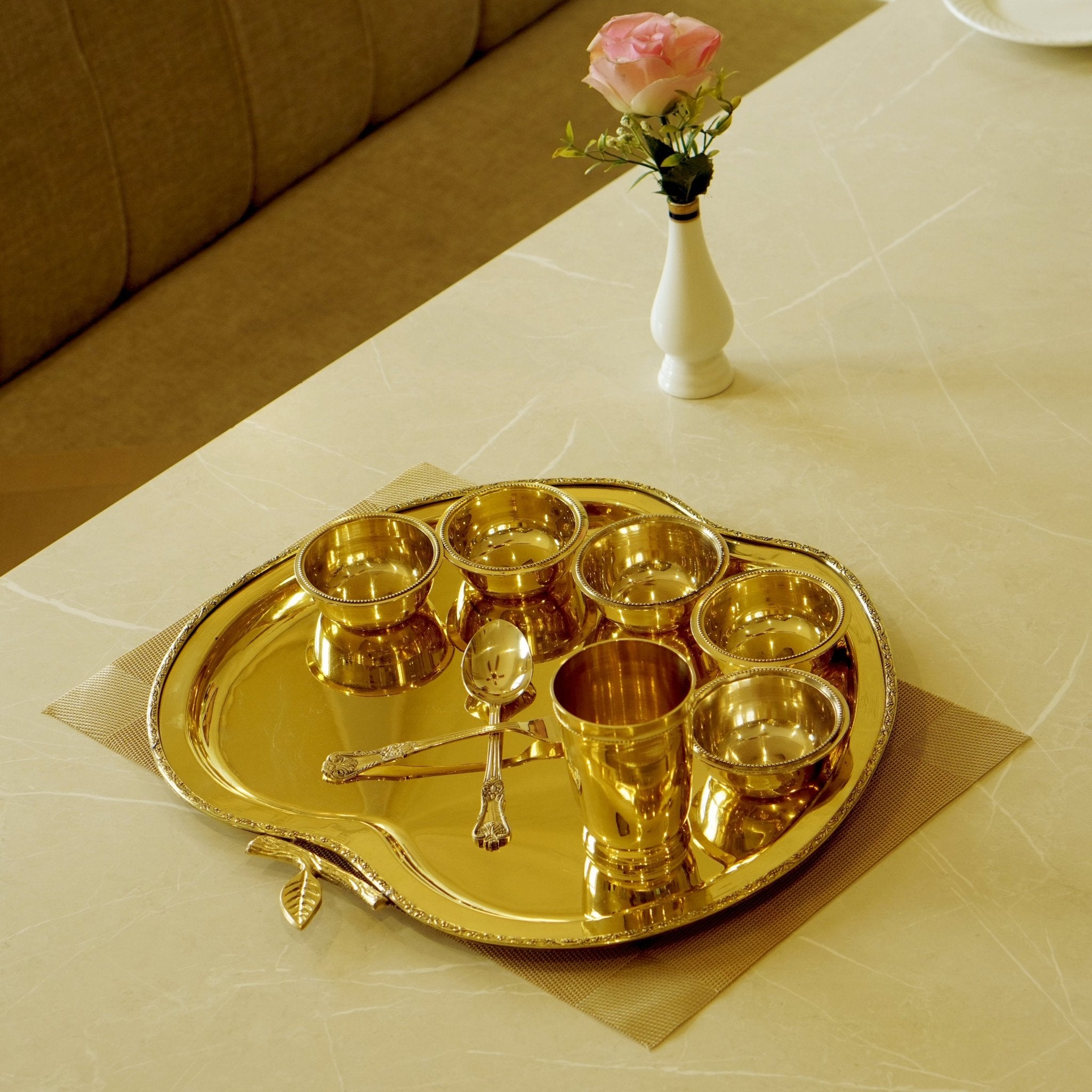
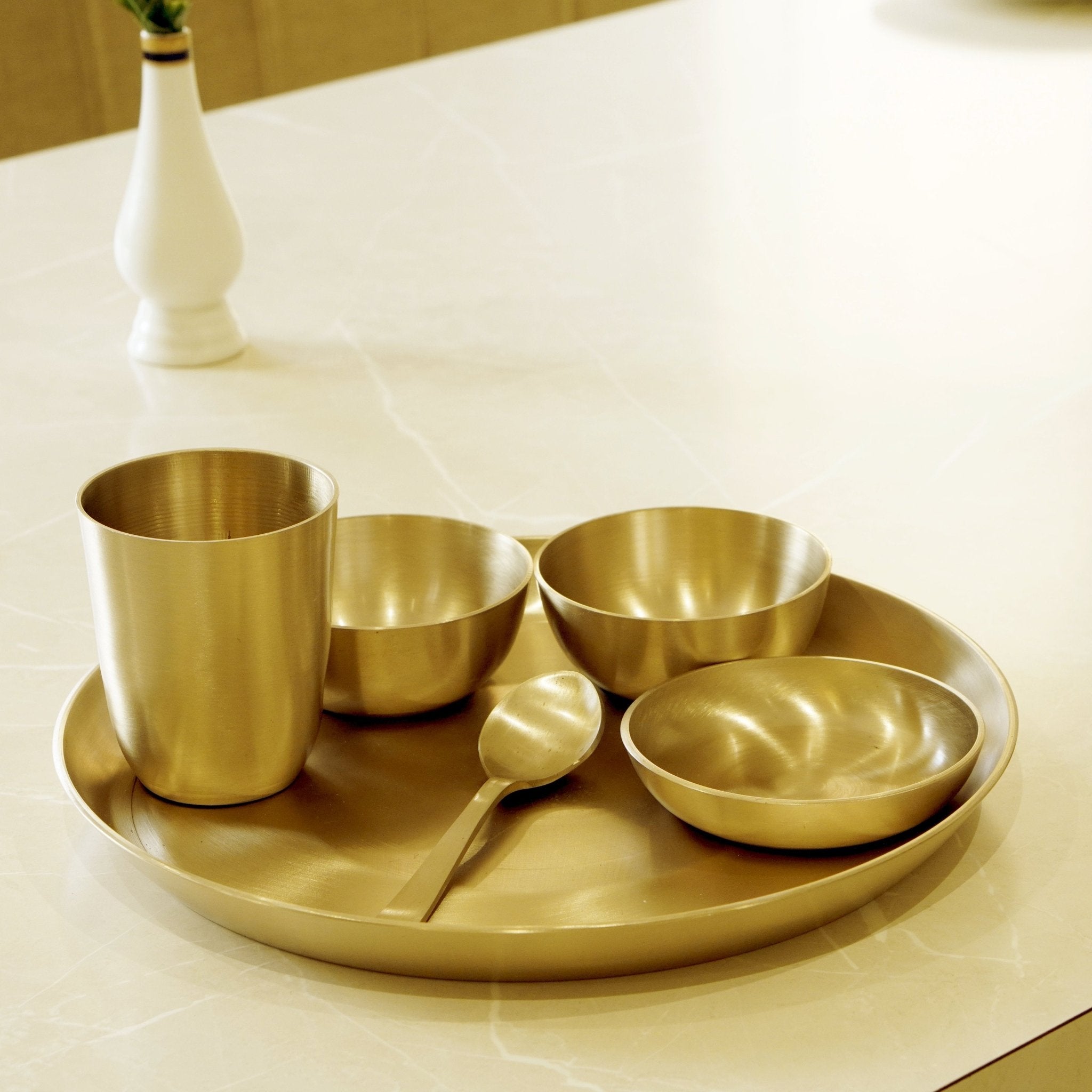
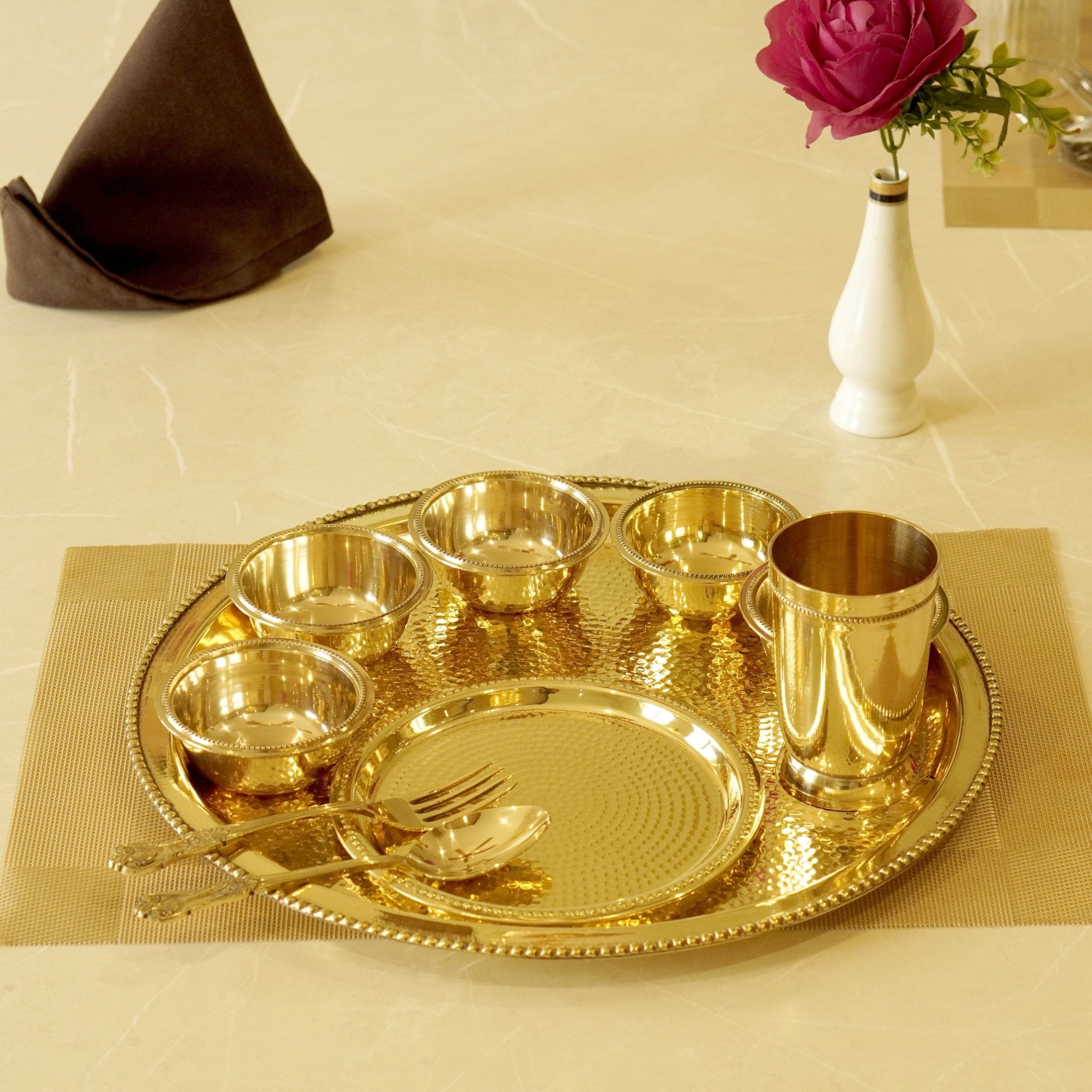
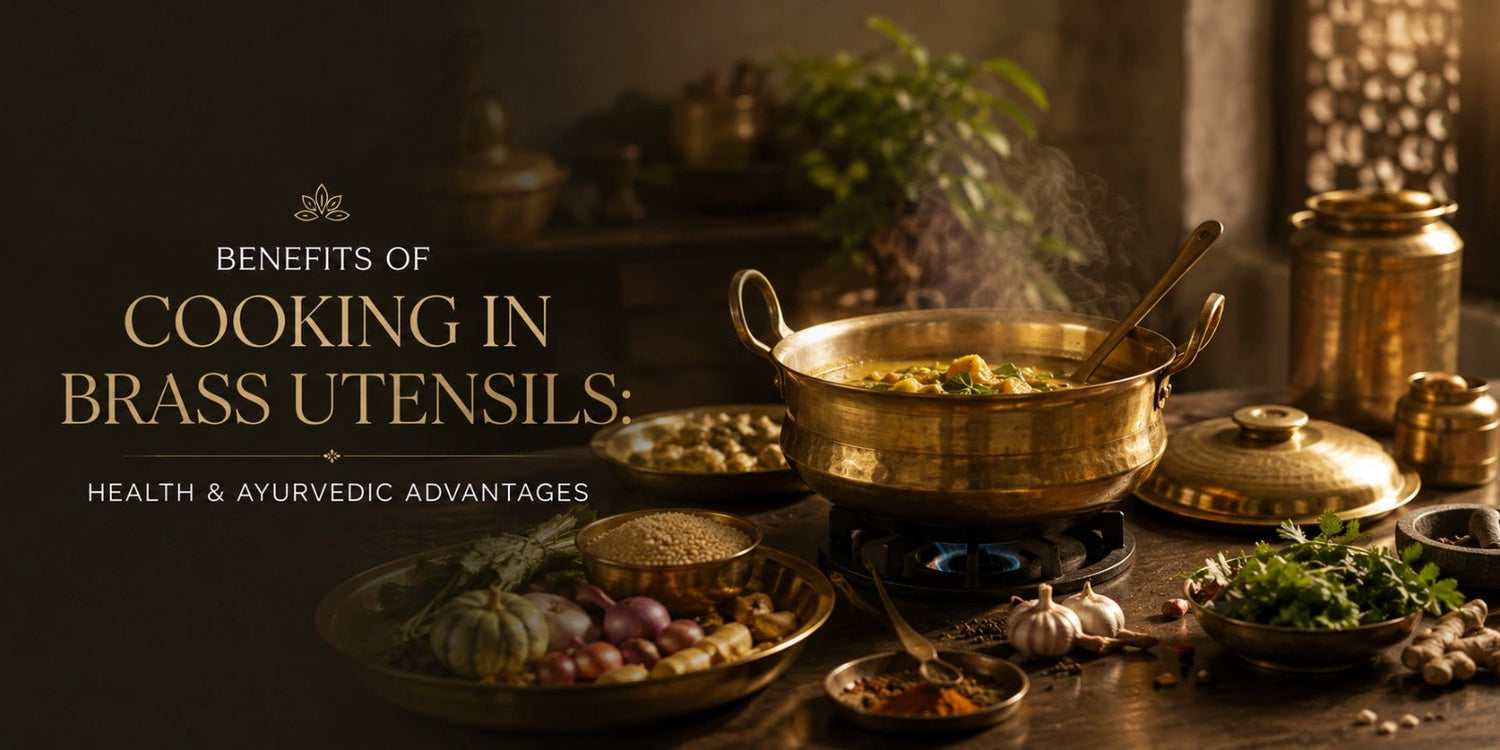
Our grandmother was probably cooking dal in a brass vessel, without a second thought. She just figured it tastes better, or maybe it feels warmer, even if she never said why. And honestly she was right. Now both science and Ayurveda are catching up to explain why brass utensils are one of the smarter kitchen decisions you can make. Brass utensils are more common nowadays in use in different sections. Benefits of cooking in brass utensils which is time saving and prevents harmful metal and bacterial contact.
What Makes Brass a Stronger Cooking Metal
Brass is basically an alloy of copper and zinc. That pairing separates it from stainless steel, or non-stick options, in a very noticeable way. Copper moves heat faster than most metals you’d find in a kitchen. Zinc brings in that structural strength, so the vessel heats more evenly, stays reliable for years, and during cooking it may contribute trace minerals into your food, little by little.
This isn’t something new. Ancient Indian, Greek, and Egyptian kitchens relied on brass and copper vessels all the time. The difference now is that we can describe the chemistry behind what people observed through plain day to day experience.
Top Health Benefits of Brass Utensils
Benefits of cooking in brass utensils can bring real health perks, not just “traditional vibes”. Here’s what your food may gain while it cooks.
Copper and zinc can leach in tiny trace amounts into food. As these elements matter for normal body function in a day to day life. Nerve operations, production of collagen and absorption of iron are all the key factors helped by copper. On the other hand zinc enhances our immune response, quick wound repair and enzymes work.
It is clearly known that brass tends to be slightly alkaline in nature. Food cooked in it can keep a more balanced pH level. That may help reduce excess stomach acid over time and support easier digestion, for some people.
As a metal, brass contains antibacterial properties which kill germs instantly. Different research and studies confirms that copper based alloys can help in reducing bacteria and infectious germs such as E.Coli and Staphylococcus aureus within hours after contact. However which results in lowering the microbial infection risk effectively.
In a human body blood circulation can be supported with the help of brass because it contains copper content which improves it. It also enhances clear skin complexion with stronger hair roots. For a long time it shows that it reduces hair fall and more natural clear skin glow.
When choosing brass cookware for these everyday cooking practices, options such as the Brass Pital Ki Kadai with Tin Coating can be considered for preparing curries, vegetables and other traditional dishes.
Ayurvedic Benefits of Brass Utensils You Should Know
Ayurveda calls brass “Pital” and generally treats it as a functionally neutral metal. In that view it doesn’t strongly aggravate the three doshas such as Vata, Pitta, or Kapha. Because of this, brass is often described as one of the more broadly recommended cooking metals in Ayurvedic practice.
Ayurvedic benefits of brass utensils don’t stop at digestion. Traditional texts describe that food cooked in brass utensils can develop a subtly sweet quality (Madhura Rasa), which is said to calm Vata and support Ojas ,the body’s vital strength.
In Hindu culture Sattvic eating puts great emphasis on light, hygienic mental calmness in the body. Brass is also known as a Sattvic metal. As a result whenever it is in use its believed that the food is more hygienic, energetic and pure compared with other utensils found in different metals.
Generally ayurvedic traditional practitioners often use brass for everyday purposes like digestion issues,skin problems connected to internal heat, and general tiredness. This idea or goal is to enhance the quality of food through this process which is really useful and fruitful for the human body.
Traditional cooking can also benefit from versatile cookware pieces such as the Brass Roti Tawa, which can be used for preparing rotis and other flatbreads as part of an everyday Indian kitchen.
Brass Utensils vs. Modern Cookware: A Quick Comparison
|
Feature |
Brass Utensils |
Non-Stick Cookware |
Stainless Steel |
|
Trace Mineral Transfer |
Yes (Copper & Zinc) |
No |
Minimal |
|
Antibacterial Properties |
Natural |
No |
Minimal |
|
Heat Distribution |
Excellent |
Moderate |
Good |
|
Durability |
Lasts for decades with proper care |
Typically 3–5 years |
Long-lasting |
|
Ayurvedic Compatibility |
Fully recommended |
Not recognized |
Not recognized |
|
Toxic Coatings |
None |
May contain PTFE/PFOA-based coatings (varies by product) |
None |
|
Eco-Friendly |
Yes, fully recyclable |
Limited |
Recyclable |
Is Cooking in Brass Utensils Good for Health? What Experts Say
The question arises now is whether cooking in brass utensils is good for health or not? The actual answer is yes there are many benefits of cooking in brass utensils but there is one condition applied to it. The utensil should be tin coated for cooking acidic foods.
As we know tamarind (Imli), tomatoes or lemon can react with the copper element present in brass and can change the actual taste of the food. And the taste and look of food appears worse. A proper tin lining prevents that reaction.
For non-acidic meals like dal, rice, milk, ghee, and dry vegetables in brass cookware is generally seen as safe and even helpful. Over time, the “brass utensil benefits” can build up. With regular use, some people experience consistent mineral exposure, a steadier gut environment, and less need for synthetic supplements.
For cooking applications where tin coating is important, the Brass Saucepan Tincoated with Lid and Brass Pital Ki Kadai with Tin Coating offer purpose-built options for the kitchen. The Brass Lagoon with Tin Coated can also be incorporated into traditional cooking routines where a tin-coated brass vessel is preferred.
Best BrassGlobe Products to Start Your Brass Kitchen Journey
If you are ready to add brass cookware into your everyday cooking, BrassGlobe has some of the better handcrafted options out there right now as we know the benefits of cooking in brass utensils.
The Brass Pital Ki Parat / Tasla is a premium matte finish kneading and mixing bowl, handcrafted by Indian artisans. You get four sizes, 14 to 20 inches, so it feels like the right starting piece for basically any kitchen situation.
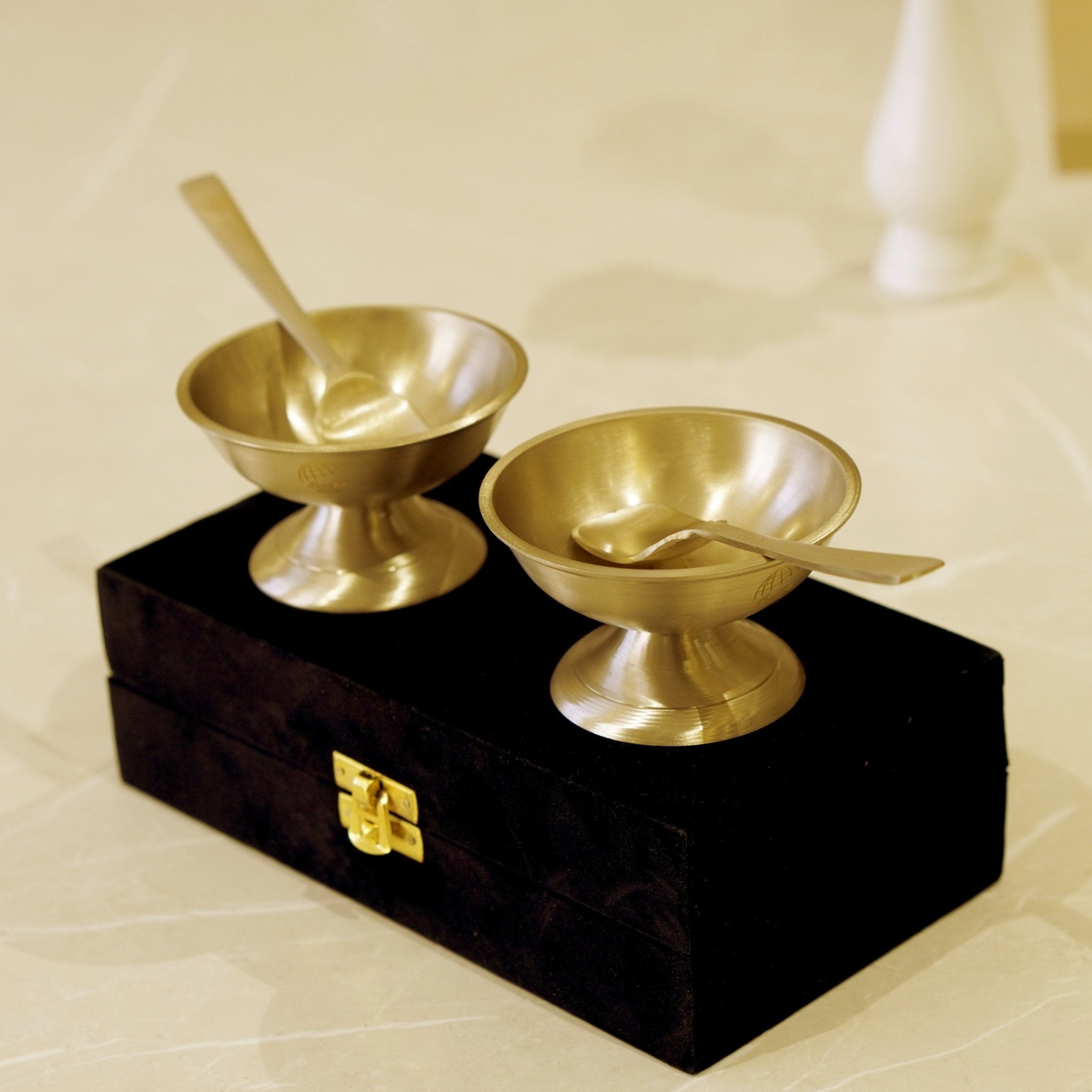
Then there’s the Brass Cup and Saucer Set, it adds that warm brass tone to your tea or coffee routine. Drinking something warm from brass, it’s said to let out tiny mineral hints, right into your morning, routine.
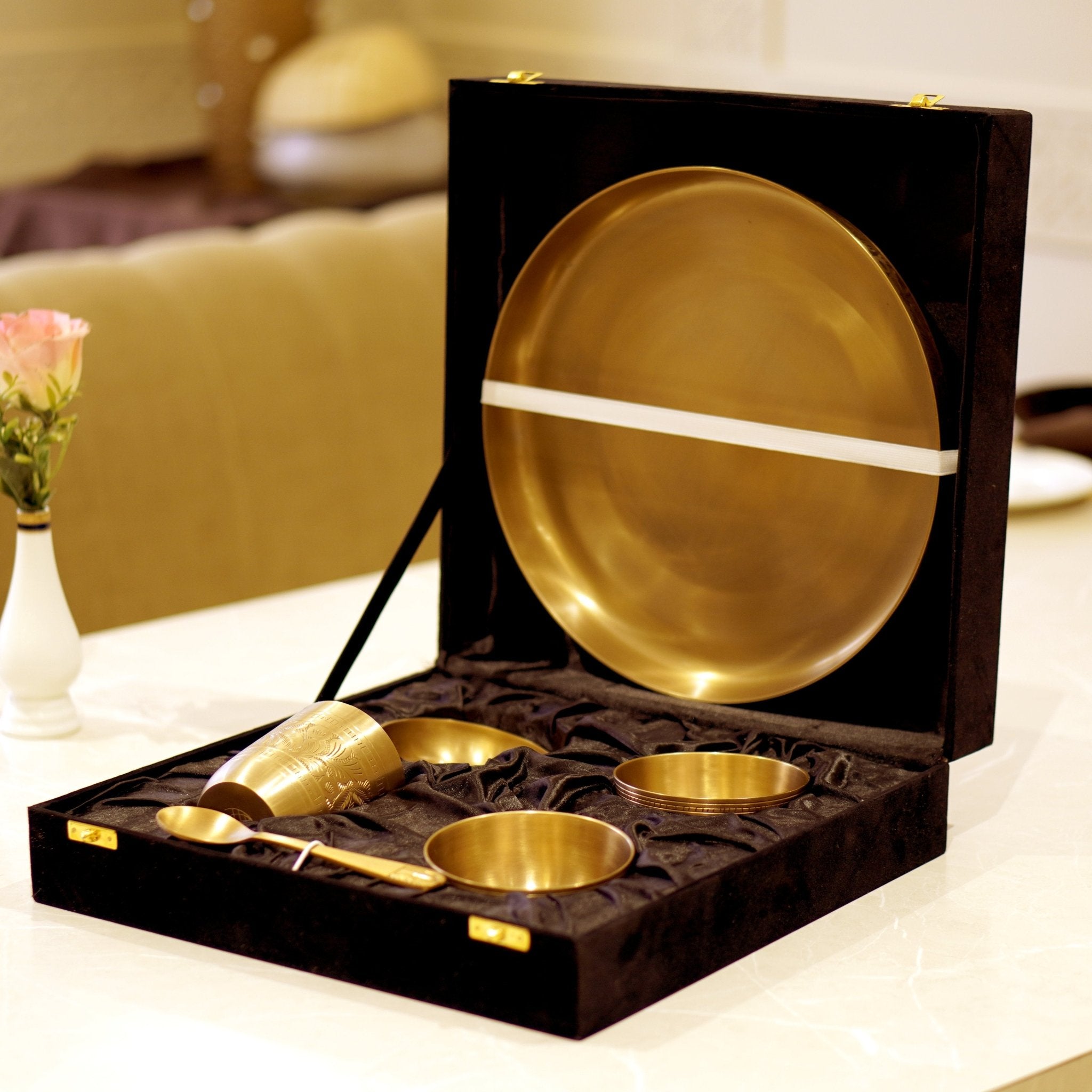
If you want to go full mode, pick the 70-Piece Brass Pital Dinner Set with Velvet Box, this is basically an all in one dining setup for the whole family. One meal after another starts feeling like a daily health practice, not just eating.
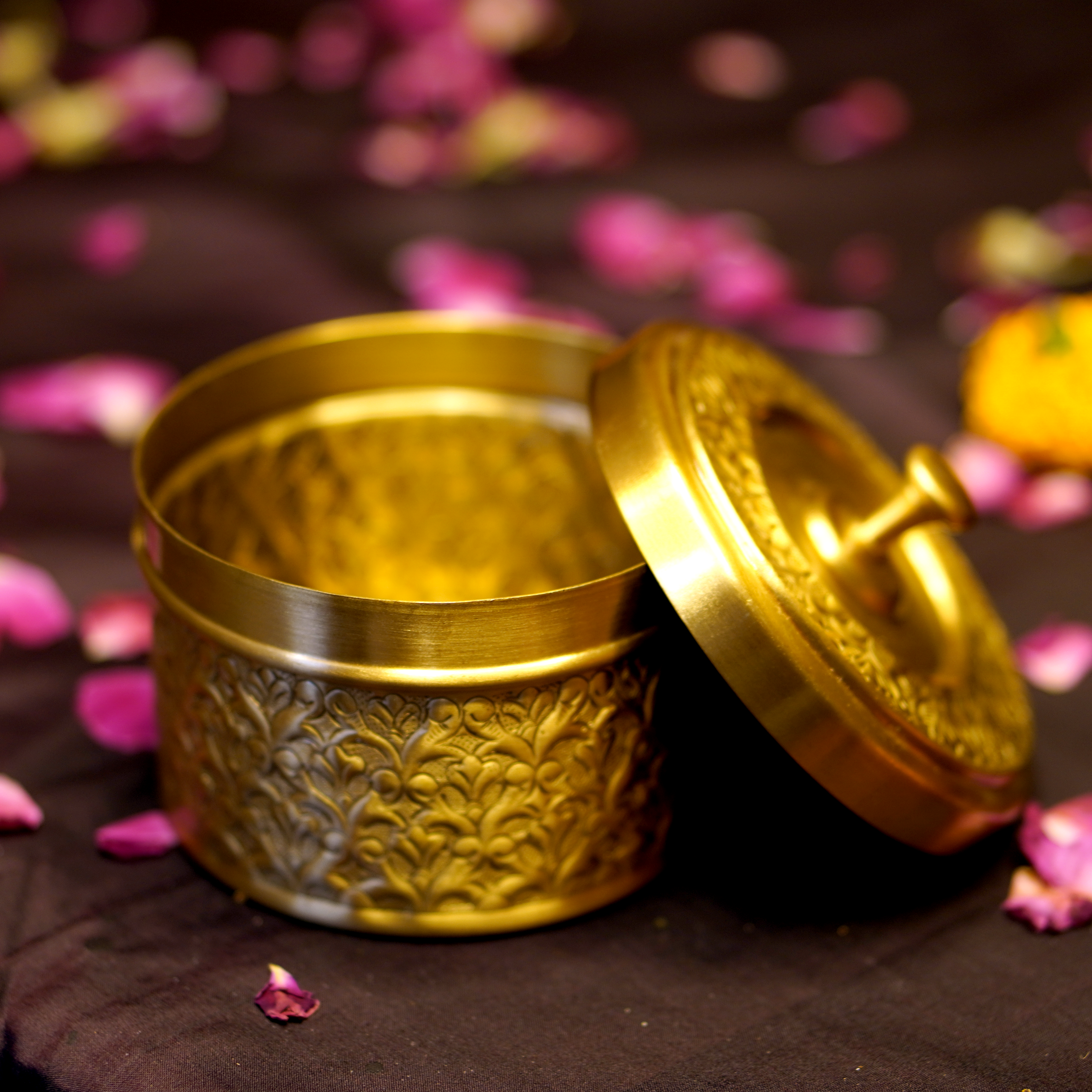
And for spice storage, the Brass Square Spice Box with Matte Finish keeps your masalas fresh, and keeps your kitchen vibe very traditional, like it should be.
Switching to “brass cookware” and “Pital utensils” isn’t just chasing a trend or anything. It’s more like coming back to a cooking style that helped protect wellbeing for centuries, before synthetic stuff took over the kitchen. Begin with one piece, then see what your gut, your skin, and your food end up telling you.
FAQs
Why should I cook with brass utensils, specifically?
During cooking brass release copper and zinc in small and traceable amounts as it is a vital mineral which helps the human body in digestion immunity and can over all skin enhancement. No synthetic material really matches that effect.
Are brass utensils okay for everyday cooking?
Yes, as long as your brass utensils have the proper tin coating (kalai). That makes them safe for regular use. Just try to keep away from super acidic foods if the tin layer has worn down.
What foods are best to avoid in uncoated brass?
Avoid tamarind, tomato, lemon based preparations, and anything else super acidic. The acid may react with copper, and that can shift the flavor as well as the food’s natural composition.
How do I clean and take care of Pital utensils?
Use a liquid metal polish, or a simple natural paste made with lemon and salt. Wipe dry using a cotton cloth. Skip harsh detergents and dishwashers, they can be too rough. Also reapply kalai (tin lining) once the inner coating starts showing wear.
Do brass utensils support digestion?
Yes bra brass utensils helps in digestion because it maintains a balanced alkaline side in food and supports a digestive flow. Traditionally in Ayurveda it is mentioned briefly that consistent use of it controls excess acidity and improves gut health.
What’s the actual difference between brass and copper utensils?
Actually brass is made up of copper and zinc alloy and it tends to be tougher and more stable in structure than copper. Whereas copper utensils are used for water storage and eliminating bacterial germs present in it.


Leave a comment
This site is protected by hCaptcha and the hCaptcha Privacy Policy and Terms of Service apply.