
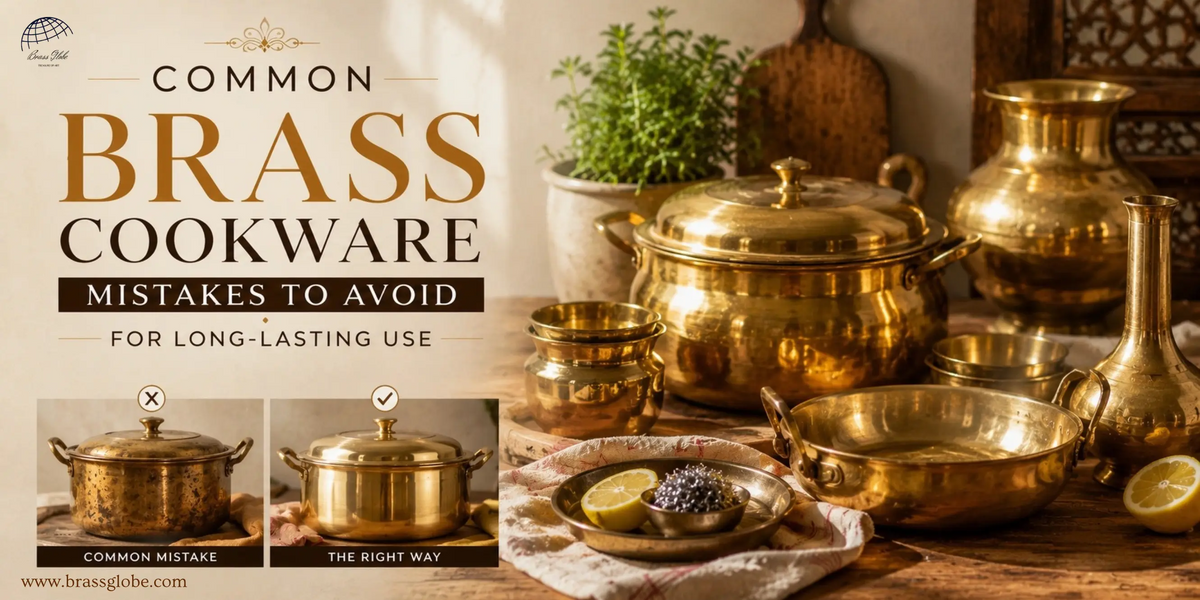
10 Common Brass Cookware Mistakes to Avoid for Long-Lasting Use
Brass cookware needs a different kind of care than stainless steel or non-stick cookware. It isn't difficult to maintain, but a few everyday habits can shorten its life. Using a rough scrubber, leaving the vessel wet after washing, or not checking the kalai lining are common examples.
This matters even more if you regularly use pital utensils for cooking and serving. Brass changes naturally with use, so some darkening is expected. What you need to watch for is actual wear, especially on the cooking surface.
Below are 10 mistakes that are easy to avoid.
1. Using a Strong Cleaner Every Time
You really don't need one.
For regular washing, warm water and a mild dishwashing liquid will do the job in most cases. Strong cleaners can be unnecessarily harsh on brass, particularly when they're used frequently.
Keep your everyday cleaning routine basic:
- Mild dishwashing liquid
- Warm water
- Soft sponge
- Clean, dry cloth
If normal washing doesn't remove tarnish, use a cleaning method that's appropriate for brass. Avoid experimenting with bleach or random chemical combinations.
And don't mistake tarnish for leftover dirt. Brass naturally becomes darker over time.
2. Reaching for Steel Wool When Food Gets Stuck
This is where a lot of unnecessary scratching happens.
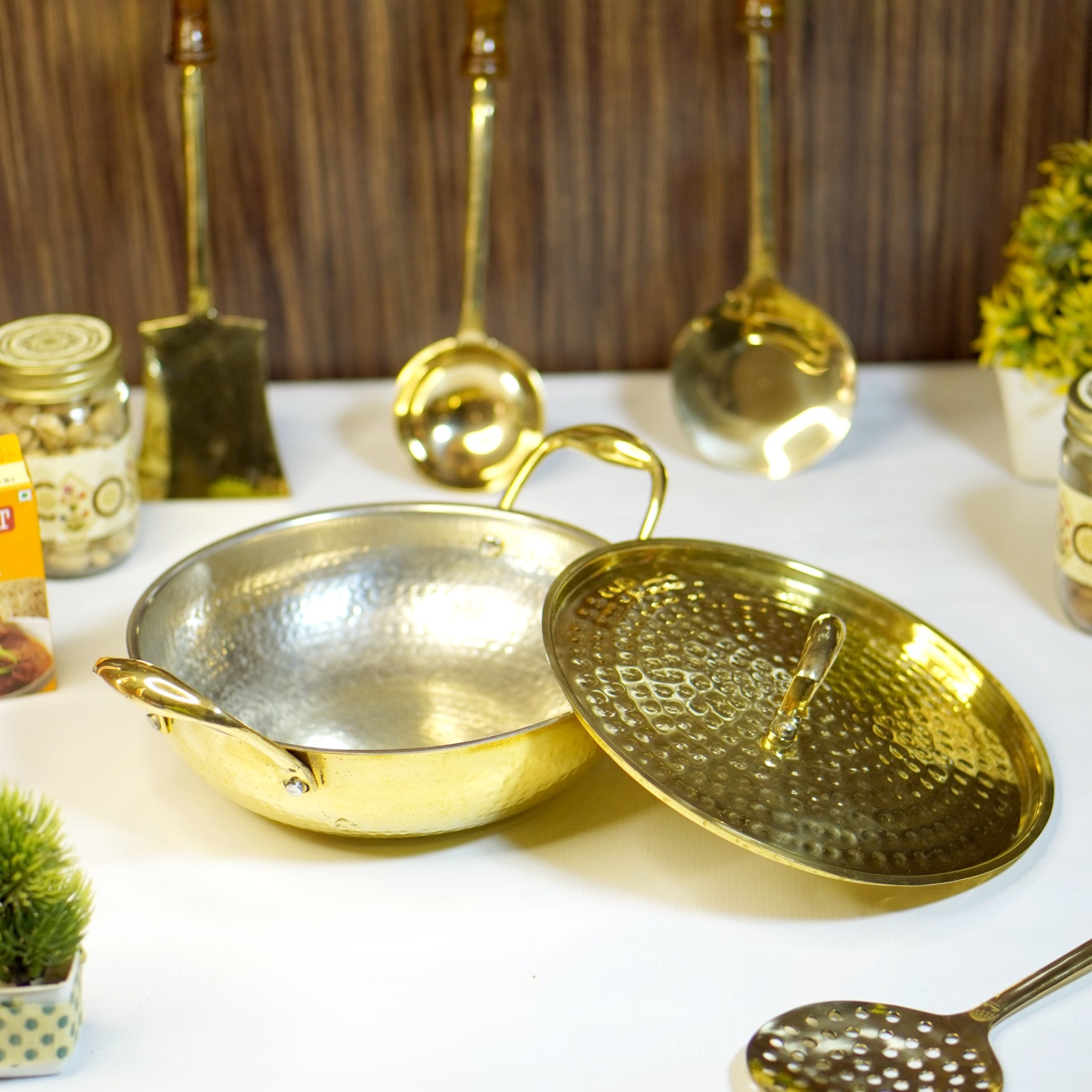
When something burns or sticks to a brass kadai, scrubbing harder isn't always the answer. Steel wool can scratch the surface. It can be an even bigger problem on brass cookware with an inner kalai coating.
Kalai is a thin tin lining traditionally applied to the cooking surface of certain brass vessels. Rough scrubbing can wear it down faster.
Try soaking the vessel in warm water first. Once the stuck food softens, clean it with a softer scrubber.
It's slower than attacking the pan with steel wool, but much better for the utensil.
3. Cooking Acidic Ingredients in Unlined Brass
Not every dish belongs in raw brass.
Brass is mainly an alloy of copper and zinc. Unlined brass can react with acidic foods, which is why you need to check the vessel before using it for certain recipes.
Take extra care with:
- Tomato
- Tamarind
- Lemon
- Vinegar
- Other strongly acidic ingredients
Many traditional brass vessels intended for cooking have an internal tin lining or kalai for this reason.
If the vessel is unlined, don't assume it's suitable for every dish. Check its intended use and the care information supplied with it.
4. Waiting Too Long to Check the Kalai
If you cook regularly in a kalai-coated handi or kadai, look at the inside occasionally.
The coating wears with use. That's expected.
What isn't a good idea is continuing to cook in the vessel after much of the lining has disappeared.
How quickly kalai wears depends on several things: how often you cook in the vessel, how you wash it and the utensils you use while cooking.
A few sensible habits help:
- Don't scrape the inside unnecessarily.
- Avoid aggressive scrubbers.
- Wash the lined surface gently.
- Check for visible wear.
- Get the vessel re-tinned when needed.
There's no need to overthink it. Just don't ignore a visibly worn lining.
5. Treating the Dishwasher as the Default Option
Unless the product is specifically marked dishwasher-safe, handwashing is the safer choice for traditional pital utensils.
Dishwashers use strong detergents, hot water and longer washing cycles. Your brass kadai or thali usually doesn't need that kind of treatment.
Handwashing is straightforward. Use a little mild dishwashing liquid, clean with a soft sponge, rinse and dry.
That's it.
You don't need a complicated cleaning ritual after every use.
6. Washing Brass and Leaving It on the Rack All Day
Brass and prolonged moisture aren't a great combination.
If you leave a washed utensil sitting wet for hours, you may start noticing water marks and changes in the finish. Putting it into a cabinet while it's still damp is worse.
After washing, wipe it down properly.
Pay attention to places that are easy to miss:
- Under the handles
- Around the rim
- The bottom of the vessel
- Corners and joints
- The inner surface
It takes a minute or two and makes storage much easier.
7. Polishing It Every Time It Looks Less Shiny
A brass vessel doesn't have to look brand new to be in good condition.
Brass reacts with its surroundings. Air, humidity, heat, water and handling can all change the colour of the surface over time.
That slightly darker appearance is often just natural tarnishing.
Constant polishing isn't required. More importantly, aggressive polishing every time the colour changes can create unnecessary wear.
Clean it properly. Polish when needed. Leave it alone when it doesn't need anything.
For cookware, the condition of the cooking surface matters far more than maintaining a showroom shine.
8. Using Your Brass Kadai to Store Leftovers
A cooking vessel and a food-storage container serve different purposes.
Once dinner is over, move leftovers into a suitable storage container instead of putting the entire brass kadai in the refrigerator.
This is especially relevant for acidic or salty dishes.
A practical routine is simply:
Cook → Serve → Transfer leftovers → Wash → Dry → Store
This keeps the cookware clean and avoids leaving food in contact with the vessel for unnecessarily long periods.
9. Assuming Anything Made of Brass Can Go on the Stove
It can't.
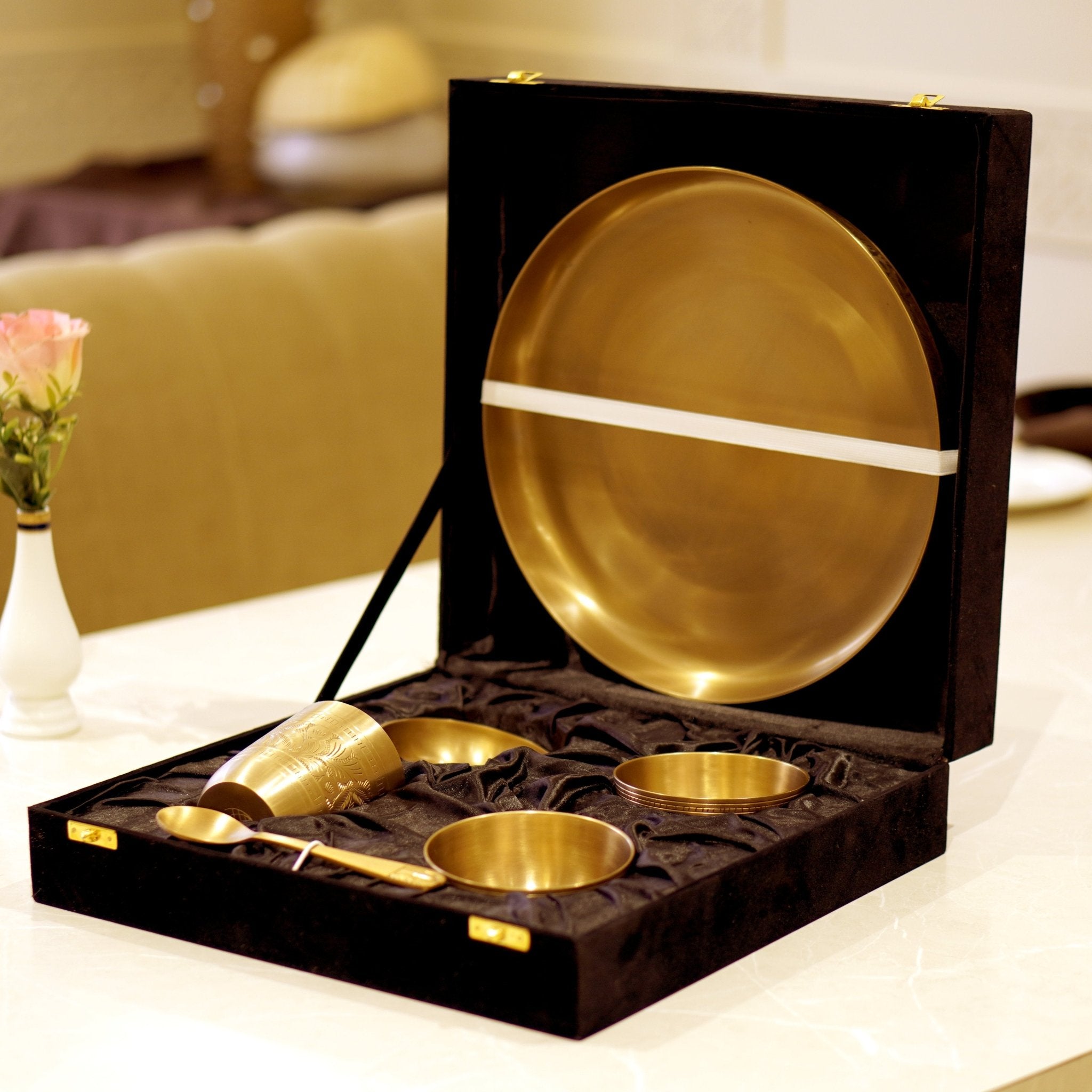
Brass products are made for different purposes. A kadai intended for cooking is not the same thing as a decorative bowl. A thali is designed for serving, not necessarily for direct heat.
Before using any brass item for cooking, check what it was made for.
|
Check This |
Reason |
|
Is it cooking-safe? |
Some brass products are meant only for serving |
|
Is there an inner lining? |
Cooking vessels may have kalai |
|
Is direct heat allowed? |
Not every brass product is designed for a stove |
|
Are there food restrictions? |
Certain ingredients need more care |
|
How should it be washed? |
Finishes and linings can differ |
|
Does it need re-tinning? |
Kalai doesn't last indefinitely |
This is particularly useful when buying pital utensils online. Read the product description instead of choosing only on appearance.
10. Thinking a Darker Colour Means the Brass Is Damaged
Colour changes are normal with brass.
A utensil that has been used regularly for a year won't necessarily have exactly the same bright finish it had when it was new.
That's not automatically a problem.
Brass can develop tarnish and patina because of normal exposure to air and moisture. Cleaning and occasional polishing can improve its appearance, but you don't need to remove every small dark patch.
Pay more attention to whether the utensil is clean, properly dried and structurally sound.
Brass Utensils Benefits: What Actually Matters?
There are plenty of claims made about brass utensils benefits, but for everyday buyers, the practical advantages matter most.
They can last a long time
Brass is a durable material. Good-quality cookware that's used and maintained correctly can stay in the kitchen for years.
Brass works well for traditional kitchenware
Kadai, handi, parat, thali, bowls and glasses are some of the common items available in brass. Depending on the product, they can be used for cooking, dining or serving.
It has a distinctive look
Brass has a naturally warm golden appearance. It stands apart from steel cookware and works particularly well when you want traditional tableware.
Brass is recyclable
Brass can be recycled, which is worth considering when comparing long-lasting kitchen materials with products that need frequent replacement.
It contains copper and zinc
Brass is primarily made from copper and zinc. Copper-containing surfaces have been studied for antimicrobial properties, although this shouldn't be interpreted to mean that using brass replaces normal washing, hygiene or food-safety practices.
Disadvantages of Brass Utensils: What Should You Consider?
The disadvantages of brass utensils are mainly about maintenance.
If you want cookware that you can scrub hard, leave wet and put straight into the dishwasher, traditional brass probably isn't the best fit.
Here's what requires attention:
- Brass can tarnish naturally.
- Rough scrubbers can scratch the surface.
- Strong cleaners should be avoided.
- Unlined brass isn't suitable for every food.
- Acidic ingredients require particular care.
- Kalai can wear down over time.
- Re-tinning may eventually be necessary.
- Handwashing is usually preferred.
- Utensils should be dried before storage.
None of these points makes brass impractical. They simply mean you need to know what you're using.
Brass Cookware Care: Quick Reference
|
Do |
Avoid |
|
Wash with mild dishwashing liquid |
Using strong chemicals for routine cleaning |
|
Use a soft sponge |
Scrubbing with steel wool |
|
Dry the vessel after washing |
Storing it wet |
|
Check the kalai |
Ignoring visible lining wear |
|
Follow the product instructions |
Assuming all brassware is cookware |
|
Transfer leftovers |
Leaving food in brass overnight |
|
Polish when necessary |
Polishing after every colour change |
|
Keep utensils somewhere dry |
Stacking them while damp |
Frequently Asked Questions
1. Can brass cookware be used for daily cooking?
Brass cookware that's specifically made for cooking can be used regularly when it is maintained correctly. If the inside has a kalai coating, check it from time to time and arrange re-tinning when the lining becomes significantly worn.
2. Which foods should not be cooked in unlined brass?
Be careful with acidic foods containing tomato, lemon, tamarind or vinegar. These shouldn't simply be cooked in raw, unlined brass. Use cookware suitable for the recipe and follow the manufacturer's instructions.
3. What's the easiest way to clean pital utensils?
For everyday cleaning, wash pital utensils with mild dishwashing liquid and a soft sponge. Rinse well and dry them with a clean cloth rather than leaving them wet.
4. How often does brass cookware need kalai?
There isn't one fixed schedule. It depends on how frequently the cookware is used and how quickly the lining wears. If a significant amount of the brass underneath becomes visible, get the vessel checked for re-tinning.
5. What are the main advantages and disadvantages of brass utensils?
The main brass utensils benefits are durability, recyclability, traditional use and their distinctive appearance. The disadvantages of brass utensils include extra maintenance, tarnishing, care around acidic foods when the brass is unlined, and the need to maintain kalai on traditionally lined cookware.
Conclusion
Good brass cookware can last for years, but the way you handle it matters.
Avoid harsh cleaners and steel wool. Don't put the vessel away wet. Check the kalai if you cook in it regularly, and don't use every brass product as cookware simply because it's made from the same metal.
For pital utensils used for dining or serving, the basics are even simpler: wash gently, dry properly and store them somewhere dry.
The brass utensils benefits include durability, recyclability, traditional use and a finish that looks very different from regular steel cookware. The disadvantages of brass utensils are mostly related to maintenance and food compatibility, particularly when you're dealing with unlined brass.
You don't need a complicated brass-care routine. Use the right vessel for the job, clean it without being overly aggressive, keep it dry and pay attention to the condition of the inner lining. Those few habits will do far more for your brass cookware than constant scrubbing or polishing.

Leave a comment
This site is protected by hCaptcha and the hCaptcha Privacy Policy and Terms of Service apply.